Other Worlds, by Barbara Michaels

>> Friday, September 09, 2005

Barbara Michaels's Other Worlds was a HUGE disappointment when I read it right after it came out. It was her first Barbara Michaels book since The Dancing Floor, so I had been eagerly awaiting it, and when it arrived it just didn't read like a B. Michaels!

I've never known if it was really a bad book or if it was just an expectations problem, so I decided to give it a reread with an open mind, ignoring the fact that it pisses me off that the author is writing only Amelia Peabody books now, as much as I like those.

One foggy evening, the most famous crime specialists in the world meet in an exclusive club, their minds on mystery. On the agenda, two tantalizing, unsolved cases of ghostly terror.

New York Times bestselling author and unsurpassed mater of suspense Barbara Michaels delivers a fireside page-turner in the grand tradition with her latest book, Other Worlds.

The smoky room glows with a mix of cigars, brandy, and genius. Those present include Harry Houdini, king of illusion; Sir Arthur Conan Doyle, father of the modern detective novel; Dr. Nandor Fodor, a psychoanalyst of international acclaim; and an elegant writer who can rival them all with her sleuthing talent.

These maters of mystery put their minds to a pair of gripping storiesof families beset by poltergeistly pranks and bewitched by inexplicable horrors. Gripping puzzles, yes, but the terror is all too vicious and all too real.

In the hallows of Tennessee, a family is threatened by a dire spirit whose predictions of despair and death come frighteningly true.

In a small Connecticut town, a newly married widow and her children move into her second husband's home to find their lives possessed by an unimaginable demon.


For the gathering at the club, a brilliant battle of wits is at hand. Were these villains phantoms from beyond or evildoers of flesh and blood? Each expert has a theory. Which of them is correct?
Ok, I realize that most of my hate for Other Worlds came from dashed hopes, but it truly isn't a very good book. A C+ for me.

The book has an interesting and promising premise. In a "gentleman's club" ambience, and out of time and space, experts on the supernatural gather to discuss unsolved cases. They take turns presenting the facts, and after each narration, each shares his conclusions.

We have two such cases presented in the book. The first one, the case of the Bell Witch, presented by Houdini, was pretty good. It had some chilling moments (though not as many as I want in a ghost story), I liked the narrator's little asides, and the conclusions presented were fascinating.

The second case, however, I didn't like at all.

First of all, it's presented as a fictionalized account, narrated in first person by the "newly married widow" mentioned in the blurb I quote above. And this woman... ahhh, I detested her. I guess it shows the skill of the writer that she managed to make me feel that way, but I didn't enjoy reading it. The little barbs she throws at her daughter while favouring her son, her decision to marry such a man as Mr. Phelps, a man who condescendingly treats her like a child ("don't worry your little head about such subjects" -that's the kind of man he was), her catty remarks about other women.. and so many more things. Ugh, couldn't stand her, even though I suppose she was just a woman of her time.

The case itself had no chills whatsoever and no interesting features to distinguish it from countless other garden-variety poltergeists. And I thought the conclusions lacking and mixed up. In fact, the only redeeming feature I found in this second half of the book was the character of the writer who presents this account of the case. Other than that, it's a complete loss.

I'd give the first story a B-ish grade, but this last one, probably a D or thereabouts.

Read more...

Colour Scheme, by Ngaio Marsh

>> Wednesday, September 07, 2005

Next in my pile of Ngaio Marsh books (ordered by date published, because I'm anal that way), was Colour Scheme. Actually, I remember there being another one before it, but I couldn't find it and I needed to start a mystery NOW, so I'll just go back to that one later.

England is at war, and this means "spy fever" for a quarrelsome collection of patriots at a shabby New Zealand resort. Inspector Roderick Alleyn joins them incognito when their amateurish sleuthing results in a macabre murder that shocks even Scotland Yard!
It had some fascinating stuff and I liked many aspects of it, but this was my least favourite of the Marsh books I've read so far -even if it's supposed to be the one Marsh herself considered her best. A B-.

I think the reason might be that Marsh is especially merciless with her characters here. That was something I noticed about her characterization from the very first of her books that I read. In Overture to Death, I was a bit taken aback by the utter viciousness with which some of the characters were portrayed.

It's not so bad here, and each and every one of the characters (except maybe Dikon Bell) is unpleasant or stupid in a different way. This made it interesting to read, but after a while it got to be overwhelming, and not so much fun to read.

Another slightly disappointing aspect was the spy plot. I'm never too fond of those, but luckily things played out as a cozy mystery here, which was good. Thing is, strangely enough, even though as a spy story Colour Scheme deals directly with the war, those events felt much more distant than they did in Death and the Dancing Footman, for instance.

The final explanation didn't really make all that much sense when it came to the culprit's motivation. The deductions which led to Mr. Septimus Falls discovering whodunnit were great, very ingenious, and they explained several details I hadn't even realized might be important, but the murderer's motivations lacked some development.

And speaking of Septimus Falls, well, someone should have warned the person who wrote the blurb for the back cover that he's supposed to be a mystery man. That's all I need to say, I suppose!

Edited to say: Hah! I was so busy writing my problems with the book that when I saw the time and realized I was running late, I forgot I hadn't mentioned what I'd really, really liked about the book. So, quickly: first, the setting. The spa and its grounds, with all those mud baths, was fascinatingly eerie. I especially liked the way it was described as resembling a moon landscape, I had the perfect image of it in my mind after that.

And also, the romance. It seems there always is one of those in Marsh's books, and I liked this one because neither Dikon nor Barbara are perfectly beautiful dolls. Barbara, especially, doesn't seem like a likely candidate at first glace, with all those mannerisms and affectations, and I loved how Dikon slowly starts seeing beneath them.

Read more...

Origin in Death, by J.D. Robb (In Death # 22)

>> Tuesday, September 06, 2005

Origin in Death is the latest in J.D. Robb's In Death series. Not counting the short stories, this is book # 22.

Set in 2059 in New York City, the number-one bestselling In Death series has given fans a searing glimpse into near-future law and order. Now, as scientists work to expand the limits of technology, Detective Eve Dallas tracks the cunning, cold-blooded killer of a father and son.

A pioneer of modern reconstructive and cosmetic surgery, Dr. Wilfred B. Icove, is found dead in his office-murdered in a chillingly efficient manner: one swift stab to the heart. Struck by the immaculate condition of the crime scene, Dallas suspects a professional killing. Security disks show a stunningly beautiful woman calmly entering and leaving the building-the good doctor's final appointment.

Known as "Dr. Perfect," the saintly Icove devoted his life to his family and his work. His record is clean. Too clean for Dallas. She knows he was hiding something and suspects that his son-and successor-knows what it is. Then, like father, like son, the young Dr. Icove is killed . . . with the same deadly precision.

But who is the mystery woman-and what was her relationship with the good doctors? While her husband, Roarke, works behind the scenes, Dallas follows her darkest instincts into the Icoves' pasts. What she discovers are men driven to create perfection-playing fast and loose with the laws of nature, the limits of science, and the morals of humanity.
After 22 books, this series still feels fresh. This wasn't among my favourite books in it, but it's a good entry in the series. A B.

I read the In Death books for the character development, mostly, and though I get the feeling there wasn't as much of it here as in the books I've loved the most, what was there was wonderful. I especially loved seeing Roarke nervous about something as natural and easy for most people as a family reunion.

As for the other "half" of the book, the one that dealt with Eve's case du jour, that was more than interesting and compelling enough. Eve's investigation of the death of the reconstructive surgeons, the Drs. Icove, was eerie and horrific and, at the same time, scarily plausible.

That said, I did have a couple of problems with it. For starters, the realization of what exactly was going on felt slightly too easy and immediate on Eve's part. This was so tremendously big, that I didn't really buy that her mind would immediately jump to the conclusion it did.

And then there's the book's climactic scenes, which didn't really have the feel of an In Death book. This might be an unfair criticism, of course, since I'm injecting my expectations in my evaluation, but while I was reading those scenes, I had to remind myself these were Eve and Roarke running around!

Read more...

Now and Always, by Caridad Scordato

>> Monday, September 05, 2005

Caridad Piñeiro, author of my favourite series book from 2004, Darkness Calls, has also written some Encanto books as Caridad Scordato. I was interested to see that the one I read, Now and Always, was published together with its Spanish translation, in a 2-in-1 volume.

Meet Connie González. She's saucy, single and one of the best FBI agents this side of South Beach. Not bad for a scrappy marielita! All that's missing from Connie's life is a man -someone unlike Victor Cienfuegos. The dashing Cuban-American M.D. is too rich... too handsome... too macho. But wouldn't you just know it? Conie loses her restless heart to him anyway. And the passion's mutual!
This very bland title, which I kept forgetting as I was reading the book, hides a tender, colourful story. A B.

I complained in one of my first columns at RTB about romances with latino characters or settings. Authors too often get things horrifically wrong. Based on what I read in Darkness Calls and on the fact that Scordato is latina herself, I suspected she'd probably do better, and I'm glad to report I was right.

Certain things that usually bother me about the latino thing were just fine. Characters who mix Spanish (or whatever language) into their English irritate me, because it's usually done without rhyme or reason. If they're talking to people who don't understand the foreign language, it would make sense for them to use it only when there's no acceptable English for it, or they don't know it. But no, too many characters tend to use it for stuff that's just weird, solely a way for the author to show us they're foreign.

Now, Connie and Víctor, they switch back and forth from Spanish to English, often in the same sentence. And I was fine with it. Why? Because it felt true. They're both completely bilingual, so they understand each other perfectly, whatever the language. I speak that way with my sister, myself, especially if I'm relaxed and feeling lazy. I just use the first words or expressions that come to mind, whether they're English or Spanish. Víctor and Connie do use more Spanish in their English than Luli and I use English in our Spanish, but they are more bilingual in their lives than we are here in a Spanish-speaking country, in a Spanish-speaking family.

The Spanish itself was fine. There are a few mistakes, but nothing too bad, just run of the mill stuff that I see all the time. Stuff like using "porque?" instead of "por qué?" when they mean "why?", not "because?", or not putting the accent on "mí" when it's used as what would be "me" in English, not the possessive "my". On the whole, pretty good. I only noticed because I'm really anal about stuff like that.

I really enjoyed Scordato's depiction of what it's like to be Latino in Miami. Of course, a Cuban-American living in Miami has as much in common with me, a granddaughter of Italian and Spanish immigrants living in Uruguay, as an American Anglo does, so I'm obviously no expert. However, whereas other Latinos I've read didn't feel authentic, Scordato's rang true. And it was all fascinating, stuff like the tension between the immigrants from the first wave that left Cuba and the newcomers.

And then there were things like the fact that her Cuban-American hero isn't a stereotypical arrogant Macho Latino pig. On the contrary, Víctor's a sensitive, nice guy, who's led a very sedate life, sex-wise. Connie calls him "too macho, too sexy, too rich", but I didn't really think she had much to worry about in the macho department, and he was very down-to-earth for the money he had. I truly liked the guy, and found him interesting, too.

Connie I enjoyed, too. She's a character with a lot of contrasts, contrasts which work together anyway. She's truly kick-ass in her work (and really good at it, too), but she's a bit old-fashioned about sex and relationships and admits it. At the same time, when she does decide to start something with Victor, she does the sensible thing and takes responsibility, buying condoms herself and standing up for herself when she doesn't like the direction things are going.

I very much enjoyed how their relationship progressed. Connie and Victor are attracted right from the beginning, and after a few initial "should I or shouldn't I" doubts on Connie's part, their romance develops pretty normally. Connie has some reservations about getting involved with someone as aristocratic and rich as Victor, feeling a bit self-conscious about being a "marielita", but she gets over that fast. The main conflict between them was near the end, about each supporting the other in their careers. That was interesting, but it got started and was over pretty quickly. I would have appreciated a bit more of that.

Oh, I was forgetting: something I found particularly interesting was the way Connie's career was dealt with. Unlike so many books where the heroine is an FBI agent, there was no question of Victor being involved in any of the cases Connie works in during the story, even the serial killer one that's the main job she has. He doesn't know any of the victims, he's not a suspect and he doesn't become an amateur detective. He basically supports and misses Connie while she's undercover, and that is it.

As for the format, the 2-in-1 thing I mentioned, that was bit of a distraction at first. I kept checking back and forth, wanting to see how things had been translated. I must say, it was a pretty bad translation, I'm afraid. It seemed to me that the translator had trouble getting across concepts that took one word in English, and opted to explain the whole idea with words and words and more words. To be fair, there are words and expressions in any language that don't have an exact translation in another, but this was ridiculous. And it explained, BTW, why the Spanish version was so much longer than the English, something that had intrigued me a priori. But on the whole, I think it's a wonderful idea. I'll even be able to lend it to my grandma!

Read more...

The Challoner Bride, by Jayne Ann Krentz

>> Friday, September 02, 2005

I loved Jayne Ann Krentz's Wizard, so I took it as a good sign that The Challoner Bride was published with it in a 2-in-1 volume titled Worth The Risk.

HE WAS A SOLDIER OF FORTUNE...

A man with a past. But Flynn Challoner had big plans for the future. Hard-driving and iron-willed, he meant to find a dynasty...and for that he needed a woman.

Angie Morgan had every reason to doubt Flynn. He had deceived her, seduced her; now he wanted to lure her into a marriage she had sworn never to accept. She was no man's brood mare, and she had told him she would marry for nothing less than love. So why was it that she found herself longing for the wedding night that would make her a Challoner bride?
I didn't like it as much as Wizard, but it was a nice read. I'd rate it a B-.

The Challoner Bride had a conflict that shows up every now and then in Krentz's old categories: the hero is determined to marry the heroine for certain business of dynastic reasons, and the heroine refuses to marry for anything other than love.

In TCB, the conflict echoes an old family legend both of the Challoners and the Torreses (Angie's family), which had a young bride being practically sold into marriage, to cement a truce between the families. Angie feels that she's almost channeling that long-ago bride, Maria Isabel, and the parallels between their situations are striking.

The situation in the present is set up in such a way that it doesn't feel anachronistic. A plot that is too close to the legend would be hard to believe in a contemporary setting, but this one's close enough that the reader can see the similarities, but modern enough to be believable.

What Angie sees is that Flynn is driven to create some kind of new dynasty, to remake his family's fortunes, which have deteriorated in the last century or so. He gets much of his inspiration from the past, so his wanting Angie, as a kind of symbol makes sense to her. As for Angie, what pressures her here isn't the family obligation that drove Maria Isabel, but her own fascination with Flynn.

And the reason it all works, is that from the beginning, the reader can see that Flynn's attraction to Angie is based on so much more than what Angie thinks. He is obviously fascinated by Angie herself, even if it takes him some time to admit it to himself.

The emphasis is on the romance here, which is good, because the suspense subplot is silly and feels tacked-on. But it's mercifully brief and so not that much of a nuisance all that.

A nice, low-key way to spend a couple of hours.

Read more...

The Basque Swallow, by Leigh Daniels

>> Wednesday, August 31, 2005

The Basque Swallow is a very different Harlequin Intrigue, by Leigh Daniels, an author I hadn't read before.

Joanna Bellamy was tickled pink to be chaperoning a bevy of nervous, excited mail-order brides to the small European country of Andorra.

The appearance on shipboard of a sinister stranger was the society matron's first inkling that there was more to the trip than met the eye.

Lucien Soileau claimed to be an art dealer, but business wasn't the reason the tall Frenchman with the hooded eyes pursued the brides to the rugged Andorran countryside.

An ocean away from family and friends, Joanna was caught in a viper's nest of danger and deception - and she wasn't sure she could even trust her heart.
I love different, and sure, this one is like no other Harlequin I've ever read. But just being different is not enough. The Basque Swallow feels like a pale imitation of those Mary Stewart books I've loved so much. A C-.

For starters, I had a huge problem with the initial, basic setup. The mail-order bride thing seems hard to believe. Not really that the women would go to Europe to be mail-order brides... that I could have bought without a problem. People are capable of anything. The thing is, though, that this business was so obviously a cover for something!

I mean, did Joanna never wonder it all worked? Were did the money to finance the whole operation come from? A luxurious cruise, transport and lodging within Europe, various entertainents for eight people, that must cost a nice bundle of money. Were the men, modest Andorran farmers, supposed to have paid enough money to this Cupid Cruise service to cover all this? As well as enough money to give an obviously rich guy like Don Maitland a juicy enough profit that he felt compelled to spend a lot of his valuable time on the project? I'm sorry, but that is so obviously nonsense that Joanna comes off like a fool for never realizing until so late in the game that things didn't add up.

Part of the charm of books like this one is the travelling in exotic, different places. The action in The Basque Swallow wanders around locations that could have been wonderful: Lisbon, Barcelona, Andorra, Paris, the Pyrinées, we spend time in all those places. And we never get even a smidgen of feel for them. There's just no local colour here. In Mary Stewart's books, you feel as if you are right there, you actually see and breathe the places she describes. Daniels doesn't even try. And even the few little details she does put in are sometimes wrong, like her saying that people in Barcelona don't speak Spanish. Er, yes they do. That some of them might refuse to speak it, much in the way French people are reputed to refuse to speak English to tourists, even when they know the language, is another thing.

Then there's also the way any suspense peters out even before the half-way point. The first part is intriguing enough... what is Cheryl up to? Who is Lucien? What's so important about that spot in the mountains? But we find out every single detail of this quickly enough, and the rest of the book is basically about our heroine and hero being pursued by a perfectly insane villain.

And that was part of the problem. This villain did things without any rhyme or reason. I can understand him being obsessed with this thing he wanted, but the way he tried to go after it was just without any logic whatsoever and without a prayer of succeeding. I don't get it, because Daniels obviously realizes this (she has Joanna and Lucien discuss this very thing). It feels to me as if she just couldn't find a way to give him a believable motivation for what she needed for the plot, so she said: "ok, it makes no sense, but I need this to happen, so I'll just make the guy crazy so he doesn't need to make sense".

The book had an uncomfortably old-fashioned feel. I was never 100% sure of when exactly it was set, which drove me crazy. Every clue seems to point to the late 80s, early 90s (and the copyright of the book is 1991, which would make sense), but there were many other little details which would have fit a story set in the 60s better.

Not all is bad, though. The hero and heroine were pretty all right. Joanna's an interesting, sensible woman, not a damsel in distress but a smart woman who always rises to the occasion. And Lucien is an interesting, very nice guy, even if he's a little too mysterious and we never get to know him completely. I especially liked that these were mature people, near their forties, and they act grown-up. No hysterical protests from Joanna about staying at a safe house, no insisting in getting herself into danger just because.

Unfortunately, this is not enough to save the book. A very disappointing read.

Read more...

Housebound, by Anne Stuart

>> Tuesday, August 30, 2005

Housebound, by Anne Stuart

The rest of the family was skating when Anne Kirkland met Noah Grant. He'd obviously been invited to New Jersey for the weekend, but by whom? Noah wasn't one of Anne's sister Holly's jet-set friends, but nor did he seem part of her brother Ashley's flamboyant entourage.

As Noah and Anne sat in the gracious house that was Anne's pride and joy, talking like old friends, she almost wished her family wouldn't return to unravel the mystery of Noah's identity...

Having met Ashley and Holly, Noah wasn't prepared for Anne. She was warm and kind, and he almost wished he didn't have such a hard job to do...
No, no, no, no! Who writes these blurbs? This describes something like the first 10 pages of the book, and inaccurately, at that.

Noah's been invited to Anne Kirkland's house for the weekend by her sister, Holly. To Anne, he's Holly's latest potential boyfriend, but in reality, he's there to evaluate the house as a possible purchase, as a favour to his former father-in-law.

The reason for all this subterfuge is that Anne basically lives for the house, and refuses to sell, even though there's no way she can afford to keep it. She plows all her money into it and yet, it's falling to pieces around her. Unfortunately for her (or maybe fortunately, actually), it only takes a majority of the owners wanting to get rid of the house for the sale to go through, and her father, sister and brother are in agreement.

When Noah shows up at the beginning of the weekend, Anne does confuse him with one of her brother's boyfriends (which means his first kiss catches her by surprise), but the confusion is cleared up when they get back, only a while later. This reveals a practically irresistible attraction between them, though, and that plays out for the rest of the book.

Noah is immediately very attracted to Anne, but he knows he should try to resist her because, when the truth comes out, she's going to be very hurt, and she'll feel even more betrayed if something has developed between them. As for Anne, she's engaged and knows she shouldn't steal her sister's guy from under her. And still they can't stop themselves.

I really liked Noah. Being an Anne Stuart hero, he has quite a bit of an edge, but he's one of the nicest I've read by her. He really does try to do the right thing about Anne, and is truly sorry that he's going to help hurt her, even when he knows he's actually doing her a favour. His torturedness (is that a word?) comes not from having done bad things in the past, but from the tragedy of losing a wife he adored. He's even an idealistic lawyer, who wants to leave corporate law and go back to work as a public defender!

Anne, as usual with this author, I liked a little less. I was just so impatient with her obsession with that house! It's very obvious to anyone that there's no way she's going to be able to keep it, but she just keeps on, even getting into debt to patch a few holes. I understand wanting to hold on to your past, but she crossed the line into idiotic, IMO.

These two have very real chemistry together, and Stuart was successful in showing the initial attraction turning into something more. A nice, low-key read. My grade: a B-.

Read more...

Sanctuary, by Nora Roberts

>> Monday, August 29, 2005

Sanctuary is the second of my forgotten Nora Roberts books I blogged about last week.

Following the success of Montana Sky , Roberts bases another story on the three siblings in that novel: Jo Ellen, Brian, and Lexy Hathaway of Sanctuary Inn, a B & B on Lost Desert Island, off the coast of Savannah, Georgia. Jo Ellen is a successful photographer who collapses under the mental anguish of seeing a picture in which her mother is young, beautiful, naked, and unmistakably dead. Her mother disappeared 20 years before, shattering a close-knit family.

When the photo disappears while Jo Ellen is in the hospital, she returns to Sanctuary to recover her sanity and mend her relationships with Brian, the chef for the inn, and Lexy, an aspiring actress. The arrival of Nathan Delaney, whose family stayed on the island the summer her mother disappeared, further complicates Jo Ellen's life. Nathan wants Jo Ellen, but he is tormented by a secret that has lured a killer to Sanctuary and to Jo Ellen.
A good, satisfying romantic suspense, with a good balance between the romance and the suspense. A B+.

It turns out I remembered more about Sanctuary than I did about The Reef. I didn't actually remember how the book developed, but right from the very beginning, the answer to who was responsible for what appeared in my mind.

Did this diminish the plot in any way? Well, of course, knowing all the answers eliminated a lot of the "I wonder who, I wonder why" suspense, but from my vague memories, I believe I might have enjoyed the story more this time around.

It's just that the answers to the mystery are just so enormously shocking, that I don't think I was able to compute, really, on that first read. What I had been guessing and supposing all throughout the book was just so far from what was actually going on, that I couldn't simply take this new info and look back on what I'd just read and understand it. Knowing the answers beforehand, I was able to read everything and catch all the clues, and believe me, there were plenty of them, so the suspense made perfect sense this time.

I particularly enjoyed the final, climatic scenes. Truly nerve-racking, and having this all happen in the middle of a huge hurricane was very timely, given current events.

This was all good, but the book's main strength was, as is usual with Roberts, the character stuff. She creates some interesting people, and it was wonderful to read about them interacting with each other. Not just the romances (though there are quite a few of those... three of them, plus what felt to me like the beginning of one), what I loved best was the way Jo rebuilt her relationship with Brian and Lexy, the way Sam finally realized he's abandoned his children and needs to work on becoming their father again, the way Nathan makes Giff realize he can have his dreams, the way Jo and Kirby turn their childhood friendship into one between two grown women.... and so many different combinations and permutations, it was all great.

And so were the romances. Kirby and the prickly Brian (a big strong man in an apron is just yummy), laid-back Giff and flirty Lexy, but I think my favourite was the main one, Jo and Nathan. There was a lot there, and these two were interesting people. And the whole situation, of course, had a huge built-in conflict.

Nathan was an especially interesting character to me. The thing that I liked best about what Roberts did with him would be a spoiler, so I will write in brown: [start spoiler] I was very fascinated by the way Nathan had to deal with his memories of his father, now that he has found out that this man, who was a wonderful dad, was also a cold-blooded murderer. How does he reconcile this great guy, who apparently loved his children and wife and gave them a great life, with a man capable of raping, torturing and murdering a woman, without any conscience problems? I've been in... not in his shoes, but in shoes that were a bit similar. It was difficult to assimilate, and I thought Roberts did a great job with Nathan's reactions.[end spoiler].

Negatives? Well, I thought Roberts went a bit too far with the graphic descriptions of the killer's doings. I found it all very disturbing. I actually had to stop reading a couple of times until my stomach settled. And what made it worse was that Roberts had managed to make the victims so very real, that it wasn't simply reading about some abstract horrible things being done to a body, but about these horrible things being done to a person with hopes and dreams. It did work to make it all so tremendously chilling and scary and didn't feel at all gratuitous, but well, it was unpleasant to read.

What with the well-developed suspense and three interesting romances, there is certainly a lot going on in the book, but Roberts never loses control of her threads, and none of these elements feels underwritten. It's a big, juicy book, and, apart from the scary parts, I had a really good time reading it.

BTW, did anyone know Sanctuary as made into a movie? I suppose it'll probably be as bad as all movies based on romance novels seem to be, but I'm tempted to look for it ;-)

Read more...

The Ungrateful Governess, by Mary Balogh

>> Friday, August 26, 2005

This one's for JanetW, who wanted me to write about The Ungrateful Governess, by Mary Balogh ;-)

The Earl of Rutherford was handsome, charming, rich, generous, and as adept at giving pleasure as he was avid in pursuing it. No wonder, then, that when he marked Miss Jessica Moore as the latest in his endless string of conquests, the irresistible earl expected a swift and most satisfying triumph. How could a mere governess, no matter how lovely and spirited, stand up to the attractiveness of his person and power of his purse?

He soon found out... as this young lady with too much pride to surrender to her rising passion set out to teach the earl a lesson in manners... even as he used every means at his considerable command to teach her a lesson in love.
Well, Janet, you were right! It's a great book. I'd give it a B+.

I really loved what Balogh did with the hero. The man was insufferable in the first sections, maybe very much a man of his times, but a smug, condescending, narrow-minded fool. Obviously, this is the way he looked like to my undeniably modern eye. I was outraged (though not surprised), by certain of his attitudes... the way he considered female servants were fair game ("[he] considered himself something of an expert on female servants" Yuck!), the way he seemed to feel contact with Jess would somehow contaminate his female relatives, even though he was the only one to do any compromising to her... intolerable!

So why did I love the book?

First, because he was called on the attitudes I despised.

Jess:
"Your assumption that my impoverished background makes me therefore a woman of loose and low morals says a great deal about your own morality".

His own grandmother:
"If Hope has not already been contaminated by contact with you," the duchess said soothingly, "I doubt she will be by Jessica, Charles. After all, you have been whoring for ten years and more." Ha! Good one!

Second, because Jess never gave way until Charles had thoroughly renounced all such attitudes. Even if she did physically want him from the very beginning, and even if she was soon in love with him, she remained firm, and refused to say yes to him until she was sure she was going into the marriage in her own terms.

Third (and here the bloodthirsty sadist in me comes out), Charles was seriously punished and, as a result, grew into a much better person. He suffered for his mistakes and had to pretty much humiliate himself to atone for his insults to Jess in the first part of the book. I absolutely adored all those scenes in which he'd propose and Jess would refuse him, because until the very end, he deserved it.

He really was a different person by the end of the book. I was a bit doubtful at the beginning because I just couldn't see how he could ever become a person I'd be happy for Jess to end up with... for instance, I thought, no way this guy is going to be faithful to a wife! But there was no doubt he was such a person in the end.

The only reason I'm not grading this an A- is because I found the initial setup much too hard to believe. Considering Jess' relationship with her grandfather, I find it impossible to believe that any sane person would seriously consider embarking on such a "career" as being a mistress, when her moral code obviously considered it something really bad, when she had such an easy alternative. Preferring to be a governess to keep her pride, that might believable. Choosing to go into Charles' bed, not really.

Other than that, a wonderful book. Even loving her new books as I do, I do understand why people are so crazy about Balogh's old Regencies!

Read more...

Reckless Conduct, by Susan Napier

The last Susan Napier I read was a disappointment, so I hoped Reckless Conduct, written quite a few years later, was better.

Behaving badly...

Harriet attended the company's New Year's Eve party in all innocence. It wasn't her fault that the punch she'd been drinking was stronger than expected--so that she'd ended up confiding in a gorgeous stranger about her broken engagement. How was she to know she'd been pouring her heart out to the chairman himself, Marcus Fox?

...at the office party!

Now Harriet has to work with Marcus. Luckily, she's since changed her image, dyed her hair blond and is a model secretary. Unluckily, Marcus still recognizes her--and seems determined to punish Harriet for her reckless conduct!
It was. Much, much better. A B.

Just a note: there will be some spoilers in this post, and I really liked reading the book without knowing these things. So be warned before you continue. I could write very cryptically, trying not to go into any spoilers, but I'm feeling lazy ;-)

Paraphrasing the brilliant AAR review of Balogh's Slightly Sinful, Susan Napier has never met an amnesia plot she didn't like. In about half of the books I read by her, the heroine has had some kind of memory trouble which keeps her from remembering having sex with the hero. One lost part of her memory after a brain operation, another blocked certain painful, traumatic memories by forgetting a couple of years of her life (and in that book, yet another character pretended he had amnesia), and the heroine of RC has forgotten everything that happened a night she got very, very drunk.

When the book starts, we readers know very little about what happened on that fateful New Year's Eve party. There's that little tidbit in the back cover blurb about how Harriet has run off in the mouth to Marcus about her former fiancé, but even if there weren't, you do get enough clues to know something Important happened then.

And you also get a little hint that there might be something interesting to Marcus' feelings for Harriet, probably related to this night. I've complained in the past about Napier sometimes not writing anything from the hero's POV, other than a couple of throwaway paragraphs which don't help at all and actually feel out of place. We have something similar here. A bit from Marcus' POV right at the beginning, and then nothing, right until almost the end.

And it works. I can't believe I'm writing this, because my position usually is that the more from the hero's POV, the better, but it works very well. I actually liked figuring out the mystery of exactly what Marcus was up to with his uncharacteristic actions and why, what had happened. And enough little things slip out, things that Harriet doesn't pay any attention to but which eagle-eyed readers surely will notice, to begin to suspect that everything he's doing, he's doing to win Harriet.

Marcus is such a wonderful change from that jerk that the hero of my last Napier. He sometimes puts a toe across the line separating nicely macho from domineering, but he's a Presents hero, after all, and since it's only a toe, only every now and then, I forgive him. For starters, I liked that he's crazy about Harriet from the beginning, and that his pursuit is constant but gentle.

I also liked that he never tried to squash Harriet new joie de vivre. He seemed to thoroughly enjoy the way she defied his authority. And by the end of the book, I loved him for the way he'd worried and worried about how better to help Harriet deal with those lost hours, the way he desperately researched the best way to approach the problem.

Harriet was fun, for the most part. I very much respected her decision to break out from her submissive, docile way of life and really enjoy herself, after all the tragedy that she'd endured, and I liked how she didn't go back to mousy woman and really did enjoy herself. And speaking of the sadness of her recent past, there was one scene that broke my heart and had me sobbing, which was when she told Marcus about the death of her cat. I'm sick, I know. I read about the lingering death throes of her parents and I'm sad, but ok, but when I read about how she returned one day and found her cat dead after a hit and run accident, I'm bawling.

Everything else was pretty good, too. Even the thing about Harriet "babysitting" Marcus' 15 year old daughter Nicola was just fine. First, because the way Harriet ended up stuck with the task made sense. It's obviously not a very professional thing to ask her, and she was expecting to be given an interesting task, so she's disappointed. She tells Marcus exactly that, and he really has to work to pressure her into doing it. And second, because I really did like quiet, studious Nicola.

This one definitely goes in the keeper pile. Hope the next one's a success, too!

Read more...

Going For It, by Jo Leigh

>> Wednesday, August 24, 2005

Jo Leigh's Blazes have really worked for me so far, which is why I picked up Going For It sight unseen. This one was part of the line's launch, and is actually Blaze # 2.

Dr. Jamie Hampton talked sex -- and all of Manhattan listened. She had the hottest nighttime radio show. Her racy topics and sizzling innuendo made Jamie the number one topic around water coolers all over the city. Her motto? "Go for it!"

She was THE expert on relationships and sex -- in theory. In practice it was another matter

Bad boy Chase Newman loved talking to Jamie. On the airwaves, her voice aroused him. In person, he planned to seduce her. To teach her everything he instinctively knew she craved. So why wasn't she taking her own advice and going for it?
I really hate to say this, but if I'd read GFI when it first came out, it would have taken me quite a while to try Jo Leigh again. It wouldn't have made me refuse to try one of her books ever again, forever and ever, as certain other Blazes did, but neither would I have picked Sensual Secrets for no reason, as I did a couple of years ago. A C-.

The story hinges around sex therapist Dr. Jamie Chambers being pressured into participating in a really dumb gimmick in order to help her radio show get syndicated. That was a hugely problematic setup, since I didn't get why she simply didn't zap that monster in the bud. The whole basis of the bet is flawed.

See, Jamie maintains that there is no such thing as seduction, being overwhelmed by a man even though you don't want to. She says women should stop lying to themselves and stop calling seduction what in reality is simply them deciding that they actually want to do something even if they know they shouldn't. She says women need to stop shifting the blame and start taking responsibility for their actions. Very commendable message, IMO.

So this slimy journalist comes to her show to interview her on the air and now, this woman HATES Jamie. Just because, because Jamie is pretty and young and successful. Ok, could happen. What I couldn't get my head around is the way this woman manages to get Jamie into a bet about whether she can resist seduction. Maybe I'm missing something, but just why couldn't Jamie explain that this isn't the point of her theory? That if she sleeps with a man it's because she wants to, and that she might want to sleep with the man Darlene chooses for the task and in that case, having slept with a guy doesn't prove there is such a thing as seduction?

But she doesn't: she stutters and gets angry and completely ineffectual and next thing she knows, she's in the middle of this bet. And meets the guy who's going to try like crazy to seduce her, Chase Newman.

And Chase was the main reason the book didn't work for me, even more than the idiotic gimmick. I didn't see him as sexy and yummy and irresistible, I saw him as a sleazy creep, a total pig, a guy who cared more about getting laid than about hurting someone and destroying her career. The way he was so happy to participate in this travesty of a bet, so cocky and arrogant! Women are his hobby, apparently. His hobby!

He does turn into a better person by the end of the book, and Leigh does give good reasons for his commitment-phobia, but his actions are so reprehensible at the beginning of the book, so piggish, that it just wasn't enough. I kept marking the pages where he engaged in heinous behaviour in the first pages, and the book soon looked like a porcupine.

Jamie I did like all right. Yes, she's a virgin sex therapist (as all sex therapists seem to be in category romance), which had me groaning, but I liked what I saw of what she did and said in her show, and she did seem to know her stuff. However, I was pretty irritated by the way she had absolutely no will-power when it came to Chase's advances. The guy basically paws her in their first date and she melts.

I guess the problem was that I couldn't see anything attractive about Chase, so I couldn't really go "well, she knows she shouldn't but, come on! Can't blame her for not being able to resist such a yummy guy". And well, this basically ruined the love scenes, which I usually enjoy very much indeed in Leigh's books, because I was too busy wanting to scream at Jamie to run away from Chase as fast as she could.

Such a disappointment! It's good that I know Leigh can do much better.

Read more...

The Reef, by Nora Roberts

>> Tuesday, August 23, 2005

I was going through Nora Roberts' backlist with someone who's never read her before (*gasp*), telling her a bit about each book, when I realized there's a bit of a black hole in my memory for her single title romantic suspense titles published in the 1997 - 1999 period. I'd see the titles...Sanctuary, Homeport, River's End, The Reef, and though I knew I had them at home and that I'd read them, I had only the vaguest memories of them. And then I got home and realized that I couldn't even find one of them, River's End. So I got a copy of it online and I'll be re(reading) these four titles in the next weeks, trying to figure out just why I found them so forgettable. I started with The Reef, this past weekend.

New York Times bestselling author Nora Roberts returns to a familiar subject-treasure, the kind of treasure found among the shipwrecks in the balmy waters of the West Indies and the treasure of love--love of family, love between the unlikeliest of partners, love found and lost and found again.

Marine archeologist Tate Beaumont finds herself thrown together with salvager Matthew Lassiter, eight years after he brutally crushed her first stirrings of young love, as they again attempt to locate Angelique's Curse, an amulet heavy with jewels and history, tainted by blood and madness. An earlier expedition ended in betrayal and tragedy, changing both their lives forever and leaving their families inextricably entwined.

Matthew has an agenda of his own: to draw out Tate's former employer, the unscrupulous and mysterious millionaire responsible for killing his father and maiming his uncle--who will stop at nothing to get his hands on Angelique's Curse. Tate and Matthew find themselves circling each other warily, each unsure of the other's motives, yet drawn together by passion and danger beneath the azure waves.
It was very enjoyable, and I can't think why it didn't make an impression. It's not Nora at her best, but I had lots of fun reading it, especially the middle section. A B.

Why the middle part? Well, what I mean by middle is actually all the part set in the present, right until the dénouement. The first part is a really long section describing the events of 8 years before the present, when the Beaumonts and Lassiters first met and first found treasure.

I'm probably going to sound weird, but my problem with this first part was that I couldn't help but read it at a breakneck speed, all but skimming each page, and I hate when I do that. This wasn't because it was all so exciting (which it was, actually), or because the action was so high-octane, but because it was just so, so obvious, that something seriously Bad was going to happen, and that they were going to lose everything and that Tate and Matthew were going to be separated. I mean, we wouldn't have had a novel otherwise. So all those 100+ pages were read with this sense of impending doom which had me reading quicker and quicker, because the sooner I could get over the unpleasantness and on to the real story, to the present, the better. Which means I ended up skimming a lot of this part, and that blows.

But once I got to section 2... ah, bliss. This was more like it. Without that sense of tragedy hanging over all the action, I could enjoy the treasurehunting, and with more mature characters and not even a whiff of puppy love and hero worship, I could enjoy the romance even more.

I loved Matthew. Even at the end of the first section, for once, I completely supported him when he made a major decision for Tate. Yep, same decision you see in so many books: that he should break up with her as hard as possible so that she could get a real life of her own, because staying with him wasn't going to be good for her. I thought Tate at 20 was nowhere near ready for the kind of sacrifice she was so bent on making, and that she would have ended up hating him if she had, so Matthew really did do her a favour.

And I'm quite a sadist, it seems, because I loved how their relationship was when they finally met again. Matthew is still crazy about Tate after all these years, only now she refuses to give him anything other than lust. She's not ready to give him her love again, when he tossed it away all those years ago. Even when she finds out he did love her back then, she can't bring herself to love him immediately, and, even approving of what he had done, I sympathized with her.

There's lots of family interaction here, apart from the romance, and that was a wonderful part of the book. The rest of the Lassiters and Beaumonts have fondness for each other and a friendship that doesn't depend on Tate and Matthew's relationship, and that was lovely to read.

All well and wonderful, but then we come to the not so good part: the whole ending, when our villain VanDyke comes to the forefront again. This guy was NOT a compelling, interesting villain. If I've said it once I've said it a thousand times: a crazy psycho who does evil things just because he's evil and crazy and obsessed, bores me. Just as with the main characters, I want someone whose motivations are understandable... who actually has motivations other than "because".

Anyway, this being a romance novel and this being the ending, I knew the good guys were obviously going to win, so it was ok reading it. Ok, but not particularly good, I'm afraid. Luckily, the middle part was wonderful enough to mostly compensate for the unsatisfying end sections.

All in all, a promising beginning to my rereading binge. I hope that, just as this one, the others don't disappoint.

Read more...

Zoey Phillips, by Judith Bowen

>> Monday, August 22, 2005

New-to-me author of the week: Judith Bowen. Her Zoey Phillips (excerpt) is the first in a trilogy which follows three friends as they track down their first loves or crushes, to see if there's anything left there.

They met ten years ago, and they've been friends ever since. Zoey, Charlotte and Lydia.

At their last reunion, they all accepted a challenge: look up your first love. Find out what happened to him, what kind of man he became. Since Zoey's spending the month before Christmas back in her old hometown— Stoney Creek, in British Columbia's interior-she decides she'll take the opportunity to search for Ryan Donnelly, the boy she'd loved with all the passion in her teenage heart.

Zoey ends up visiting the Donnelly ranch, and she discovers that Ryan-who's still single-does seem interested in pursuing something with her. But what about his brother, Cameron? Cam Donnelly, successful rancher and single dad, is as remote and mysterious as Ryan is flirtatious and charming. Does he approve of her "romance" with Ryan or not? What does he think of her? Zoey's not sure why it even matters. . . and yet she knows it does.
Zoey Phillips picks up a bit in the end, but it's not really a very engaging book. A C+.

A likeable heroine, a premise that really appealed to me, a rural-ish setting that was pretty well done... that was all fine. My main problem with it was the hero. He's not unlikeable, or anything like that, it's just that he's a cypher throughout most of the book. We have no insight at all into his motivations and character, and up until the very end, I just didn't see any sparkle, any chemistry between Cam and Zoey.

I guess part of the trouble is that Zoey doesn't even notice him particularly until late in the book. For most of the story he's just Ryan's matchmaking brother to her, not a person in his own right. And then there's the fact that we don't see his POV until late, late in the book, and since we're not really even seeing him through Zoey's eyes, that insight into his mind was too little, too late. I did like what I saw of it, but it just wasn't enough.

Another little annoyance is the fact that this feels as if it were part of an ongoing series, in the sense that there's piles and piles of characters with complicated past histories which are just mentioned in passing. I didn't feel lost or anything, but I did feel somewhat left out. As I said, not a critical flaw, but just an annoyance.

I don't think I'll read the rest of this series, I'm afraid, unless someone raves about those books.

Read more...

One Perfect Rose, by Mary Jo Putney

>> Friday, August 19, 2005

My group's chosen Author of the Month for August was an old favourite, Mary Jo Putney. Since the couple of books I have by her in my TBR are part of a series, and I've decided to wait until I have them all before starting them, I decided on a reread, One Perfect Rose, a spinoff of the Fallen Angels quartet.

Stephen Kenyon, Duke of Ashburton, has always taken the duties of his rank seriously--until shocking news sends him running from his isolating world of wealth and privilege to roam the countryside as an ordinary man. When he meets the lovely Rosalind Jordan, a foundling who has grown into an enchanting, compassionate woman, she stirs the deepest desires of his heart. Yet how can Stephen declare his love when he is haunted by the knowledge that made him flee his old life? And how can Rosalind risk loving a man who fulfills her secret dreams but can never be hers?
I hadn't reread OPR in a few years, but I'd read it so many times before that, that it was like visiting an old friend. I realized I still loved what I used to love about it, and that a certain little character quirk that used to annoy me still did. Still, a B+.

For those of you who haven't read this one, I should mention something that's cunningly hidden in the blurb above. As the book opens, our hero is told by his physician that he's mortally ill. A "tumefaction of the stomach and liver" (that's how it's described, IIRC) has developed, and he has, at most, 6 more months to live, and possibly less.

Understandably shaken, Stephen immediately takes off with the vague idea that being on his own and as a regular man will help him come to terms with his own mortality. After a few weeks, he runs into a troup of strolling players, which includes a beautiful woman he's instantly fascinated with, and when events conspire to make him have to stay with the troupe for a while, he decides to join them and spend a few weeks treading the boards with them (and spending time with the beautiful Rosalind).

Stephen is one amazing character. Anyone who's read the other books in the series, especially the one about Stephen's brother Michael, knows that the old duke, their father, was a grade-A bastard. As the heir, Stephen was raised to fit his mould. Any show of emotion was punished and arrogance and coldness was encouraged.

And given man's methods, it was a miracle Stephen turned out so well. He's grown into a lonely man, cut off from his own emotions, one who spent too many years of his life stuck in a cold, loveless marriage. However, many of his father's lessons just didn't take. He's a honourable, kind man, without one arrogant bone in his body (something which annoyed his father to no end). He's also a man who increasingly finds his past life (especially all those years spent with his late wife) empty and meaningless, and who is especially hard hit by realizing that, though he'd like to make some radical changes to his life, to make it more enjoyable, he just doesn't have time now.

When he meets Rosalind, he sees what he could have had even more clearly, and that just about kills him. Rosalind makes him feel things he never thought of feeling, and he fights his feelings for her as long as he can, thinking it's not fair to saddle her with a dying man. But the attraction between them is too powerful, and they end up getting married.

Rosalind is the perfect woman for Stephen. A foundling, she was taken in by Maria and Thomas Fitzgerald when they found the quiet three-year-old wondering the London wharfs alone, scavenging for food. Some 25 years later, Rosalind is an important part of the family. She doesn't have the Fitzgerald flair for the stage, but she's the one who takes care of the practicalities and does perform some of the minor parts.

She's a sensible, matter-of-fact widow with a very sunny disposition and an optimistic outlook, and just like Stephen, she finds herself tremendously attracted even knowing there's no future for them. When she finds out about Stephen's death sentence, she already cares about him too much to abandon him, and so she accepts his marriage proposal, even though she knows she'll have to watch him suffer until he dies.

Stephen and Rosalind's courtship and the first couple of months of her marriage are beautifully described. It's wonderfully bittersweet to see Stephen discover the feelings he's capable of, all the while knowing he just doesn't have time enough to enjoy them as he wants to enjoy them. And the same with Rosalind: after a failed marriage, she discovers what marriage to a truly good man can be like, and yet she knows it will be over within months.

And then, after a beautiful first couple of hundreds of pages, comes the ending. The way in which Stephen's illness is resolved is just brilliant, no complaints from me here (no spoilers, really, this is a romance novel so a HEA is to be expected). A miracle cure would have made me want to toss the book against the wall, but the way Putney goes about solving it was just perfect, and she drops more than enough clues throughout the book (I remembered what happened, so I was on the lookout for them).

What I didn't like at all, however, was the really unnecessary bit about Rosalind's past. Some spoilers now: Rosalind is revealed to be the lost daughter of a French count and his aristocratic English wife, killed during the Terror. It wasn't the feasibility of this that bothered me, or the coincidence of her finding out the truth (as Stephen says, it wasn't such a coincidence). What left a bad taste in my mouth was the apparent message that she had to be a noblewoman to be worthy of Stephen, that a common actress wouldn't have been good enough. To be fair, Stephen never thinks this, nor do any of the good characters, and maybe I'm being a bit too sensitive here, but I would have prefered for her to be a normal lowborn woman.

Other than that, One Perfect Rose really is pretty much perfect!

Read more...

Fallen From Grace, by Laura Leone

>> Thursday, August 18, 2005

I've wanted to read Fallen From Grace, by Laura Leone since it first came out. I was patient enough to wait for the paperback and bought a copy of it together with a friend, who also wanted to read it, only for it to get lost in the mail. Grrrr!!

Luckily, Tara Marie was kind enough to trade her copy with me, so I've finally managed to read it.

From RT:


With her writing career on the skids, author Sara Diamond moves into a much cheaper apartment. There she meets neighbor Ryan Kinsmore. They become fast friends and their ties grow tighter, eventually turning friendship into love. But Ryan hides a dark truth: He's a high-priced male escort whose sexual expertise is a prime commodity.

Forced onto the streets as a teenager, Ryan got trapped in a world of danger, sex, abuse and lies. His "rescue" by a powerful madam named Catherine seemed a gift of life at the time, but it came with a very high price tag. Can Ryan find a way out of this dangerous world? Can Sara accept his past?
FFG didn't disappoint my very high expectations. It actually exceeded them somewhat. It's not often that I read two A books in the same weekend, and this one was actually an A+!

It's a real shame wasn't released by a big publisher, because I wish more people had had access to it. I do understand why the biggies might have thought it too much of a risk, though. My own guess is that the main problem wasn't the prostitution thing per se (Gaelen Foley's Alec seems to be considered a perfectly viable hero, after all), but that Ryan's so much the victim of his pimp.

My impression is that, for most romance readers, a hero can do just about anything, no matter how mean and/or "depraved", and they won't bat an eye, he's still considered heroic. However, if he's perceived to be in a position of weakness, or, at least, in a position that he's not the one in power, it seems to make a lot of people uncomfortable and they can't see him as heroic. Well, that's my theory, and I'm sticking to it. It would also explain the lack of success of such gems as The Iron Rose and Heart of Deception.

Anyway onto the book itself. Considering FFG doesn't draw back from the darkness of Ryan's life, it's a surprisingly sweet and romantic book. Ryan himself is a lovely character, one that I was happy to root for. I loved his honor in the face of all he had been through, the way he was brave enough to do what was right when it came to his relationship with Sara and tell her the whole truth, even when he knew perfectly well that it almost certainly meant dashing every hope he might have with her.

I thought Leone's portrayal of Ryan's complicated relationship with his pimp, Catherine, was one of the book's strengths. At no time did I blame Ryan for his seeming inability to get out of this life he professed to dislike. I knew he should, I knew he could, if he wanted to, and that it wouldn't be that complicated to do, realistically, but Catherine's hold over him had so many layers, and such compelling ones, that his reluctance was understandable.

And so was Sara's, when it came to taking the necessary chances that starting something with Ryan involved. I found Sara a very human, very realistic character. Her fears were perfectly sensible, and so was her cautiousness. I loved that even though she was powerfully drawn to Ryan and already pretty much in love with him, she still had enough self-respect to refuse to put herself in a position she would have been unhappy with. It couldn't have been easy to hand Ryan an ultimatum the way she did, especially for a woman with Sara's level of self doubt, but she was brave enough to know she had to, even though in the short term, it probably would have been less complicated to try and ignore things. She knew she wasn't going to be able to do that and be happy, so she took this huge, corageous step.

Seeing Sara and Ryan slowly fall in love and build an increasing intimacy between them was one of the best reading experiences I've had in ages. FFG showcases different kinds of love, from the romantic, to the fraternal, to the sickly possessive, and it does this wonderfully.

This is a character-based book, but it does have a couple of secondary subplots, what with Sara's sister Miriam's new lifestyle and Ryan befriending a street boy who reminds him of his old life. Both of them were pretty good, though I did feel I could have done with a bit more about Adam, especially near the end.

Sara's reactions to Miriam's revelations were especially good. I really expected her to be very matter-of-fact about it all, so it was interesting to see that she did have a few hang-ups, hang-ups she dealt with as best she could.

But this was just icing on the cake. Sara and Ryan's relationship was more than beautiful enough to carry the whole book. A real treasure!

Before I end this post, some good news: browsing through Leone's website, I found the following, here:

*****
A New Series by Laura Resnick!
Mystery, romance, comedy, and fantasy combined!
At least in theory.


Coming in 2005 from Luna Books, beginning with

Disappearing Nightly
An actress determined to find work despite the interference of demented sorcerers, demonic gangsters, and deranged zombies.
A four hundred year old wizard trying protect New York City from Evil.
A skeptical cop with an unexpected destiny.
The one thing they have in common is their conviction that our heroine's next performance will be her last if she can't find out why actresses all over the city are vanishing right before the eyes of their audiences.
*****
Apparently, that one comes out in December.

Also, a good news / bad news thing. Looking for more info on that one, I found a page which mentions One Good Night, by Mercedes Lackey, which will be book # 2 in the Five Hundred Kingdoms series (first book is The Fairy Godmother, which I raved about on Monday). It's coming out on January 2006, which sounded really far away the first time I read the date, but I now realize is only in 5 months' time. Time's really flown this year *sigh*

Anyway, bad news is it will come out in HC. I wonder if it might be released in ebook format? Otherwise I'm going to have to start asking the gods that someone will be travelling to the US about then and will agree to bring me a copy!

Read more...

It's In His Kiss, by Julia Quinn

>> Wednesday, August 17, 2005

Julia Quinn's one of my few autobuy authors. I'm one of those who absolutely loved her turn into angstier writing, with her last two Bridgerton books, so I wanted to read book # 7, It's In His Kiss, as soon as possible.

MEET OUR HERO…
Gareth St. Clair is in a bind. His father, who detests him, is determined to beggar the St. Clair estates and ruin his inheritance. Gareth’s sole bequest is an old family diary, which may or may not contain the secrets of his past… and the key to his future. The problem is--it’s written in Italian, of which Gareth speaks not a word.

MEET OUR HEROINE…
All the ton agreed: there was no one quite like Hyacinth Bridgerton. She’s fiendishly smart, devilishly outspoken and according to Gareth, probably best in small doses. But there’s something about her--something charming and vexing--that grabs him and won’t quite let go…

MEET POOR MR. MOZART…
Or don’t. But rest assured, he’s spinning in his grave when Gareth and Hyacinth cross paths at the annual--an annually discordant--Smythe-Smith musicale. To Hyacinth, Gareth’s every word seems a dare, and she offers to translate his diary, even though her Italian is slightly less than perfect. But as they delve into the mysterious text, they discover that the answers they seek lie not in the diary, but in each other… and that there is nothing as simple--or as complicated--as a single, perfect kiss.
IIHK had none of the angst I was expecting. Which isn't a bad thing at all, really, since I do like Julia Quinn when she does "light and frothy". It's what so many new authors try for and fail at doing, because while JQ does light and frothy at style, she doesn't skimp on the substance. A B+.

This style I mention was truly delightful. The dialogue sparkles, and so does the narration. I was especially charmed by the little intros at the top of each chapter. They provided quite a few chuckles.

As for the romance, it was very nice. I was surprised at how much of a conventional path Gareth and Hyacinth's courtship followed. It's funny, because while what happened with them (they meet, get to know each other and, after no more than a couple of kisses, they decide they like each other enough to get married) must have been pretty frequent in non-dynastic matches, it so seldom happens in romance novels. There's always something like our protagonists pretending to be engaged, or deciding to be lovers and not wanting to marry until they have to, or the hero proposing to get revenge against someone, stuff like that. Not here. Other than some inappropriate visits from Hyancinth (more on that later), these two were surprisingly proper up until their engagement.

I especially liked the direction the story went in near the end, when a teeny bit of angst did enter it, as Hyacinth got suspicious about Gareth's motives for marrying her.

The weak point of the story was all the running around looking for the jewels, searching Gareth's father's house and all that. It wasn't offensive, but I just thought it was a bit pointless and boring. Other than that, a good, feel-good book. Oh, and I loved Lady Danbury!

Read more...

The Fairy Godmother, by Mercedes Lackey

Fantasy is a genre I would really like to read more of. It's such a huge genre, though, that I don't really know where to start. Fantasy romance written by authors best known for their fantasy books seems like a good place to start. I can try out authors and if I like them, I can then move on to their fantasy titles. I started The Fairy Godmother (you can read the first 3 chapters here), by Mercedes Lackey, in that spirit.

In the land of Five Hundred Kingdoms, "Tradition" rules, and everyone is expected to fit into established fairy tales.

Enslaved by her wickedly avaricious stepmother and stepsisters, Elena should have had a Cinderella-like life, but when things didn't work out, she flees and seeks work. Her fairy godmother, in fact, the fairy godmother of several kingdoms, makes her apprentice fairy godmother, and it's her duty to prevent the bad things that come with Tradition.

Her life takes yet another curious turn when, disguised as a crone to test three questing princes, she loses her temper with Prince Alexander. He acts like an ass, so she turns him into one. Unwilling to let a defenseless donkey wander the woods alone, she takes him home and puts him to work transforming his life.
TFG was one of the best books I've read lately. In fact, so far, I've only rated 3 non-reread books A this year.

For me, this was just so different, so original and it felt so fresh! And now a fantasy fan will come tell me she thought it was derivative, that it followed very predictable paths, blah, blah, blah. Well, see, that's the beauty of being just starting out in a genre. Everything will probably feel new to me for a while. Maybe it will feel new in the same way that, for someone reading her first romance, an amnesia plot will feel new, but the thing is, reading this book brought me a great deal of pleasure.

Ok, enough yammering an on to the book. TFG has two pretty distinct parts. The first half shows Elena's transition from put-upon, overworked and abused quasi-Cinderella to powerful Godmother, and man, was this fun! There's a lot to learn for the reader here, and some of it, like how exactly this force called "The Tradition" works, not particularly straight-forward, but Lackey manages not to do any info-dumps and, even more important, to make it all truly fascinating.

I just can't get over how ingenious, and even elegant, some of the little ways Lackey plays with The Tradition and classic fairy tales are. I especially like Elena's "saving ways", how she quickly manages to find her own, individual style in working as a Godmother and how this style entails not simply shoving magic at The Tradition, to make it go her way, but understanding it completely and subtly manipulating it with tiny amounts of magic, using what Elena knows about it to make sure an outcome comes about with the minimum amount of effort.

The second half of the book has Elena acting as an excellent Godmother, one who is very comfortable and confident in her role now, but who still is very open to learning and knows she doesn't know everything. This part of the book introduces a hero, a failed Quester who does so badly at his courtesy test that Elena decides to give him his comeuppance. So we see Prince Alxeander grow from a rigid, close-minded man, wholly lacking in compassion, to one who is more than worthy of Elena.

And it does take a lot for him to become worthy of Elena, because she's such a wonderful protagonist. Strong, intelligent, with plenty of common sense and decency and very human, she was a joy to read, and remained so until the end.

I've already gone to the Reader to Reader board at AAR and asked for more Mercedes Lackey recs. You can see that thread here. Other suggestions, whether in that thread, or here in my comments, are very welcome.

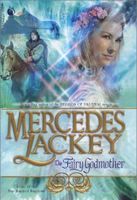
The Fairy Godmother Cover


Oh, and I shouldn't forget to mention that I thought the cover was spectacular ;-)

Read more...

What A Man's Gotta Do, by Karen Templeton

>> Monday, August 15, 2005

My first Karen Templeton was Honky-Tonk Cinderella. I absolutely hated it. But What A Man's Gotta Do sounded good, and I'm a sucker for plus-sized heroines, so, since it didn't have that royalty crap of HTC, I thought I'd give it a try.

Mala Koleski's brother might have married a real-life princess, but her own luck in the Prince charming department was zilch. Then an old high school crush by name of Eddie King returns to her hometown of Spruce Lake, Michigan, oozing even more bad-boy Southern charm than he had twenty years before. . .and even more determination not to set down roots. As their long-put-off attraction finally comes to a boil, however, Mala wonders if having a fling is enough to salvage her sagging self-confidence. . .or whether she dare put her size 18 butt on the line for the obviously hurting man. And when Eddie finds himself living in Mala's upstairs apartment, can he turn his back on on a pair of kids whose father abandoned them as Eddie's did him, not to mention their got-more-love-than-she-knows-what-to-do-with mother. . .or will he finally face his own fears in order to do WHAT A MAN'S GOTTA DO?
On the positive side, I did like WAMGD a teeny bit more than HTC. On the negative, this means that instead of a D-, it's a D+ for me. This is one of those cases in which I can sincerely say that a book I'm grading low isn't badly written or plotted. It's quite a good book, objectively. It's just that it rubbed me completely wrong.

I don't need to identify with the heroine to enjoy a book, but one like this, which is heavily fantasy and wish fulfillment, works best if you do. And I didn't. Frazzled, weary single-mom Mala wasn't someone I felt I had anything in common with. I admired her for being such a wonderful, amazing mother (except for her refusal to take any child-support money. That's a hot button issue for me, as I got the impression that she cared more for her pride than for her children's well-being in that respect), I quite liked her and I thought she truly deserved to find happiness, but I didn't feel any kinship with her.

I also never did understand what Eddie saw in her. As I said, I love reading about women who pack some extra pounds and guys who find them even more attractive for it, so the weight thing wasn't at all an issue for me (or rather, it was a positive, the way Eddie was so turned on by Mala's body). The thing was her attitude. A more UN-sexy woman I've seldom seen. The scene which clinched this for me was when she's waiting for Eddie, after they'd decided that tonight was the night, that that evening was when they'd become lovers. She's sent the kids away and got ready for her lover... in loose velour pajamas. Right.

And then there was her cutesy swearing. That was something that started out slow, so at first, it was just something that was only mildly irritating. But about half-way through the book, it felt to me as if there were particularly revolting examples of it on every page. "Criminy" "... what in the Sam Hill...", "Gee whiz", "...wait a dadburned minute!", even "tarnation"! I absolutely HATE this kind of thing. If you want to irritate me and make me want to toss your book out the window, take some notes, because this is the way to go.

And the worst thing was that Eddie was a particularly frequent offender when it came to usage of these horrific expressions. Yes, even "criminy". Which is one of the things I most disliked about this character, because these expressions, together with some other turns of phrase, made him sound like a fussy old lady. I don't need (actually, I don't want) my hero to sprinkle his speech with "fucks" to prove his machoness, but give me a break! Eddie in no way sounded like a 38 year old man! He sounded pretty much like Mala, actually.

Something else that made me grate my teeth was the non-stop shilling for Templeton's other books. Every single secondary character who appears here seems to have his or her own book (or her parents did). And Templeton makes sure we newcomers know it, as well as what that book was about. Every. Fucking. Time.

The parts in which she advertised her "royalty" books were especially annoying, because having all that stuff about princes and princesses felt really out of place in this heavily blue-collar, problems-of-real-people-who-yes,-often-shop-at-Walmart type of story. I could excuse the info-dump about Galen and her husband, but Alek and Luanne and Sophie and Stephen had absolutely no place in this book, even if Stephen was Mala's brother.

I don't know, maybe it was because I so hated HTC, so Templeton showing me how happy Alek and Luanne were did nothing to me. And also because the other book (I've no idea what its title is, the one about Stephen and Sophie) sounds so horrific. Farmer somehow gets stuck with 5 kids and gets a housekeeper to help, who turn out to be a princess hiding out from her royal responsibilities? Oh, please spare me!

There were some things I did like about WAMGD, though. The kids were actually pretty well-written and one of the things about this book that I did enjoy, surprisingly enough. They were neither monsters nor diabetes-inducing paragons, just kids who were sometimes too loveable for words and sometimes acted out enough to get on everyone's nerves. I especially enjoyed bossy Carrie.

And Eddie was a good wounded hero, quite a nice guy and, as I said, even if I didn't really understand his attraction to Mala, I did appreciate how turned on he was by very real, 37-year-old body.

Unfortunately, this wasn't enough to save this book for me, and I ended up fighting the urge to skim.

Read more...

Waking the Princess, by Susan King

>> Friday, August 12, 2005

Waking the Princess is the second in a trilogy by Susan King, an author I hadn't read before.

An antiquarian for the National Museum, Christina Blackburn has her reasons for disguising her smoldering beauty with a pair of prim spectacles and an icy facade. She posed for a painting that scandalized the Victorian art world--"The Briar Maiden of Dundrennan"--and it nearly ruined her life. Ever since, she vowed to suppress her passionate nature and keep her identity a secret.

But when the museum sends her on a trip across Scotland, Christina discovers the same notorious painting--and its dangerously handsome owner. Sir Aedan Arthur MacBride knows the local legend about the sleeping maiden, of course, but he refuses to believed in its curse over the lairds of Dundrennan. Then he gazes upon this very real maiden's face, and he knows he is utterly doomed...
I like slow-moving books, I actually prefer them to those action-filled books which run along at break-neck speed. I like books which concentrate on the character building, I tend to prefer them to those where the conflict is purely external. However, slow-moving and character-based doesn't have to be boring, and this one was. A C.

Anyone who reads this blog can probably deduce that to be able to post about as many books as I do, I need to read them pretty fast. Well, this one took me almost 2 weeks, and that was including a couple of hours of sitting down and forcing myself to push forward as fast as I could. I kept putting it down and picking up something else.

It's a shame, because it had a lot of things that could have made for a lovely book. The characters are nice and the ambience is very well done, for instance, and I always love books that incorporate early archaeology. But the tediousness pretty much ruined what could have been a lovely reading experience.

I think part of the problem was that there was no real conflict between Christina and Aedan. Sure, they were adversaries, after a fashion, in the problem about whether Aedan was going to be able to put his road through the hill Christina was evaluating for possible archaeological significance, but they both were quite reasonable about that. It wasn't as if they were enemies about it. Each trusted that the other was doing their job to the best of their abilities, and that neither was going to do anything dishonest to get their way. Whatever happened, neither was going to "triumph" over the other, the situation just wasn't like that at all.

But that's not a problem (in fact, it's quite refreshing). The thing is, without that as a source of conflict, what's left? What bothered me was that, in the end, the only reason these two weren't engaged to be married within a couple of days of meeting, was that Aedan believes his family's under a curse, so if he married for love, his wife would die. Period. That was it. It didn't do it for me.

Read more...

Under Cover, by MaryJanice Davidson

>> Thursday, August 11, 2005

MaryJanice Davidson's Under Cover is an anthology containing three stories centering around biotech firm Anodyne.

Sweet Strangers - Renee Jardin is being pursued by the biotech firm, Anodyne, that she used to work for. She is accused of espionage and is on the run. When a government agent tracks her down she enlists his help to clear her name...and more.

Lovely Lies - Peter Random (security guard from the first story) finds a sleeping girl in the backseat of his car. He learns she is a reluctant heiress who is trying to outrun her evil stepfamily. She teaches Peter the meaning of life isn't money - there's so much more!

Delightful Deception - When Anodyne is taken over by boy-genius Dr. Jimmy Skrye, Dr. Thea Foster ("IQ"=ice queen) wonders how her life will change. She can't imagine...
Chatting with a fellow romance reader the other day, she mentioned Susan Napier's books are like mind candy for her. Well, Napier's books are positively deep compared to Under Cover. What am I saying, a puddle is deep compared to it! Which, amazingly enough, doesn't mean it was bad. Shallow and underdeveloped, it was, nonetheless, lots of fun and managed to have a couple of touching scenes. A B.

I think my favourite was the third story, which paired a genius heroine with a hero who was just as smart. I loved boy-genius Jimmy, hyper, clowny Jimmy, who was sexy as hell, IMO. And I adored that Ice Queen Thea wasn't this "Boo-hoo, I believe I'm frigid and no man will ever want me" ninny. Thea was very much take-charge with her sexuality, and confident in every aspect of her life. Her attack of doubts near the end felt a bit out of character, but that was short enough that it didn't much bother me.

The first story was good, too. Renée is fun, kick-ass and resourceful, and I loved how Eric fell so completely for her almost immediately. I kept thinking this was too quick, too break-neck, but I somehow bought the romance all the same.

The middle story wasn't so good. Peter was a fun character, the tough, macho guy who adores his ugly cat, but Lori... what a wimpy idiot. None of the stories had a particularly believable plot, but this one simply made no sense at all. Why the hell did her stepfather and brother think Lori was going to hand them her money just because they said so? Either they were brain-dead or Lori had showed herself to have no spine, and neither of those options make for a good story. And even during the story, why didn't stupid Lori just go to the police? For that matter, she really couldn't have been so much of an idiot that she wouldn't tell her mother what her husband was doing!!

And of course, all the stories are written in Davidson's very distintive voice. The negative is that every character sounds more or less the same (Thea and Jimmy are the only exeptions, they sound a teeny bit different), but on the whole, this is a voice I enjoy.

A fun, breezy read, perfect for the beach! ;-)

Read more...

Gentle from the Night, by Meagan McKinney

>> Wednesday, August 10, 2005

I've been hearing about Meagan McKinney's Gentle from the Night for a long time. It's been mentioned as a homage to the old gothics, but with a much higher level of sensuality, so I thought it sounded interesting.

A young governess, Alexandra Benjamin, encounters a darkly seductive master, his simple-minded, mute brother, and a whispering ghost at ominous Cairncross Castle.

Left penniless after her father's death, Alexandra Benjamin strikes an unusual bargain with John Damien Newell, the darkly seductive master of Cairncross Castle. Hired to teach his troubled younger brother, Samuel, to speak, she soon discovers the castle harbors many terrible secrets. Secrets that lead Alexandra through a labyrinth of twisted lies and ancient mysteries, to where the answers lie waiting in the innermost chambers of the heart.
I wanted to like this book, I really did, especially because I did like certain aspects, but ultimately, I had too many problems with the hero and found the plot a bit frustrating. A C+.

At least those who recommended it got the "hot gothic" angle right. That was probably the best thing about the book. Cairncross Castle is a character in itself here, and the heavy, oppressive atmosphere is very well done, and Alexandra and Damien's courtship really is steamy.

Also good was the heroine's background. Alexandra's father was Jewish, so she finds herself in a position just outside of society. Once the story starts in earnest, at Cairncross, this fact isn't a problem anymore, other than in her mind, but it had been a real issue before that.

She's a pretty good heroine, really. She's not at all TSTL, wondering around for no good reason, and she does have the good sense of being at least a little scared of her new boss, especially once she gets to know him better.

And now we come to my main problem with GFTN: Damien. Damien reminds me of certain Anne Stuart heroes, the darkest of her darkest heroes, men who really are walking on the line between good and evil and have actually dipped their toes on the dark side of that line. That can make for a fascinating character, but it can also create a character who crosses the line for the reader, and Damien did, for me. He was one scary man, and I kept wanting Alexandra to run away, to shake her for her insistence on her responsibility to save him.

Something else I didn't care for was the whole "paranormal.... or is it?" back and forth. It became frustrating after a while, and I never did completely "get" it, the whys and hows. I kept wanting Damien and Alexandra to actually do something, but they, especially Damien, mostly reacted to what happened and didn't do much. As I said, frustrating!

Read more...

Death and the Dancing Footman, by Ngaio Marsh

>> Tuesday, August 09, 2005

After reading a good one, I bought a big pile of books by Ngaio Marsh and I've started going through them by order of publication. The latest was the intriguingly titled Death and the Dancing Footman.

The party's over when murder makes an entrance...

With the notion of bringing together the most bitter of enemies for his own amusement, a bored, mischievous millionaire throws a house party. As a brutal snowstorm strands the unhappy guests, the party receives a most unwelcome visitor: death. Now the brilliant inspector Roderick Alleyn must step in to decipher who at the party is capable of cold-blooded murder...
Fascinating! A B+, probably my favourite of Marsh's so far (not that I've read so many, but still!).

This is a different "detective" novel, in that the detective, Marsh's famous Roderick Alleyn, doesn't enter the scene until about the last third of the book. There's a lot of time spent showing the situation until the murder, and the situation right after it, before Alleyn is called in, through the snowstorm.

I went into the story knowing nothing about the plot, other than what I read on the back cover, which was a tiny blurb, not even as informative as the one I quoted above (which is from the latest reissue, I think). So basically, for a long stretch of the book, I had absolutely no idea of how things were going to play out, who was to soon-to-be corpse (or even if there was to be a corpse), and this was really a lot of fun. I must say I never suspected what ended up happening. I'd imagined plenty of different scenarios, but this one was truly surprising.

Most of the action is seen through the eyes of the person invited by Jonathan to be basically the audience of the "play" he's put together in his house party, Aubrey Mandrake. Mandrake's a particularly interesting character to me, because he's a type usually not used as the hero of the piece, but as a laughingstock. A club-footed poetic dramatist, writer of unintelligible surreal plays, né Stanley Footling of Dulwich and terribly self-conscious about it... he's, nonetheless, written very sympathetically and given a very nice romance of his own, even as Marsh gently does make fun of him at times

The rest of the characters are just as well done, something that is key for such a character-based book to succeed. The young ingénue, nowhere near as silly as I had expected, the silent young man with a mother complex, the mother who much prefers her other son, the hopeless philanderer, the mysterious Austrian beauty... all were three-dimensional characters and interesting to read.

Something especially intriguing to me was the setting, not just the physical setting, which was good enough, but the time. This book was published in 1941, set in very early 1940 and probably actually written not long after that, right at the beginning of the war. And this war going on outside this isolated house is very much present in everyone's minds, and hovers all over the action, from the characters listening to the war news on the wireless, to their having to be careful with the curtains because of the blackout, to Alleyn wondering at the futility of trying to solve one little murder when a few hundreds of miles away, thousands of people are getting slaughtered.

My only qualm about this story is the solution to the crime. I don't want to give too much away, but I thought it was pretty easy to guess (the reference to a certain Dorothy L. Sayers book was a dead giveaway. It was probably supposed to be a kind of double-bluff, but it got me thinking in a certain way and that was it for me) and, at the same time, not too probable.

Still, for its well-drawn characters and fascinating interactions, DATDF was a success. And the "Dancing Footman" scene was hilarious!

Read more...

His Secondhand Wife, by Cheryl St. John

>> Monday, August 08, 2005

After reading the AAR review of His Secondhand Wife, by Cheryl St. John, I couldn't wait to read it, enough that I had it couriered straight to Montevideo instead of having it sent with the rest of my books via M-Bag. And when it arrived, I didn't even wait for the weekend to start it, as I usually do with books I look forward to, I just tore into it immediately. It's kind of weird that I was so anxious to read it. After all, I'd never read anything by the author and Westerns aren't really my cup of tea.

Scarred in body and soul, rancher Noah didn't consider himself fit company for anyone. But when his brother's philandering finally caught up with him, honor dictated that Noah claim his brother's widow as his own....

Standing on her doorstep, with his collar turned up and a rifle by his side, Noah was about the most intimidating man Katherine had ever seen. And though one man's false promises had already dashed her dreams, she instinctively trusted this stranger. Even more, Kate suspected she'd only be a fool this time if she didn't take a chance on Noah for the sake of herself...and her unborn child!
I wasn't disappointed. What a truly lovely, lovely book! A B+.

I really liked Kate, but my enjoyment of this was all about the hero. With characters like Noah, who've gone through hell and are pretty much still living in it, an author runs the risk of having the reader pity them. St. John doesn't cross this line, and what I felt when I read about Noah wasn't at all pity. It was more a kind of feeling his pain and wanting really badly to see him happy.

Noah's issues and fears are very convincing. I've read other characters before who are oh-so-convinced that no one could ever love them, that they are repulsive, and often, they seem a bit too determined to suffer. I felt Noah's fears were justified. After seeing his father's and stepmother's reactions to him and given that he was so isolated and didn't have much contact with other people, his personality, his deep-held belief that Kate couldn't possibly want him to even come close to her, made sense.

As I said, Kate is a pretty good character. She's very refreshing in that she doesn't go through any "oh, I'd rather work myself to death at the laundry and have my child suffer through poverty rather than allow my brother-in-law to take care of me" dramas, and she's very ready to marry a kind, nice guy she likes and respects for security, even though it's not a love-match.

The scenes where Noah and Kate finally consumate their marriage are among the most affecting I've read lately. Noah's a virgin, and those scenes show his feelings wonderfully. And then, the way the further love scenes evolve track the development of their relationship very effectively.

Something else I liked was that there are no distractions from the romance here. There are no outlaws riding around, or people who want to get revenge on Noah, or anything like that. The most villainous character is probably Noah's stepmother, but she's basically just an unkind woman with an overdeveloped sense of propriety, who tries to manipulate people. She's not an over-the-top evil villain, and Noah and Kate have no qualms about putting her in her place whenever her behaviour goes beyond what's tolerable.

I thought HSW was going to end up getting an A grade all through the first half. It was just so good! The second half is not as good, however. I can't really pinpoint why, but I felt there was a bit of a letdown there. The book didn't become bad, just not as great as it was at first. Still, a very enjoyable story.

Read more...

Blog template by simplyfabulousbloggertemplates.com

Back to TOP