Further Under the Duvet, by Marian Keyes

>> Tuesday, September 12, 2006

I loved the Marian Keyes books that I've read, most especially the wonderful Lucy Sullivan is Getting Married, so I don't know why I haven't read more.

Further Under the Duvet (excerpt), which was published in the US as Cracks In My Foundation, is a collection of essays, magazine articles, short stories and various other pieces. It's a sequel to Under the Duvet, an earlier collection which I'm now going to be looking for.


Go further under the covers and stay in bed a little longer with Marian Keyes in this winning follow-up to her smash essay collection, Under the Duvet. Written in the witty, forthright style that has earned her legions of devoted readers, Cracks in My Foundation offers an even deeper and more candid look into this beloved author's mind and heart, exploring such universal themes as friends and family, home, glamour and beauty, children, travel, and more. Marian's hilarious and thoughtful take on life makes her readers feel they are reading a friend, not just an author.

Marian continues to entertain with her reports from the trenches, and throws in some original short fiction as well. Whether it's visiting Siberia, breaking it off with an old hairdresser, shopping (of course!), turning forty, living with her beloved husband, Himself (a man beyond description), or musing on the F word (feminism), Marian shares the joys, passions, and sorrows of her world and helps us feel good about our own. So grab a latte and a pillow and get ready to laugh your slippers off!
Funny and charming and sometimes also serious and wrenching. I enjoyed most stories to varying degrees. A B.

FUTD was divided into 7 sections.

The first, Handbags and Gladrags, I didn't enjoy all that much. I mean, I love Keyes voice, and there were quite a few funny moments, but I'm really not that interested in handbags and shoes and spas and make-up (I like all that, don't get me wrong, it's just that they're not my reason to live, or anything!) And really, a couple of those articles amounted to nothing more than nicely written brochures for products like spas or shops. Oh, but I did have a good time reading the first one, in which Keyes tells of The Nicest Thing That Ever Happened To Me, even if it's about how she became a beauty columnist for a few months and how she loved getting all that free make-up.

Part 2 was On The Road, and that one, as the title indicates, is all about travelling and visits to foreign countries. This section was just hilarious. I especially loved Being Sent to Siberia. Keyes has a way of poking fun at funny foreign stuff without coming off as an arrogant bitch.

Then came the Health and Beauty section, and here we're back to similar themes as in section 1. I did like this one better, though, because it was more about funny experiences than about how absolutely fah-bulous that spa she went to was. Best story of the bunch: Hair-brained, about the traumas of breaking up with your hairdresser.

In part 4, Woman to Woman, the tone gets a bit more serious, and I loved it. All three of the pieces here were great. I loved the two which were about feminism and how some men can't cope with their wives making more money than they do, and the one about her wedding was sweet.

Next comes the fifth part, Friends and Family, and the book keeps getting better and better. Funny, funny, funny, and Keyes' love for her family just shines through. A highlight: Big Air, the description of a visit to the final of the first Irish air-guitar-playing championship. Oh, man!

The sixth section is But Seriously, and guess what? It's about more serious themes, like about Keyes' alcoholism and how she recovered, or about her visit to a Russian orphanage, invited by the Irish charity which runs it (the profits from the HC edition of this book are going to that particular charity), or about yet another visit with another charity, this time to Ethiopia. It's great, because Keyes has a light touch, so even when she's talking about heavy stuff, it doesn't feel heavy. And she's great at making you laugh at the most inappropriate things and not feel like you're making light of them. It reminded me of Helen Fielding's Cause Celeb in that way.

Finally, part 7 is Short stories, which is, er, well, short stories. My favourite was The Truth is Out There, about a British girl named Ros and a handsome amber-yellow, 3-feet-tall alien named Bib, and I also liked Under, about a woman in a coma. However, this section also contained my least favourite pieces, which were the Mammy Walsh agony columns that were sprinkled thorughout it. I admit the character is very well done, but I developed such an intense, visceral hatred for the disgusting, judgmental old bitch that I couldn't enjoy myself.

A fun collection, perfect for reading when you know you won't be able to sit down for hours, but just need to read something!

Read more...

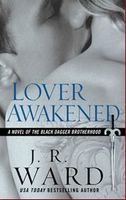
Lover Awakened, by J.R. Ward

>> Monday, September 11, 2006

book coverAll you blog readers are probably tired by now of reading review after review of Lover Awakened (excerpt), by J.R. Ward, but what can I do, here's another one. I've done my best not to read any other reviews or discussions about it (Arielle, you're going to pay for emailing me those. You can't imagine how much self-control it took to stop myself from reading them!), so I hope I'm at least not repeating what's been said a hundred times already. As soon as I post this, I'm going to go cruise for reviews. Fortunately Sybil's been kind enough to keep a list!

Oh, before I start, a warning for those two or three people who haven't yet started this series: in itself, the main storyline of LA is a spoiler for the most important secondary storyline from Lover Eternal, so you should stop reading right now. Go read reviews of Dark Lover (here's mine), if you want to know if these books are for you.


In the shadows of the night in Caldwell, New York, there’s a deadly war raging between vampires and their slayers. And there exists a secret band of brothers like no other - six vampire warriors, defenders of their race. Of these, Zsadist is the most terrifying member of the Black Dagger Brotherhood.

A former blood slave, the vampire Zsadist still bears the scars from a past filled with suffering and humiliation. Renowned for his unquenchable fury and sinister deeds, he is a savage feared by humans and vampires alike. Anger is his only companion, and terror is his only passion—until he rescues a beautiful aristocrat from the evil Lessening Society.

Bella is instantly entranced by the seething power Zsadist possesses. But even as their desire for one another begins to overtake them both, Zsadist’s thirst for vengeance against Bella’s tormentors drives him to the brink of madness. Now, Bella must help her lover overcome the wounds of his tortured past, and find a future with her…
Well, I'm pleased to say this is one series that is still going as strong as ever. As the other books, it's got such an energy that it completely obscures all those little things that can irritate a lot, like the cheesiness, the overdone slang (that's better in LA, but there's still a couple of "you feel me?" too many) and the way you can sometimes see the author's hand very clearly. I say this so you understand why, while I'm rating this one an A-, there's going to be much more criticism than there is in most A- reviews.

We saw the beginning of the plot of LA in LE. We saw those initial meetings between beautiful aristocrat vampire Bella and scary warrior Zsadist. We saw the way Bella's fascination with him became stronger than whatever fear he inspired, and we saw him fight against the sexual pull and almost lose. And we also saw how Bella was kidnapped by a very different lesser, one who was fighting tooth and nail to keep some human individuality and not become just one more pale, baby-powder-smelling assassin. And when I say he wanted to keep some human individuality, I don't mean that he wanted to remain kind and nice, because his humanity before he turned lesser didn't run to kind and nice.

So as the book starts, Bella is still captive in the lessers' "Persuasion centre", having spent weeks either in a hole in the ground or even worse, having to tolerate being with David (aka Mr. O), who's convinced himself she's his wife and he loves her. A good touch is that David's obsession with her does give Bella some power to hurt him, and she often does, as a way to get back at him for keeping her prisoner. Of course, being a romance heroine she feels guilty about it, but I liked that she was human enough to have that impulse to hurt the person who's hurting her.

Anyway, after six weeks of no news from Bella, everyone outside thinks she'd dead. Her family has even held a funeral for her. But Zsadist is still looking for her. He doesn't know why, because of course, it's not as if he feels anything for her, and he rationally knows that she's probably dead, but he keeps going out every single night to look for lessers, and the first thing that comes out of his mouth when he interrogates them is always "Where is she?", no matter how much he thinks he's not going to ask anymore.

And then Bella is rescued, and the best part of the book starts, as she recovers from the ordeal at the Brothers' house.

No matter how much everyone protests, Bella holes herself in in Zsadist's room and insists on being with him. And yeah, Z is among those who protest, at least after the first night. The one who protests the louder, actually. But Bella persists, and the relationship between these two starts to develop, and that was a beautiful thing.

Z is probably the most tortured character I've read, and that includes some of Sherrilyn Kenyon's. He was kidnapped when he was only months old, and before he was rescued by his twin, Phury, he spent the next hundred years being tortured, both physically and mentally, including sexually, and the flashbacks we see are very telling. The end result is that Zsadist is truly fucked up.

I think the only reason I'm able to actually believe in a happy ending for him is that this being a vampire book kind of gives me leave to believe that his psyche will recover much faster than a human's would. From the guy we see at the beginning of the book (remember him? The guy who couldn't bear to be touched? The guy who was completely convinced that he was contaminated, so much that he absolutely hated his dick and couldn't even think of it as anything other than "it", or "that bastard"? Whose only response to anything was fear and anger?), to the pretty much normal guy (for a vampire) we see there at the end, in a couple of months and just through the power of Bella's Magic Vagina? In this particular universe, I bought it, but I don't think I would have in a regular contemporary.

Anyway, the love scenes are incredible. It's been a while since I've read scenes that are so erotic and emotionally charged. Little bit by little bit, through Bella's insistence, Z discovers that his body, which had previously only given him only pain and humiliation, can also give him pleasure, and seeing his discovery and his awakening is lovely. There's one scene in particular that I adored, which is the one in which Z gets his first kiss (yep, in many aspects, Z is actually pretty much a virgin). That scene was incredibly sweet and touching.

I also loved the way Z is so out of his depth with Bella. Even when he wants to do things right, he has no idea of how to go about it. He's all "What do I do?", but he keeps trying. I loved seeing the scary, powerful warrior so nervous and uncertain, especially when Bella's needing period came.

I liked Bella and her determination that she wants Z, no matter how much he tries to push her away for her own good. It's an interesting dynamic, because, at least at the beginning, Bella's the more dominant one in bed, the one who knows what she's doing and what she wants. Still, as much as I liked this aspect of her, there's still the fact that like the rest of the women in this series, Bella doesn't really do anything, and that's getting a bit old. I hope Ward will find a way to change this in the next books in the series. I'm not asking for a heroine who will go out hunting lessers (though a female warrior would be cool!), but at least someone who actually does something other than wait for her man at home, please!

The ending of Bella and Z's story was a bit of a change in tone, but after all these two had gone through, I wasn't really bothered by how sweet and schmaltzy it was. I was much too happy for them for that. And well, I liked Z's determination that he was going to fix himself before he went after Bella. Sweetie!

While the focus is on Z and Bella, the novel isn't just about them, but about the world they live in and the people in it. Z and Bella's story isn't shortchanged at all, but we get quite a bit about Phury (oh, I practically cried for him, poor thing! I can't wait for his book), Butch and Marissa, Bella's brother, Rehvenge, Vishous, Tohr and Wellsie and John. The interactions among the Brothers are as fascinating as ever, and so are the other subplots. The only one I thought was a bit lacking was Rehvenge's story. I don't think I'm too sure of what his issue is about (am I leaving this vague enough?)

Of course, Wrath and Beth and Rhage and Mary are very much there, too, but I think Ward was very smart in not really giving them that much space. There's nothing more boring than couples from previous books showing up solely to show off how happy they are, after all. Much more interesting to get those subplots about all those other people whose lives are all very much unsettled.

While a couple of strings are left loose at the end of the book (for instance, what's going to be the meaning of that new development about Butch, which happens late in the book? I guess we'll find out in the next book. Same thing for the real truth about John's parentage. I mean, it's pretty obvious (says I, and I'm probably going to end up being mistaken), but we don't really get confirmation), it's not something as huge as what was left loose in Lover Eternal... the whole conclusion of Bella's kidnapping! Hmm, actually, I liked that we get a better closure here, but I don't know if it was the best choice for Ward. After all, the manipulation in LE really worked for me, even as I complained that I was feeling manipulated. I was just desperate to read this one! Now, next book I'll be buying immediately, don't get me wrong, but the wait will be easier.

BTW, the names are still silly. And even sillier and even more juvenile are all those terms like "sehcluded" and "ghardian" and that kind of thing. As much as I call them silly, I've kind of got used to the guys' names, but whenever one of those new words appeared, I winced. Oh, and the way they spoke in the 19th century flashbacks! My god, that was horrible! The flashbacks themselves were very well done, but the language? Sucked.

Lover Revealed coming in 6 months. I'm not too crazy about Butch and Marissa (man, she's been sooooo boring so far!), but what the hell, I'm going to be ordering it the minute it comes out, anyway!

Read more...

Doctors on the Frontline, by Olivia Gates

>> Friday, September 08, 2006

Reading Doctors on the Frontline, by Olivia Gates, was a very international experience. We've got a book set in the Balkans, with a British heroine and an Italian hero (and the secondary characters include Portuguese, Azerbaijanis, Americans and a few more). Furthermore, the book was printed in Spain, bought in Malta, and then sent to this Uruguayan reader. How about that?

BTW, I've got the book with the cover you see here, but this one was also published in the US as a Harlequin Presents title, and the American cover is quite different. Definitely not as medical looking as the original one!


The moment Sherazad Dawson laid eyes on Lorenzo Banducci——she shot him!

Sherazad has chosen to plunge into the chaos of the Balkans frontline to seek a balancing perspective of her own chaotic life.

While Lorenzo has forsaken a brilliant surgical career to help the forgotten and the forsaken all over the world. He's also forsaken any expectation of a normal life and emotional involvement in his perilous lifestyle, living only for the day. But Sherazad blasts her way into his life and nothing is the same any more. Soon working side by side has their initial overwhelming attraction flaring into a raging affair.

But will she get over her scars and fear of commitment? And even if she does, can he place his emotions for her above his vocation?
Well, this was certainly different. The romance was a bit Harlequin Presents-ish, but this isn't necessarily bad (see my comments about Nalini Singh's Awaken to Pleasure, for instance), and here it wasn't, either. But this romance develops before a truly fascinating backdrop, that is the hero and heroine's job as, as the title explains, doctors on the frontline. A B.

When British doctor Sherezad Dawson's life went to hell back home, she decided to volunteer with Global Aid Organization and she's been sent to the frontlines in the Balkans. She knows it's going to be harrowing work, but she really wasn't expecting such horrors. And she wasn't expecting to meet her new boss when he rescued her convoy from attack, either.

Italian Dr. Lorenzo Banducci is a man dedicated to his work. He's been in the frontlines for years now, and everyone knows he'll stay there forever, and that he's practically married to his job. But he finds himself more and more drawn to the new addition to his team, and as the days go by and the moment when Sherezad will have to leave comes closer, they'll have to decide what will happen.

This is an extremely short book that feels much longer than it is. I was very impressed by how Gates managed to tell her story in under 200 pages, because it was a story complete with good development of a romance from scratch (I mean, this is not a couple who are already involved as the book starts, and we explore only a certain aspect of their relationship. Sherezad and Lorenzo haven't met as the book starts), plus an excellent look at what the work of doctors like Lorenzo and his team might be like. And Gates did it without her story feeling crammed or without it feeling as if anything was underdeveloped.

Well, one might say we didn't get enough background on the hero and heroine's past, but I'd argue that while we didn't go into any deep analysis there, what Gates did tell us was enough to give us a good clue of where these two characters were coming from. For instance, we understand perfectly well what caused Sherezad's fear of relationshps, and why Lorenzo is so dedicated, even if we're not really hit over the head with constant repetitions of their past. I'd rather call this being subtle when it comes to characterization ;-)

The only place where I thought we should have had a bit more insight into the characters' motivations was near the end, in Lorenzo's case. There comes a point after which we just aren't privy to what he's thinking, so we're just as much in the dark as Sherezad about what he intends to do. Well, ok, I guess this is a perfectly valid way to write it, but I would have liked to know much more about what was going through his mind when he made several huge decisions about the direction his life was going to be taking.

I very much enjoyed the glimpse we got of their jobs. This is a book in which the external conflict isn't really one constant thing, like a villain who's after our hero and heroine. Well, actually, it is one main thing, but it's the war itself, impersonal, but just as dangerous and tragic as if it were after our hero and heroine in particular.

There was a definite ER feel to some of the medical scenes, in that I hadn't the slightest idea of what these people were talking about, but I did get the message that such and such technical term means the patient is in great danger, and that the tension is going up. From her bio in front of the book, Gates is a doctor, and she puts her medical experience to good use here.

On the romance front, I quite liked the relationship between Lorenzo and Sherezad. The "regular" part was just ok, but I loved how their relationship developed on the job, how Gates showed that they respected each other's skills and judgement and I thought this spilled out onto their personal, romantic relationship.

I've just seen in Gates' website that she's got another Mills & Boon book, called Emergency Marriage, that's set in Argentina. That's probably as close as I'll come to having a book set near my home, so I'm going to give it a try, even though it sounds terribly HP-ish and every single category book I've read set in South America has been awful.

Read more...

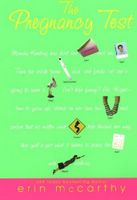
The Pregnancy Test, by Erin McCarthy

>> Thursday, September 07, 2006

I've been hearing some good things about author Erin McCarthy, so I thought I'd give her a try. So when someone offered me to trade for The Pregnancy Test, I accepted, even though it didn't really sound like my kind of book at all!


Ordinarily, I'm a fan of pink-lovely color, does smashing things for the complexion. But not when it's the bright, glaring stripe staring back at me on the pregnancy test. Then, pink is the color of major oops, of morning sickness, of boyfriends who seemed decent but now are part of some Jerk Witness Protection Program.

Still, I've got a few things going for me-bitter humor, a divine right to eat till I'm the size of Marlon Brando, and good friends who've managed to get me a job interview with one Damien Sharpton: in need of a personal assistant, and some say, a good, swift kick in the arse. If you want to make a lasting impression, by all means, toss your cookies in your future boss's wastebasket, which is located directly between his excruciatingly sexy legs.

Apparently, Mr. Gorgeous-But-Unbearably-Anti-Social must like personal assistants who violate their trashcans, because I got the job. And if I can avoid him via text messaging for the next nine months of free health insurance, everything will be just fine. Except that he's just asked-no, insisted-that I go with him on a business trip to the Caribbean. Gulp. Ordinarily, this would be cause for celebration. Ordinarily, I'd shave my legs, pack my bikini, revel in day-glo drinks and my seething lust for Mr. Swarthy-And-Secretive. But there's nothing ordinary about this situation…which means it could be absolutely extraordinary…
This might be a good book for when life is complicated and you feel like reading something that will distract you, but doesn't have a whole lot of conflict in it. In fact, I'd say The Pregnancy Test is pretty much conflict-free. Still, it was a nice, sweet story. I'd give it a B-, but with some reservations. I'm aware of the fact that I've recently rated as C+ some books that one could objectively say are better than this one (I'm thinking the Goodman, for one). But well, whereas in those books quite a few parts bored me and made me want to skim (or at least, put the book aside for a while), here I read every word, and practically in one sitting.

Mandy Keeling is pregnant and her boyfriend did a runner (oh, I can't deal with this, I don't want another kid, etc., etc.) when he found out. Mandy decides having a child on the way means she needs to be responsible, and for her, being responsible means that she needs to give up her struggling toy store and find a 9-to-5 job (easier to get child care) with health insurance.

Of course, Mandy's situation isn't really too desperate. Her parents have got serious money and it's always very clear that they'd be perfectly ready to help her out. And it's not even one of those romance-novel situation in which the grandparents would help out, yes, but would pretty much ask for the kid's soul in return. In this case it's simply that Mandy would feel better about herself if she handled things on her own. It's a perfectly sensible thing, and I very much respect Mandy for wanting to be self-sufficient, but this is something that kind of sets the tone for the whole book. Remember I said it was pretty conflict-free? Well, that's because you never get the feeling that the stakes are that high. What happens if Mandy does not get this job? Do she and her kid starve? Nope, she's got enough of a safety net that it won't be that big a deal. What happens if people find out she's pregnant? Well, nothing, really. Maybe she'll get some embarrassing comments, but nothing truly bad. It's all like this.

Anyway, back to the story. One of Mandy's roommates works at a computer company, and she gets her an interview for an assistant position with an executive in her company, Damien "Demon" Sharpton. Damien has a reputation for being a very cold fish and an extremely demanding boss, and scores of secretaries have already left in tears.

Mandy's interview is a nightmare. She and Damien unknowingly share an elevator up to the office, and she not only tells him she's a bit worried about her interview because her potential boss has a reputation for being a bastard (paraphrasing here), she also gets a bout of morning sickness and throws up on his shoes. Actually, the book gets points because McCarthy doesn't play the situation in a way that the humour depends on the heroine being humiliated. It's an embarrassing situation, but Mandy comes out ahead, and when Damien actually interviews her, she handles herself just fine and is hired.

And so Mandy starts to work with Damien, and becomes the best assistant he's ever had. Only one problem, he never gets to see her. She handles everything he throws at her like a champ, but only through email and IM. Damien doesn't know why she might be hiding from him (we know that she's trying to hide that she's pregnant, but obviously, he doesn't), but he's getting more and more obsessed with her. So he decides to order her to go to the Caribbean with him. He's got the trip supposedly as a vacation, as a prize for his work productivity, but he tells her that he doesn't do vacations and that he needs her there because he intends to work.

And so off they go to Punta Cana, where they end up giving in to temptation and starting an affair that is supposed to finish the minute they get back to New York. But, of course (this is a romance novel after all), when the time comes, it's not easy for either of them to let go.

When I started the book, I was most doubtful about the pregnancy angle, because the description I read made it sound as if a huge part of the plot was going to be about how Mandy hid it from Damien. But it turns out I actually quite liked how McCarthy handled it. I can't fault Mandy for prefering not to be upfront about it (it might be illegal to discriminate on that basis, but we all know it happens, and much too often), and I thought the truth came out in the exact right point in which the secrecy would have stopped being justified.

The focus of the book ended up being squarely on the relationship. Of course, the fact that Mandy is pregnant is a big issue there, but things like Damien's issues with relationships end up being much more important in what little conflict there is between them. As I said, it's not really much of a conflict, and I thought McCarthy didn't make as good a use as she could have of Damien's background and past, but I liked what there was of it.

The characters are nice enough, if not particularly deep. Mandy wasn't nearly as silly as I feared she might be, and Damien was a nice guy. I liked that his extremely difficult past hadn't made him into a mysoginist bastard. Cold, yes, but he was never cruel or mean. And I liked seeing how he came alive again thanks to Mandy. Oh, and I liked his complete and utter fascination with her pregnancy. As to this, I recognize that having the hero being so into the pregnant heroine, even when the child isn't his, is a powerful fantasy. As someone who doesn't have kids and is not planning to have any, it's maybe a little less powerful for me, but I appreciated this aspect of Demon all the same.

All in all, TPT is a pretty light and insubstantial story, but one that's quite nice, with a sweet, funny romance and sympathetic characters. I don't think I'd pay TPB price for it (I got it used, in a trade, remember), but it's not a bad way to spend a couple of hours.

Read more...

Goddess of the Sea, by P.C. Cast

>> Wednesday, September 06, 2006

After the lovely Goddess of the Spring, I couldn't wait to read more of P.C. Cast's Fantasy Romance blends. The next one I grabbed from my TBR was Goddess of the Sea, an earlier book.

And yep, yet another very nice cover for this author! (though mine looked a bit brighter than this particular scanned image I found online. Not as bright as the first one I found that I put on my sidebar, but not as muddy as this one)


On the night of her twenty-fifth birthday, alone in her apartment, Air Force Sergeant Christine Canady wished for one thing: a little magic in her life. After drinking way too much champagne, she performed, of all crazy things, a goddess-summoning ritual, hoping that it would somehow make her life a little less ordinary...but she never believed the spell would actually work!

When her military plane crashes into the ocean, CC's mission overseas takes an unexpected turn. She awakens to find herself in a legendary time and place where magic rules the land--occupying the body of the mythic mermaid Undine. But there is danger in the waters and the goddess Gaea turns this modern, military gal into a beautiful damsel so that she can seek shelter on land. CC is soon rescured (literally) by a knight in shining armor. She should be falling in love with this dream come true, but instead she aches for the sea and Dylan, the sexy merman who has stolen her heart.
The good things about Goddes of the Spring were also present in Goddess of the Sea... a fascinating, fresh setting and a very strong heroine. However, Dylan here wasn't quite as interesting as Hades, so this one's getting a slighly lower grade: a B-.

Sargeant Christine Canady (known by everyone as C.C.) is turning 25 only a few days before she's deployed for 3 months in Saudi Arabia. After celebrating her birthday by watching one of her favourite movies, eating an entire bucket from KFC and drinking two bottles of champagne, she gets a bit carried away by the atmosphere and, in a scene very reminiscent of the one in Goddess of the Spring, half-seriously follows the instructions in a book to make an offering to the goddess Gaea (the goddess of the Earth), asking for some magic in her life.

Like in the other book, what starts out as a lark ends up with C.C. really feeling what she's doing, and over the next few days, we readers are privy to some very interesting events which make it clear that C.C. has acquired a degree of protection from the goddess. Nothing big enough that makes C.C. convinced that something strange has happened, though. Not until, that is, her plane crashes into the ocean and right before C.C. drowns, she's approached by a beautiful mermaid who, asking her "Do you desire to continue to live, no matter the cost?" switches their bodies.

C.C. soon understands why the mermaid was so anxious to switch bodies, when the first person.. sorry, mer-person she meets is her very creepy half-brother Sarpedon, who immediately proceeds to try to rape her. Sarpedon and Undine (the mermaid in whose body C.C. finds herself) share a father, Lir, some of whose other names are better known: Neptune, Poseidon, etc. However, that's no obstacle for Sarpedon wanting to mate with Undine, and for Lir to accede to it, never knowing that Undine fears and is repulsed by him.

C.C./Undine manages to escape Sarpedon on their first encounter, but she's very scared, and obviously wants to go back from being human. Fortunately, chance takes her to a cove that is the domain of Gaea, Undine's mother, who hearing her story, decides to help her. Gaea can protect her only on land, and can't definitely change her back to human, but she can give her a human body for a while, as long as she returns to the sea every third night. However, she will be allowed to keep her human form forever if she finds true love.

And so, C.C. pretends to be the amnesiac Princess Undine, washed up to shore after a shipwreck, and is rescued by knight in shining armor Sir Andras. Did I forget to mention that in this world, it's the Middle Ages on shore? And that the area where C.C. is now is right off the coast of Wales, even though her plane crashed in the Mediterranean, en route from Italy to Saudi Arabia? No, it didn't make much sense to me, either, but it was something I was able to let go and not worry about much.

Anyway, Sir Andras takes the Princess to a nearby monastery ruled by Brother William, an intolerant zealot who despises women, especially beautiful women. And while Sir Andras at first seems wonderful (total knight in shining armor, duh), it soon becomes obvious that he's very much a man of his times, his attitudes towards women included. Not like the very interesting merman C.C. had met right before being washed ashore, and who she meets on those nights she must return to sea. But what happens if the true love C.C. finds is with a merman, not with a human?

I thought Goddess of the Sea worked best as a story about female friendship and power. I loved C.C.'s enthusiasm and growth. She's a very different character from Lina, from Goddess of the Spring. Lina was very much a mature woman, and this was part of her strength. C.C., on the other hand, is much younger and it shows, though not in a way that I found annoying. I really ended up appreciating her sense of humour and adaptability and the way she faced her problems head-on.

I also enjoyed the development of her relationship with the other women in the monastery. These women work in the kitchens and were hired only because they are ugly, so at first, they don't like the stunningly beautiful Undine very much. But gradually they start to appreciate her, and I loved those scenes in which they join together to help her.

Another character I found very enjoyable was Gaea. I loved her relationship with C.C..From the beginning, she knows there's now a different soul inside Undine's body, but their relationship still is that of a loving mother and her child: warm, supportive and tender.

The setting is something else worked wonderfully. It wasn't as great as Hades, in Goddess of the Spring, but I still enjoyed the descriptions of the underwater world and the monastery. Cast's descriptions can sometimes feel a bit too lavish, but they create some very vivid and beautiful pictures.

The romance was probably the book's weakest element. It's nice enough; I liked that merman Dylan immediately knows there's another soul inside his childhood friend Undine, and it's very clear that it's the woman inside the body that he's attracted to, not the body itself. I also liked that Dylan is a sweetie. But... he's also very bland. I love beta, kind, sweet heroes, so it's not a matter of his not being an alpha. The problem is that he's just not an interesting person, maybe because he's so very shallowly drawn that we don't get a good sense of who he is.

This means that when C.C. is so excited because she's fallen in love with him, I didn't see it. Who is she falling in love with? I had no idea, and I was pretty sure that neither did she. I simply didn't buy the whole drama.

To close, a quick word about the ending. I liked it, but other readers should be warned that there are shades of Jude Deveraux's A Knight in Shining Armor there. I repeat, I liked it and I thought it worked wonderfully, but then, I actually liked the ending of AKISA, so be warned!

Read more...

The Assignment, by Evangeline Anderson

>> Tuesday, September 05, 2006

Ahh, this is what I love about ebooks and about having an ebook reader! I read Bam's review of The Assignment (excerpt), by Evangeline Anderson, thought it sounded interesting, hopped over to Loose-Id, bought it, zapped it to the ebookwise and immediately read it. No waiting 6 months for it to get here, or anything like that. Delayed gratification has its points (not least that by the time I get books, I've forgotten anything the review said, so I go into them basically blind), but there's something to be said about not having to wait at all!


Detective Nicholas Valenti, tall, dark and stoic, has been best friends with his partner, Sean O'Brian for six years. The two men have seen each other through divorce, disaster and danger and saved each other's asses more times than Valenti can count. When he started seeing his blond, intense partner in another light, Valenti isn't really sure. He only knows that he wants O'Brian in a way that had nothing to do with friendship and everything to do with possession. It is a desire he will have to hide forever because O'Brian is undeniably straight.

As Valenti is struggling with his new, unacceptable feelings for his partner their police Captain puts them on a new case that could blow Valenti's cover once and for all. He and O'Brian are going undercover at the country's largest and most infamous gay resort to bust a notorious drug lord and stop the shipments of poison cocaine that are flooding the gay bars all over the city.

Now Valenti will have to make a choice between friendship and desire. He and O'Brian will play the roles of gay men that will push the limits of their relationship to the breaking point. Will their time at the RamJack forge a new bond between them or destroy their partnership forever?
So, so good! My thanks to Bam for drawing my attention to this one, it's fantastic. I'm going with a B+, but I was thisclose to giving it an A- (you'll probably understand why I went with the lower grade later).

The Assignment, in case you haven't looked closely at the cover, is male/male romance. It's the early 80s, and Detectives Nicholas Valenti and Sean O'Brian have been professional partners for years. They're great friends and totally comfortable with each other. Or at least, they were, because Valenti has a secret now. After O'Brian was stabbed and almost died, this previously totally hetero guy realized he's actually crazy in love with his partner. Too bad O'Brian is totally hetero, just as Valenti was (clue right here!) and will never, ever feel that way about him!

Anyway, since these two have always publicly shown such ease around each other, even being quite demonstrative in their hugging and touching, when a certain undercover operation comes up, their boss immediately offers it to them. The operation in question is going undercover as lovers at this really hedonistic and outrageous gay sex resort, which the police suspect is a front for drug dealing.

It's a dangerous mission, and one that requires the undercover cops in question to be very convincing. Guys uncomfortable with each other just won't do (in fact, one such pair of rival gangsters has already extremely painfully failed to do so), so the Captain knows that Valenti and O'Brian are his only choice.

When he hears about the mission, and about the fact that it might be required that they do whatever is necessary to make their roles convincing, Valenti objects. There's nothing he wants more than to get physical with O'Brian, but he doesn't know how he'll be able to handle it, knowing that O'Brian will never, ever feel that way about him. Plus, O'Brian will surely protest, right? So he'd better protest, too.

But not only doesn't O'Brian protest, he's in fact extremely enthusiastic about the mission. He's enthusiastic when they practise being gay (and you can figure out what that practise entails), and he's even more enthusiastic when they go into the RamJack and actually have to do that "whatever's necessary" to be convincing. Which is even more torturing for Valenti, because he just knows O'Brian will never, ever feel that way about him.

Was that "will never, ever feel that way about him" one too many? Hey, I'm just trying to give you the book's flavour here! O'Brien would do everything he could humanly do to get the message across to Valenti that he might not be as hetero as previously thought, but Valenti was too caught up in his pity party to notice.

Don't get me wrong, I absolutely loved it. Even as I kept thinking "for heaven's sake, Valenti, get a clue!", I was eating it up. I loved, loved, loved Valenti's angst, I loved O'Brian's slutty drama queen impersonation, I loved the totally cheesy, "let's-see-in-how-many-crazy-suggestive-situations-these-two-can-get-stuck" plot (and the cheesy suggestive situations were plentiful and frequent), and I especially loved the way this all developed into the beginning of a sweet, lovely relationship.

Oh, and I loved the incredibly hot sex. I should mention this one definitely qualifies as erotica, or maybe romantica? The reason I find it necessary to spell this out, BTW, is that I sometimes see gay romance automatically classified as erotica, just because of the gay element, whatever the heat level or the focus of the story actually is. This pisses me off, because it's as if they're considering homosexuality as some kind of kink, and so it's therefore automatically deemed necessary to slap a kind of warning on it. I'm not making much sense, am I?

Let me try again. I read erotica and romance for different reasons. Romance I read for the emotional payoff, erotica for the turn-on (even though good erotica often provides an emotional pay-off, too). What I find offensive about the automatic labelling of gay romance as erotica is that it's as if it implies that a reader couldn't possibly be getting the warm fuzzies associated to traditional romance from gay romance. And that's just bullshit.

So where was I going with this before it turned into a rant? Oh, right. I was mentioning that this particular gay romance is romantica / erotica. Not for the simple reason that the relationship is between two men, but because while I did get my emotional pay-off from it (and boy, did I get it!), Valenti and O'Brian's relationship here is basically developed through their sexual encounters and explorations. And it works. Each scene brought the story and their relationship forward, and none felt at all gratuitous.

I highly recommend this one, and I'm going to take a good look at Anderson's backlist. There seems to be a lot of BDSM books there, which are just not my thing, but I did find a couple of promising ones!

Read more...

French Quarter, by Lacey Alexander

>> Monday, September 04, 2006


French Quarter (excerpt) is my first book by author Lacey Alexander. It was published by Ellora's Cave, and it's the first in the Hot in the City trilogy.


When Liz Marsh hires P.I. Jack Wade to find out if her fiancé is cheating on her, she has no idea she's about to embark upon a sexual odyssey through New Orleans' steamy French Quarter. Raised to be a prim, conservative woman, it takes Jack's sizzling sexuality to make Liz shed her old self and release the secret woman inside her, a woman who seeks every sensual adventure she can find. With Jack on her arm and the decadence of Bourbon Street beckoning, Liz's sexual daring knows no bounds.
I've been going through a streak of not-so-good books lately, and I'm afraid French Quarter was one of them. Like with One Forbidden Evening, I wish I'd liked this one better, because it had certain things I appreciated very much, but ultimately, it bored me, so I'm going to have to go with a C+.

The book starts with what I thought was a silly twit alert. Liz Marsh's fiancé has been acting weird lately, coming home very late from work, and so on, and Liz suspects he might be cheating on her. Before she confronts him, Liz wants to confirm her suspicions, so she decides to hire a PI to follow him around. Through a friend's recommendation, Liz decides to hire Jack Wade. So far so good.

And here came what made me groan: she gets it into her head that she cannot bear to let this PI (who she hasn't even met, remember, and who she suspects will probably be a paunchy, burnt-out old guy) think that she's a loser because she suspects her fiancé could be cheating on her. Therefore, she will dress up sexy (see-through blouse, that kind of thing) so that the guy will think her fiancé is crazy for cheating on such a bombshell of a woman.

Fortunately, the book doesn't continue in the same idiotic vein. Jack, the PI in question, who happens to be young and hot, is so impressed by this sexy lady that he takes the case, even though he's stopped doing adultery cases years ago. He follows the fiancé, sees that he's spending his evenings in a strip club, even going into the private rooms with some of the women, and takes some photos. But since the photos come out a bit too dark and don't convince Liz 100% that the man with the bare-breasted woman in his lap is actually her fiancé, she insists in going to the strip club and seeing for herself.

And here starts Liz's change from shy and proper "good girl" to adventurous sex kitten. She and Jack embark on a journey of sexual exploration, which includes from girl-girl action in the strip-club to a threesome with Jack's best friend, in which Liz is an enthusiastic participant and Jack an extremely supportive and appreciative companion.

I liked that unlike in some other erotica I've read that centers on the heroine stepping out of her comfort zone, I never got the feeling that the hero was somehow pressuring the heroine to do things she didn't feel comfortable with. Not at all: in this case, Liz was the one who took the lead, with Jack enjoying everything very much, yes, but mostly concerned about what Liz would like.

So why a C+? Well, it's simple. I loved the idea of the heroine exploring her sexuality, but the actual explorations involved didn't work for me at all. Unlike the similar scenes in Emma Holly's All U Can Eat, I didn't find these scenes particularly erotic or engaging. In fact, except for some very specific scenes (LOL, no, I'm not going to share exactly which!), I ended up pretty bored by most of them. Many, especially those between Jack and Liz, which should have been developing their relationship, I felt very tempted to skim.

As this might indicate, the romance didn't work for me very well. At the end of the book, I didn't buy that Jack and Liz were in love. In lust, sure, but not in love. And the suspense element with Liz's fiancé who refused to let her go was very weak and didn't add much to the story.

Eh, well, at least it was a quick read!

Read more...

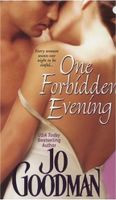
One Forbidden Evening, by Jo Goodman

>> Thursday, August 31, 2006

I've been meaning to try Jo Goodman for a while, because I've heard such good things about her books. I actually started reading one of them, the first in the Compass Club quartet, but for some reason, I put it aside and never picked it up again. Her latest, One Forbidden Evening, sounded so good that I decided to pick that one up instead of persisting with the other one.


As a masked ball reaches its fever pitch, Cybelline Caldwell surrenders to the embrace of a midnight lover, a stranger who seals her fate. By morning the wanton seductress has been replaced by a determinedly sensible woman preparing to leave London...and its memories. Yet temptation follows. For Christopher Hollings, Earl of Ferrin, the notorious rake she so brazenly challenged, vows to show her that one night was not enough.

It took some clever detective work, but Ferrin uncovered the identity of his mystery lover, surprised and intrigued to come face to face with Cybelline. Soon he discovers she is a woman of mystery-and a woman in danger, stalked by a ruthless enemy. Unable to erase the searing memory of Cybelline in his arms, Ferrin knows he must discover the secrets that shadow her days...for only than can he claim all of her nights.
I truly don't like having to write this review. I wanted to love this book, not just because I wanted to agree with all those people who are big fans of Goodman and recommended I try her, but because in abstract, it has so many things I usually enjoy, things I would list as favourites of mine and really should have enjoyed. There's the complex characters who actually talk to each other, there's the nerdy hero who has great respect for the heroine, there's the tortured heroine, there's the rich, flavour-full writing. But in spite of all this, the OFE failed to engage me at all. A C+.

Christopher Hollings, the Earl of Ferrin is known to be a rake, but he's still very surprised when during a masquerade ball given by his mother, a young woman dressed as Boudicca approaches him and propositions him. Half-convinced that this must be someone's idea of a prank, he's even more surprised when she actually follows through, and they end up having sex in one of the servant's stairwells.

After this, Boudicca disappears, and Ferrin is left intrigued. He uses the antique spear his Boudicca left behind, as well as some things she said, to deduce that she must somehow be related to Cybelline Caldwell, the Viscount Sheridan widowed sister. Finding out that Mrs.Caldwell has recently set up her household at one of Lady Riverdale's estates, Ferrin follows her there, where he finds it's Mrs. Caldwell herself who was his Boudicca.

Cybelline isn't particularly happy to see Ferrin again, not least because she already has enough troubles. For months she's been receiving letters from her late husband's mistress, accusing her of having murdered him, and those letters are getting more and more menacing. But Ferrin is much more than he seems at first sight, and she finds herself increasingly drawn to him.

I think my main problem was with Goodman's writing style. I had two problems with this, one small, one bigger. The small one is that the rich writing is at times too rich and ends up bordering on purple. That's not bad in itself, but I had trouble getting used to it, and in fact, never fully did. Also, at times it felt to me as if Goodman had a mild case of Cheryl Holt-itis.

No, Goodman's writing isn't as bad as the writing in the one Holt book I read, but the main thing that drove me crazy about the writing in Total Surrender was how Holt seemed to have written her book in "regular" language, and then gone through it with a thesaurus, substituting words at random with whatever synonym sounded most archaic or old fashioned. While in Holt's case sometimes the word used was inappropriate, and this didn't happen with Goodman's, what did happen in the latter was that the writing gave me an impression of artificial old-fashionedness, and instead of feeling lush and beautiful, it felt a bit stilted and overwritten. Of course, writing style is just as personal as sense of humour, so I don't expect everyone to have been bothered by it, just as I don't expect everyone to find funny the same things that I do.

Anyway, if this had been the only thing about her writing that bothered me, it wouldn't have been that bad. The bigger problem was one that I'm not completely sure I should categorize as one of writing style. I'm talking about the way Goodman often kept quite a lot of a character's motivations and feelings hidden from the reader, even we were seeing a scene from that particular character's POV. We'd see him (or her) doing something, but we weren't sure why he was doing it, or how he felt about it.

I'd compare this to the way I felt when I read a certain mystery in which we actually saw some post-murder scenes from the POV of the person who ended up being the murderer. Of course, the person wouldn't have been constantly thinking "I killed so-and-so, I killed so-and-so", but it felt wrong not to have been given that information when we'd been in that person's mind. Same thing here, it didn't feel natural that we were seeing such a partial view of what was happening in the character's mind, as if the author was deliberately hiding information.

In OFE, the result of Goodman doing this was that I felt very distant from her main characters. I never got to completely understand who they were or where they were coming from. Which means that I was never able to care all that much about them. Which, in turn, meant that I found it hard to stay involved in the book, and that the temptation to skim was strong.

I had other problems, but they were more minor than what I just described. Things like how in the problem with Nicholas' mistress and the letters, it was much too easy to figure out who was to blame, or how the whole to-do about having Ferrin being disguised as Mr. Wellesley added nothing. I haven't read the previous book in the series, so I was bored by the numerous scenes devoted to Cybelline's brother and sister-in-law and the kids who live with them. And the final scenes, when the suspense element comes to its climax, were uninteresting. By then, I didn't much care about what would happen to these people.

Oh, well, seems that Goodman isn't for me, right?

Read more...

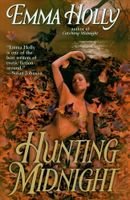
Hunting Midnight, by Emma Holly

>> Wednesday, August 30, 2006


Hunting Midnight (excerpt) is the second in Emma Holly's upyr series (there's a short story before them, the on in the Fantasy anthology, but it takes place in another time and place and has nothing to do with these characters. It just serves to introduce the upyr universe).


For centuries, Ulric's pack of shapeshifting immortals have hidden in the Scottish forest, far from the dangers of the human world. Only when his longtime lover betrays him does their leader venture out, recklessly roaming the streets of Bridesmere, singing for his supper . . . and whatever else he desires.

Ulric never expects to meet Juliana Buxton, dutiful daughter of a rich merchant, nor to be blackmailed into helping her escape her elderly betrothed. Juliana is everything he has learned to distrust in a woman: bright, bold, and endlessly curious. The smart course of action would be to ditch her, no matter how deliciously passionate she is.

Luckily, Ulric's heart has other ideas.
Hunting Midnight was very so-so. It was readable enough, but I never got to really care about the characters, and the upyr universe still hasn't completely gelled for me. A C+.

If you've read Catching Midnight, the first book in the series, you'll probably remember Ulric, the leader of Gillian's pack, with whom she was involved before deserting him and her other fellow pack-members for the human world. That Ulric was a bit of an asshole, a dominating man who, protesting that he was doing it only because he loved Gillian, tried to blackmail her into going back to him.

Hunting Midnight takes place only a couple of weeks after the events of CM. Ulric, devastated by Gillian's final abandonment, has been wondering around England enthralling women right and left and having tons of meaningless sex (*sigh* men!).

Juliana Buxton is the only daughter of a prosperous merchant, and she's in a bit of a pickle. Her father has decided that she will marry a business connection of his who Juliana finds intolerable, and though he loves his daughter, he will not be moved.

Juliana and Ulric meet when he picks her as the flavour of that particular night and they quickly end up having sex in a nearby alley. Juliana had picked that particular night to run away from home, but none of her tentative plans had worked, so when she saw the beautiful man singing outside the inn, she was at the end of her rope and he seemed quite a godsend.

Ulric finds the young woman attractive enough, but nothing special. Definitely not special enough for him to want to take her along. He allows her to believe that he's willing to help her get away from town, while never intending to follow through. But he doesn't count on Juliana quickly figuring out he's upyr (the sex left him so exhausted he neglected to take the precautions necessary to secure himself for the night... talk about idiotic!) and threatening to let him burn if he doesn't really promise to take her away. And not only that, Juliana also decides she wants to become a upyr, and she secures the promise that if by the end of the summer she still wants it, she will be changed.

And so Juliana and Ulric head north to Scotland and to Ulric's pack's territory, where more problems await them. The pack is in disarray, and Juliana is still being chased by her intended husband, who seems more interested in her companion than in anything else.

One of the main problems I had with the first book in the series was how matter-of-factly everyone took finding out that there were such a thing as upyrs and that, in fact, the person who was beside them (or in their beds!) was one. I had the same problem here, especially at the beginning. Julianna's reactions to finding out that the man who just screwed her brainless was a upyr were weird. I could excuse the incredibly quick sex because of Ulric's power to thrall her, but I really couldn't buy the way she acted afterwards, both relating to her discovery and to what she'd just done.

Maybe if she'd been in a very bad position, at the end of her rope, I would have been able to buy her behaviour, but come on! A woman whose only worry is that her father wants her to marry a man she doesn't like (the guy was a piece of work, but at the beginning, Holly never made me think Juliana was afraid of him or even hated him or was repulsed by him. It merely felt as if she didn't like the man much) wouldn't immediately jump, just like that, at the possibility of leaving all her life behind her and becoming a vampire! It was hard enough to believe she'd run away like that, with no plans and no certain means of supporting herself. Or rather, it was hard to believe that anyone with half a brain would do that. The upyr thing was much too much. It made me start out with a low opinion of Juliana's intelligence and sommon sense, and that opinion never really grew all that much.

The romance wasn't particularly good, either. At the beginning, I didn't get the feeling that Ulric was even particularly attracted to Julianna... not more than he was to all those women he'd seduced the previous nights, at any rate. She was there and insisted on being taken with him, so he took her, but if she'd decided to go back to her house, I didn't get the feeling Ulric would have been too put out by it. He would probably have just shrugged and gone on on his way.

Obviously, his feelings for Juliana changed, but the way they did felt a bit weird. One moment he's still madly in love with Gillian, the next, he's decided he loves Juliana instead. Er, ok, I guess.

But the main problem I had with the romance was I didn't feel there was any tension in that area of the book. After he decides he loves Juliana, Ulric gets all kind of ideas about how she can't love him, and blah, blah, blah, and he starts angsting about it, but all this never did make much sense to me. It didn't really add any tension there, it just made me a bit distant from Ulric, because I didn't understand what the hell he was going on about.

I know what you're thinking now: since this is an Emma Holly, how was the sex? Well, I can't deny the woman knows her way around a sex scene, so objectively, they're pretty steamy. However, to be honest, these particular sex scenes of Holly didn't affect me at all. It's probably because of the lack of tension I mentioned above, but most of the times Ulric and Juliana got it on (and they did get it on a lot), I yawned. I even skimmed a couple of the scenes, because they really weren't adding anything. Did you read what I just wrote? I skimmed a sex scene! In an Emma Holly book! That's pretty telling, I think.

The most interesting thing in the book, I thought, were the dynamics of Ulric's pack, and the way Juliana was integrated to them. That was pretty intriguing, as was Lucius' appearanceat the end. Lucius is the hero of the next book in the series, Courting Midnight, and I was interested enough by this character that I'm going to give it a try.

Read more...

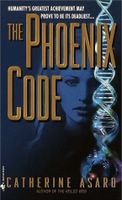
The Phoenix Code, by Catherine Asaro

>> Tuesday, August 29, 2006

I've never tried Catherine Asaro's Skolian books, which I guess she's best known for (actually, I did read one short story which I believe beongs in that universe, the story in the Irresistible Forces anthology, and I wasn't too impressed), but I love her two books that I've read that are set on Earth in the very near future and deal with Artificial Intelligence. Those are Veiled Web and the book I reread recently, The Phoenix Code (excerpt).


When robotics expert Megan O'Flannery is offered the chance to direct MindSim's cutting-edge program to develop a self-aware android, it's the opportunity of a lifetime. But the project is trouble plagued--the third prototype "killed" itself, and the RS-4 is unstable. Megan will descend into MindSim's underground research lab in the Nevada desert, where she will be the sole human in contact with the RS-4, dubbed Aris. Programmed as part of a top-secret defense project, the awakening Aris quickly proves to be deviously resourceful and basically uncontrollable. When Megan enlists the help of Raj Sundaram, the quirky, internationally renowned robotics genius, the android develops a jealous hostility toward Raj--and a fixation on Megan. But soon she comes to realize that Raj may be an even greater danger--and that her life may depend on the choice she makes between the man she wants to trust and the android she created.
An excellent combination of sci-fi and romance. A B+.

AI expert Dr. Megan O'Flannery is thrilled when MindSim, the leading company in the field, offers her the chance to head the team developing their promising new android. The job implies living in an underground lab in Nevada, alone with the android at first, and then also with the robotics expert chosen to work on the prototype.

The robotics expert is the very renowned Raj Sundaram, a man Megan had already met once, and been very intrigued by. Raj is a man considered very difficult by most people. His mind doesn't work in a particularly linear way and he doesn't do much to hide it, so his cryptic way of speaking, combined with his social ineptness confuse people, turning them hostile to him. Unlike most, though, Megan isn't bothered by this, but fascinated.

When Raj arrives in Nevada, the attraction between him and Megan quickly develops into something more. But all is not fine, because the android, Aris (who later changes his name to Ander), has become very attached to Megan, so he develops a strong resentment towards Raj. And soon Megan finds herself in a dangerous situation in which she doesn't know who to trust.

Both the romance and sci-fi elements here were wonderfully done. I was fascinated by the way Asaro dealt with the AI element. Her setting gives a very interesting vision of the near future, which, even after 6 years of the book being written, still feels valid.

TPC is also pretty rare for a genre book, in that it really delves into certain big issues and makes you thing about them. Asaro asks some very interesting questions about what being human means, and this made think about how I feel about this, and actually made me question some of my beliefs.

I really enjoyed the scenes in which Megan worked on Ander and his development. Ander is a compelling character, very believable as someone who's only learning how to be human and is having to cram years of development into weeks. I loved how Asaro showed his thought processes through his reactions, and he became a very well-rounded character for me.

The romance was lovely, even though I might have liked a bit more space devoted to it. Asaro gives us a very unique romantic triangle, one with the intriguing twist of having one of the vertices being an android. I very much enjoyed both Megan and Raj. I liked the way Megan was so honourable, so determined to do the right thing by Aris/Ander, once she became convinced that he'd developed a consciousness that made him human. And Raj I loved for his vulnerability and his genius and his social ineptitude, and for the way he interacted with Ander, always so respectful of his humanity, even when the android was hostile. The relationship between these two men was among the best things in the book. And only now that I've finished the book do I realize that we see things only from Megan's point of view, and that's because the book's so well written that I felt I knew what was in Raj's mind, and I didn't feel anything was missing.

The resolution was great, the best possible solution (and I remember the twist catching me completely by surprise the first time!), and the action, even the adventurous part, never confusing. I didn't completely understand why Megan would still trust a certain person, but other than that, TPC was great.

I think I'm now going to start Sunrise Alley, which looks to be in the same vein as this book.

Read more...

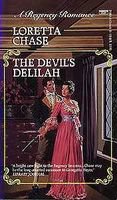
The Devil's Delilah, by Loretta Chase

>> Monday, August 28, 2006


Loretta Chase's single titles have worked much better for me than her Trad Regencies, but The Devil's Delilah came very highly recommended.


Sure to be ruined by the tell-all memoirs of her father— society's most infamous rogue—Delilah Desmond is determined to suppress the manuscript. She enlists the aid of bookish Jack Langdon—whose rumpled brown hair and poetic gray eyes hide a most passionate heart…
This one was better than most of her other Trads, and quite good, but nowhere near as great as single titles like Lord of Scoundrels, Lord Perfect or Mr. Impossible, to mention just three. Still, I liked it enough for a B.

Jack Langdon and Delilah Desmond meet at an inn, when Jack finds Delilah holding his best friend's father at gunpoint. Jack jumps to exactly the wrong conclusion and tries to interfere, only to find out later, to his chagrin, that Delilah is no criminal, but the daughter of a well-known former rake, and that she's not trying to rob the Earl of Streetham, but defending herself against him (the lovely man had assumed she was a maid, and thus fair game).

Delilah is worried, very worried. All her chances of making a good, respectable marriage (thus providing for security for herself and her parents), are hanging in the balance, because her father has written his memoirs, and it's obvious that if they were published, the scandal would be enormous. To make things worse, he's actually gone and offered them to a publisher, and now the man is chasing them, alternating between trying to convince her father to hand the manuscript over and trying to steal it.

Realizing that Jack is a really nice guy, Delilah asks for his help with hiding the manuscript. At the same time, the Earl of Streetham, who has an interest both in making money from the manuscript and in getting some revenge on Devil Desmond, enlists his son, Jack's friend to help him. And so starts a huge farce, in which people cross and double-cross each other, steal, hide, bury, unbury and rewrite the manuscript and, last, but not least, fall in love.

What I loved:

  • Jack: I loved this absent-minded bookworm of a hero, who finds himself captivated by this young woman who couldn't be more unlike him if she tried. And the way he falls for her, despite his best efforts not to, is vintage Loretta Chase. It reminded me a little bit of Benedict's reactions to Bathsheba in Lord Perfect.


  • Delilah's father, Devil: I just loved that the absent-minded bookworm was the love interest, while the dangerous, feared rogue was the heroine's father. Devil's reactions to some of Delilah and Jack's more clumsy attempts at romance were hilarious.


  • The writing: Chase is a genious at smart and witty writing, and her dialogue sparkles.
What I didn't much care for:

  • The whole to-do about that cursed manuscript: So and so has it, so and so hides it, so and so is pressured by yet another so-and-so to steal it, etc., etc., etc., ad nauseam. After a while, I didn't know (or care) who had it and where, and wanted nothing more than for Chase to forget about it and concentrate on Jack and Delilah.
Of course, the good parts were many more than the annoying one, and I quite enjoyed TDD.

Read more...

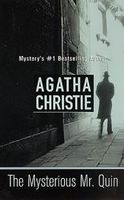
The Mysterious Mr. Quin, by Agatha Christie

>> Friday, August 25, 2006

book coverAgatha Christie's The Mysterious Mr. Quin is a collection of 12 stories which were published in magazines during the 1920s, and were only collected in a single volume in 1930. I remembered this collection fondly from my early teens, when I was devouring all of Christie's oeuvre.

All twelve of these stories feature two characters. Mr. Satterthwaite, who is our... well, not narrator, because this isn't told in 1st person POV, but maybe our witness to Mr. Quin's actions? Mr. Satterthwaite is in his late sixties, an elf-like little man who knows everybody worth knowing and is known by everyone. He's spent his whole life, and most especially his latest years, as an observer, watching as other people live their high dramas, but never participating himself.

Until, that is, the events narrated in the first story, The Coming of Mr. Quin. It's New Year's Eve and Mr. Satterthwaite is staying at some friends' house, as a member of a larger party. After dinner, the men are talking about the mysterious suicide of the house's former owner, which happened in the presence of a couple of them, when someone knocks on the door. It's a gentleman named Mr. Quin, a passing motorist whose car broke down nearby and who asks for refuge for half an hour, while his chauffer fixes the car.

And during that half hour, Mr. Quin skilfully manipulates the conversation so that the whys and hows of that mysterious death become quite clear to Mr. Satterthwaite, with unexpected consequences to some of the party.

The other 11 stories vary in setting, but there's always one constant. Mr. Quin mysteriously appears when there has been or will be a need for him, acting as a catalyst for Mr. Satterthwaite to wade in and take a part in the dramas developing in front of him, always helped by Mr. Quin in seeing things in a different way.

Each story also has a link (sometimes subtle, sometimes very obvious) to the Harlequinade. I especially remember that on my first read, those mentions intrigued me enough to go to the library and investigate (no internet back then!).

The stories vary in quality, but other than the last one, which was just as confusing and nonsensical this time around as I remembered it being when I first read it, they're all interesting, neat little mysteries. And there's the bonus of the glimpse into English society in the 1920s, which was fascinating.

In general, I liked the earliest stories in the book more. It would make sense if the stories are arranged in chronological order, which I'm not sure they are. I especially liked the story I mentioned above, the second one, The Shadow on the Glass, the third, At the Bells and Motley, the seventh, The Voice in the Dark and the eighth, The Face of Helen.

On the whole, I'd rate this book a B.

Read more...

All U Can Eat, by Emma Holly

>> Thursday, August 24, 2006


More and more, I'm realizing I prefer very hot mainstream, vanilla romance rather than all-out, no-holds-barred erotica. However, there are a couple of authors for whom I make an exception, and one of them is Emma Holly. Her erotica works just as well for me as her more mainstream romance does... the same things that don't work at all for me in other writers' work are just perfect in an Emma Holly. All U Can Eat (excerpt) is a good example.


A tale of sex, lies, and big, juicy burgers . . .

Sassy diner owner Frankie Smith just lost the battle to keep her wandering boyfriend home, a fact everyone in her small Southern California town is happy to comment on. With looks like hers--and never mind her mean mesquite fries--she's soon swimming in offers to cheer her up. But when a local society girl turns up dead behind her diner, and Frankie becomes the prime suspect, it looks like world-weary cop, Jack West, might have the inside track!
All U Can Eat was pure steamy fun, with a perfect blend of romance, hot sex and a neat mystery. A B+.

Frankie Smith owns a diner in the Southern California town of Six Palms and has a good life. But things start getting complicated when her boyfriend, Troy, suddenly leaves her for another woman (after some truly excellent sex, to add insult to injury), and the new couple start parading together all around town. To make things worse, a body turns up in the alley behind Frankie's diner, and there are some indications the victim might have been mistaken for Troy's new girlfriend, which makes Frankie a suspect.

Jack West is Six Palm's chief of police, and he's long had a bit of a crush on Frankie. He hasn't found the nerve to approach her yet, but as the murder case gets more and more complicated, and as surprising revelation after surprising revelation start coming out, Jack and Frankie finally get together.

The first thing I should mention, because this is something that might be an issue for many readers, is that we see Frankie doing a bit of sexual exploration before she gets involved with Jack. There's Troy (which, strictly speaking, doesn't really count, because when we see them having sex they're actually still in a relationship), there's the mysterious, tortured stranger with whom Frankie engages in some rebound sex, right after Troy leaves her, there's the two bi-sexual owners of a local garage with whom she has a threesome... you get the picture.

It didn't bother me at all. I have to say, though, I was glad to see those sexual explorations limited to the heroine. I don't mind seeing the heroine exploring her sexuality with other people, but I tend not to like seeing the hero sleeping with someone else, even before he and the heroine get involved (not that I refuse to read a book that has this element, or that I've never enjoyed one. I'm just talking in general). Yes, yes, I have double standards when it comes to this. I know it, and you know what? I'm reading romance for pleasure, so I see no reason to try and change it. I'll just stick to what I like in this area. Anyway, I actually liked that Frankie had no problem sleeping with whomever she was attracted to, and that she didn't torture herself about it. And, even better, she's not punished for it by the author!

Also, however much I've enjoyed Holly's more open relationships in the past, I liked that when Frankie and Jack do get together, they are faithful to each other. And I loved their relationship. I loved that Jack had had a crush on her forever, and I loved how he was much less "perfect" (older, more tired) than Frankie's partners earlier in the book. And of course, he's a bit vulnerable about that.

The mystery is not the focus here, but it was lots of fun. It was very intriguing, and very sexually charged itself, too. The people in Six Palms, California sure do have interesting sex lives, and we get to hear all about them! ;-)

Coming out next November, Prince of Ice, which is set in the same universe as The Demon's Daughter. Yay!

Read more...

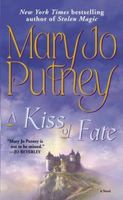
A Kiss of Fate, by Mary Jo Putney

>> Wednesday, August 23, 2006

Mary Jo Putney used to be one of my big favourites when I first started seriously reading romance. I absolutely adored her Fallen Angels series, and I loved many of her other books. Titles like The Rake are still in my keeper shelves (not that I have actual, physical keeper shelves. I keep too many books and shelve them all together. But you know what I mean).

Anyway, in the past few years, around the time she wrote those contemps, I took her of my autobuy list. I actually haven't yet read the Bride series (not contemporary, but writen around that period). And I'm afraid reading the short story in the Irresistible Forces, the short story that acts as an introduction to the Guardian series, didn't really inspire me to go back.

So why did I end up picking up A Kiss of Fate (excerpt)? Well, I read the keeper review of The Marriage Spell at AAR, and though that one is actually part of a new series, Putney's brand of fantasy romance seemed tempting. And since I already had AKOF in the TBR...


Laird of an ancient, powerful Scottish clan, Duncan Macrae is committed to ending the ceaseless strife between Scotland and England. But he also has other, secret powers-those of a Guardian, humans with mystical abilities to control nature's forces and see into the hearts of others. From the moment he encounters independent young English widow Gwyneth Owens, his fiery spirit is irrevocably drawn to claim her as his own-a passion that will not only set his loyalty to his land against his sworn Guardian vows, but will also threaten everything he cherishes most.

Though Gwynne's father was a Guardian, she believes that she has inherited only her mother's beauty, not her father's power. Then one kiss from the dangerously alluring Laird of the Macraes ignites a hunger that shakes her to her soul-and reveals visions of a looming catastrophe that threatens England and Scotland both. Only by becoming Duncan's wife and betraying the man she loves can she avert disaster.

As irrevocable destiny and two mighty nations clash, Gwynne and Duncan must test their powers and passions past the most forbidden limits if they are to save their love-and secure the future.
To be honest, I liked AKOF more than I expected to. It was a very solid B for me.

AKOF is set in an alternate version of mid-18th century Britain. It looks just like our world, except that there's a group of people with paranormal powers, the Guardians, operating behind the scenes to influence events in a positive manner, but with as little interference as possible.

Our heroine, Gwyneth Owens, is part of a Guardian family but has no powers of her own, something that's been the source of frustration all her life. She's dedicated herself to becoming a keeper of all the information and history regarding the Guardians, something that's very much appreciated by the rest of her community (Guardians can't just operate on instict; knowing what effects things have had in the past is basic to their actions).

When Gwynne meets Duncan Macrae, he's instantly crazy about her, but she hesitates. Duncan is an incredibly powerful weather mage (a Guardian who can affect wheather phenomena, like his ancestors, the characters in the short story in the Irresistible Forces anthology) and Gwynne feels intimidated. Against her instincts, she rejects him, right until the Guardian Council strongly suggests that she should accept his suit.

And so Gwynne and Duncan go off to his castle in Scotland, while around them events threaten to go to hell. Charles Edward Stuart has just landed and is beginning his campaign, pitting Duncan's loyalty to the Guardian Council (which has decided that all things considered, Britain will be better off with its current monarchs) against his innermost feelings that his country deserves to rule itself. And among all this, Gwynne can't seem to be able to dispel the vague feeling that she will betray her husband.

AKOF has two pretty distinct halves. The first covers Gwynne and Ducan's courtship and marriage, as well as the development of Gwynne's powers, which suddenly appear after the wedding (more on this soon) and lasts up until they begin their married life in Scotland.

This part was nice enough, mostly because of Putney's talent as a writer. I'd forgotten how smooth her writing feels, how well it flows. And though it feels a bit underdeveloped, the Guardian universe is quite intriguing.

Ducan and Gwynne's relationship here is nice enough, too (pretty clear I liked this but wasn't particularly wowed by it, eh?). The only thing I didn't like was those powers of Gwynne's that developed after her marriage. It turns out Gwynne's Guardian talent is to be an Enchantress, a woman who can project power in order to captivate and fascinate any man, and that the reason why she didn't know until after her marriage was that those particular powers lie dormant until... yes, you guessed it! Until a woman first has sex. My eyes are rolling. Oh, please! I wish Putney had kept away from the silly magical sex. She seems fond of it, she also had it in the short story!

When we got to the end of this first half I was a bit worried. The relationship between Duncan and Gwynne seemed to be settled already (Duncan had been madly in love with her since he first saw her, and by this time, she had fallen in love with him, too), so my thoughts were basically "Oh, no, will the rest of the book be just political intrigue and Jacobite uprisings?"

Well, yes and no. The historical events do come to the forefront in the second half of the book, but it's not only that, because this has a huge effect on Duncan and Gwynne's relationship, and this part of the book ended up being much, much better than the first half.

The history is extremely well-integrated in the story. This particular period and place in history aren't my favourites to read about (the main reason why I was so worried at the halfway point), but Putney managed to make it not just interesting, but truly fascinating. And perhaps because I don't actively seek out books set here, Putney's point of view, which is pretty anti-Jacobite, felt fresh. The few books I have read really romanticize Bonny Prince Charlie and demonize the English, and it was interesting to read something different.

And these events create very compelling conflicts in both characters and have a devastating effect in their marriage. There's Duncan's struggle within himself to decide where the line is between acting to prevent needless loss of life and acting to aid the Jacobite cause, and to decide whether he should actually cross the line. And there's Gwynne's struggle to decide how she should react to Duncan's actions, whether she should act to stop him from making what she sees as a huge mistake, even though this will probably mean the end of her marriage.

I really liked how all this played out. It might be a bit of a spoiler, but I especially appreciated that, unlike in so many other romances, it turns out it's the hero who's been led astray by his instincts and the heroine who is right in what she did.

The first half was a B- for me (ok, but not great), while this second half was a B+. This makes the B I mentioned above. I'd like to see where Putney goes with this universe, and maybe know a bit more about those mysterious Guardians, so I'm going to read the next book in the series, Stolen Magic, ASAP. Unfortunately, there seem to be only these two books in the series!

Read more...

Angels Fall, by Nora Roberts

>> Tuesday, August 22, 2006

I don't think there's any author whose new books I anticipate more than I do Nora Roberts's. I thought I'd lost her back in the late 90s / early 00s, but I've loved all her more recent books. Her latest is Angels Fall.

Reece Gilmore has come a long way to see the stunning view below her. As the sole survivor of a brutal crime back East, she has been on the run, desperately fighting the nightmares and panic attacks that haunt her. Reece settles in Angel's Fist, Wyoming - temporarily, at least-and takes a job at a local diner. And now she's hiked this mountain all by herself. It was glorious, she thought, as she peered through her binoculars at the Snake River churning below.

Then Reece saw the man and woman on the opposite bank. Arguing. Fighting. And suddenly, the man was on top of the woman, his hands around her throat . . .

Enjoying a moment of solitude a bit farther down the trail is a gruff loner named Brody. But by the time Reece reaches him and brings him to the scene, the pair has vanished. When authorities comb the area where she saw the attack, they find nothing.No signs of struggle. No freshly turned earth. Not even a tire track.

And no one in Angel's Fist seems to believe her. After all, she's a newcomer in town, with a reputation for being jumpy and jittery-maybe even a little fragile. Maybe it's time to run again, to move on .

Reece Gilmore knows there's a killer in Angel's Fist, even if Brody, despite his seeming impatience and desire to keep her at arm's length, is the only one willing to believe her. When a series of menacing events makes it clear that someone wants her out of the way, Reece must put her trust in Brody-and herself-to find out if there is a killer in Angel's Fist before it's too late.
I'm not one of those who complain about how books are getting shorter, and how it used to be so much better in the golden older days, when books were routinely 500 pages long. I happen to believe that most of those older stories could have done with some a lot of tightening up, and I enjoy the more focused feel of many newer books. However, nothing can beat a long book when it's written by a talented author, who can handle all that space, and so I loved the bigness and depth of Angels Fall. It's a book that goes pretty slowly, but rather than bore me, this allowed me to wallow in it and enjoy it. An A-.

Reece Gilmore has been travelling around the US since she survived a mass shooting in the restaurant where she worked in Boston. She's pretty much recovered from her physical injuries, but the psychological ones are another matter. She still suffers from panic attacks and there are plenty of things she can't handle.

When her car breaks down in Wyoming, right outside the tiny town of Angels Fist, Reece sees it as a sign she should spend a bit of time there (she's become big on such signs in the past couple of years). She plans to do just what she's done in tens of other places around the country: get a temporary job to make a bit of money and then move on when the urge hits.

But Reece soon realizes that she might finally be recovering and that Angels Fist might not be as temporary for her as all those other places. There's the way the town seems to fit her, and how the job she's got is cooking at the local diner, when she hasn't been able to handle cooking since the shooting. And there's also Brody, a novelist living right outside town, to whom Reece feels attracted.

Then disaster strikes. When out hiking, Reece is witness to a murder. She immediately reports it, but the sheriff can find no traces of it. And then strange things start happening, things that seem to indicate Reece's mind might not be strengthening as much as she thinks it is, and which support the sheriff's theory that she might have been imagining things. After a while, no one believes her. Except Brody, that is.

There is definitely a certain similarity here to Northern Lights, both in the compelling setting and in that both are mainly the story of one of the characters. Just as NL was basically the hero's story, Angels Fall is mainly the story of the heroine's growth. But in both novels, Roberts manages to strike a perfect balance between the growth of her main character, the romance and the suspense.

It works because Reece is such a fascinating character and one of the most corageous I've read in a long time. I loved how Roberts showed that it can be not at all easy to just bounce back from a traumatic event. This is something that often bugs me in romance novels, that regular-Joe (or regular-Jane) characters are so often faced with pretty horrible violence and are just not affected psychologically by this. Actually, they're often not even that affected physically (in some books bullet wounds seem to hurt no more than mosquito bites!), but that's a subject for another day.

Anyway, my point is that I appreciated reading a book which explored the way facing violence, even in this world that seems to have grown so inured to it, can have devastating psychological consequences. And I loved seeing Reece's growth and healing. I have to agree with Brody's assessment that she's not running away, but on a journey and doing exactly what she needs to do in order to recover. Reece is a woman who knows herself, and I liked the way she accepted herself and her foibles and the things she had problems with and dealt with them, indulging them when she knew they wouldn't have adverse consequences, but fighting against them (and winning) when it was necessary.

Brody is also an interesting character. Unlike so many Nora heroes lately, he's no nurturer. How weird is it that I love Nora's nurturer heroes for being so nurturing and I loved Brody anyway for how he was? At first he does come across as callous and does go a bit overboard with the constant sarcasm, but I think this worked for me anyway because it was so exactly what Reece needed at the time. A good clue of this is that Reece herself feels most comfortable with him and with Joanie, the two people who are the least "poor baby" with her. And when the time comes that Reece needs his unwavering support, he gives it, without a question. He's literally the only one who doesn't doubt Reece's sanity (even Reece thinks she's losing his mind and might never have thought she wasn't if Brody hadn't set her straight on some things).

And this tough, callous facade makes the moments of tenderness very affecting. At first sight, it looks as if maybe he isn't THAT attracted to Reece. This is not a hero who sees the heroine and pursues her like crazy. No, you kind of get the feeling at first that he likes her, finds her attractive, but wouldn't really have gone out of his way to pursue her if she hadn't got in his way. But you slowly start realizing that his feelings are much deeper than that, and you realize that at the same time *he* does.

He's not perfect though. At times I wanted to strangle him (Reece and I both, actually), like when he reacted as he did to what he thought was Reece trying to pressure him into marriage, but this only made him more real to me.

The secondary characters, like all the other townspeople, were wonderfully well-drawn. Not one stock character among them. I have to say, though, I didn't really enjoy the secondary romance. That whole "I'm giving him time to sow his wild oats" thing is just not my cup of tea.

The suspense element was a good, too. I actually zeroed in on the culprit from the very beginning, but Roberts had me second-guessing myself all throughout the rest of the book. Still, it's not really very hard to guess who did it; you only need to think who's the only person who could have done the cover up without some very improbably big coincidences and tight times. And there was something about him I didn't like right from the beginning.

Something else I appreciated was that Roberts left the original crime in Boston as it was, and didn't feel the need to tie a neat bow around that particular end. I know many authors would have been tempted to try to link it somehow to the current action, or to have Reece somehow remember a key detail that helped finally solve it, but that isn't the case, and I thought it was the right choice.

Like all her good books, this one had me wanting to read more Roberts. Fortunately, Morrigan's Cross is coming out in a week! Will I be able to hold off until all three books in that trilogy come out, so that I can read them together? I don't know -and I wouldn't bet on it! ;-)

Read more...

Blog template by simplyfabulousbloggertemplates.com

Back to TOP