Reading Year in Review - Part 6: Publishers and Imprints

>> Wednesday, January 11, 2006

I don't usually pay much attention to a book's publisher. I actually never even looked at that before I decided to start tracking that bit of information in my spreadsheet, so I can honestly say it's not something that's influenced my purchases.

Ever since I started filling in that little column, I've been slightly more aware of imprints and publishers, albeit in a very vague way. I know Dorchester books often have very original storylines (even if the editing is sometimes lacking) and awful covers, and I recognize Avon clinches on sight, but that's about it

So basically, I've absolutely no expectations of what the results of this analysis may be. Will it turn out I've tended to like books from Publisher A or Imprint B significantly better than others? Or that I've had absolutely no luck with Publisher X or Imprint Y? I have no idea.

First, some numbers. Books read in 2005 from:

  • Penguin-Putnam: 80:

    Jove was the main imprint there, with 32 books, basically because that's where my two biggest comfort authors (i.e. the ones I reread compulsively) are published in PB (11 books each by Jayne Ann Krentz and Nora Roberts).

    It was followed by Berkley, with 16 (includes rereads of 4 Barbara Michaels from the 70s).

    Then came Signet, with 12 (mostly Trad Regencies -half of those 12 were old Mary Balogh Trads).

    Fourth in place was Putnam, with a total of 6: the hardcovers of 3 Nora Roberts, 2 J.D. Robb and 1 Jayne Ann Krentz.


  • Harlequin: 66: I kind of talked about this one already in the post about genres and subgenres.

    Harlequin Blaze was the line I read most of, with 12. That was pretty diversified, with multiple reads only by Vicki Lweis Thompson and Jo Leigh.

    Mira came next with 11, including some which were old category reprints and some which were not. There were 3 books each by Elizabeth Lowell and Anne Stuart here.

    In third place: Silhouette Intimate Moments, with 8. Five of them were old Nora Roberts categories, though.

    Harlequin Intrigue, Harlequin Presents and plain Silhouette titles came next, with 6 each. The latter were 4 Nora Roberts, 1 Jayne Ann Krentz and 1 Linda Howard... all big name authors. The other two were more diversified, though I did have a few Susan Napiers there in the Presents line.


  • Random House: 34:

    Bantam Books was the top imprint there, with 10, including multiple reads from favourites such as Nora Roberts (yes, I did reread a lot of her books last year!), Madeline Hunter and Amanda Quick.

    Second was Dell, with 9, seven of which were Mary Balogh titles.

    Ballantine had 6 reads, including two each by Suzanne Brockmann and Linda Howard.


  • HarperCollins: 28:

    That was basically all Avon: 20 books. Whatever it's said of this imprint, some of my favourite authors write there, like Lisa Kleypas, Julia Quinn, Susan Elizabeth Phillips, Elizabeth Lowell and Judith Ivory


  • Simon & Schuster: 24:

    22 of those were Pocket Books, and 10 of those were by Jayne Ann Krentz (yes, I also reread her a lot last year). Another of my very favourite authors, Liz Carlyle, writes there, and 3 of the 22 were hers.


  • Kensington: 12:

    Zebra had half of those, including a few debut authors, like Caroline Linden and Katy Love.

    There were also 3 Kensington books, all by Shannon McKenna.


  • Dorchester: 9:

    I read only two imprints there (not that I know if there publish more). Lovespell had 6, all futuristic, alternate-reality or fantasy romances which showed a lot of originality. The 3 from Leisure were more Earth-bound, but just as different.


  • Macmillan: 9:

    Most (7) were from St. Martin's (mostly Jennifer Crusie), and the other 2 were from Tor (old Elizabeth Peters books).


  • Warner: 6:

    That was 3 Warner Books and 2 Popular Library romance novels (all 5 old Jayne Ann Krentz books from the 80s) and 1 old Elizabeth Peters. Nothing after 1989 from them. Are they still publishing romance? Looking at their website, apparently so, but not anything I've been reading!


  • Others: 29: Others is a big category! I have both ebooks and tiny, independent publishers there.

    Ellora's Cave was the first one there, with 8 reads, seven of which were by Lisa Marie Rice (yes, there are only 6 available, but I actually reread Midnight Angel later in the year!). All ebooks.

    In second place came Bloomsbury, with 5... the Harry Potter books, reread in preparation for the Half-Blood Prince.

    Loose-Id was third, with 4, all ebooks. Three were by Stephanie Vaughan.
Phew, that was long! Next, a (hopefully) quick look at my average grades for different publishers and imprints. For that, I converted my letter grades into numbers from 1 to 12 and did the averages there. When relevant, I also calculated the averages for older books (2000 and before) and newer ones (the last 5 years... from 2001 on).

Warner had the best grade, with 9.17 (a bit over a B+). Well, duh, most of them were rereads from one of my favourites. Plus, considering all those great books were published at least 15 years ago, that doesn't really tell me I should still be buying Warner books.

Others got 9.04, just over B+. Surprising at first, but then I remembered the Harry Potters are there, pushing the averages up. Still, Ellora's Cave got an average grade of 8.25 (bit over B) and Loose-id got a 7 (a B-). The rest had only a book each, so averages wouldn't tell me much.

Simon & Schuster did pretty well: 8.58 (about half-way between a B and a B+). Plus, the average hasn't really changed between old and new books.

Macmillan had 8.56, only slightly less than S&S and still nearer B+ than B. And the newer books had a really high average: 9.50 (halfway betwen B+ and A-. I obviously adore Jennifer Crusie!

I won't go into all the others. I'll just mention Harlequin got the worst average of all, with 6.68 (between a C+ and a B-). Though I did rate the newer books better than the older ones! The line I seem to dislike the most is Silhouette Intimate Moments. Even the Nora Roberts were meh, and two others were downright bad (Judith Duncan and Karen Templeton). I only really, really liked the Caridad Piñeiro

Only one more part left!

Read more...

Jigsaw, by Kathleen Nance

>> Tuesday, January 10, 2006

The first Kathleen Nance book I read, Day of Fire, blew me away. At last, a futuristic world that actually did feel futuristic, not some kind of cheesy 70s "barbarian in space" fantasy.

Jigsaw was Nance's very next book. I was especially interested in the AI angle. Being a huge fan of Catherine Asaro's futuristic AI-related romances, it sounded like the perfect book for me.


SHE'D PUT HERSELF IN HIS HANDS BEFORE...

Headlights in a blizzard, a car following too close, too fast, left Bella Quintera wrecked by the side of the road. Such reckless driving, especially in Michigan's Upper Peninsula, seemed ominous. The identity of her rescuer confirmed Bella's fears. Years before, Daniel Champlain had been her lover, but the relationship was one she strove to forget. The NSA agent's rugged good looks still haunted her-as did his betrayal.

BUT NOT HER LIFE

She'd watched him destroy her father; now Daniel demanded Bella listen. She was in danger. He wanted to know about her new creation, about its implications for national security. What she'd designed was worth killing for; but was a master criminal truly after her-or was it Daniel, again pursuing his ambition, thoughtlessly flipping her life upside down? The peril was real, no game like the jigsaw puzzles she made in her spare time. And this puzzle had missing pieces: the ones that showed whom she could trust.
A really cool book. Smart and modern, combining a fascinating suspense plot which was actually suspenseful and a lovely romance which was actually romantic. A B+.

On the romance front Jigsaw has a reunited lovers plot which works. When Daniel and Bella first met, the attraction was instantaneous and they gave in to it. Things were going fine, until a few days later, when Daniel did his job and reviewed Bella's father work... finding some of the data had been faked. Bella, believing her father's denials, felt betrayed and cut off that relationship completely.

Now Daniel has again been sent on a mission involving the Quinteras, a mission which also includes finding out if his suspicions are correct and Dr. Lionel Quintera has developed a viable Artificial Intelligence (sorry if the technical terms aren't correct!). He hasn't, but we soon find out Bella has, an AI named Fran with whom she plans to enter the Turing Competition. Not if the bad guys get it first, though!

The conflict between these two was very well done. I bought the reasons for their estrangement, the reasons why each thought they were doing the right thing. And even when they found out the truth about the incident in the past, there was still plenty of conflict, with Daniel torn between wanting to protect Bella and help her, and his duty to his country. Bella knows this perfectly, so her refusal to completely trust him feels understandable.

In addition to this, there were certain personal issues to confront, as well. It's not wholly a book driven by external conflict. Daniel has certain issues with intimacy and really sharing himself, while Bella needs to get over some trust issues. But for both the internal and the external conflict, I really liked how Nance had them work through them until I was sure they'd succeeded and could really make it as a couple.

Plus, for a book that had so much going out outside of the protagonists' relationship, Nance managed to create some wonderfully hot sexual tension between Bella and Daniel. Unfortunately, the payoff was a bit lacking, especially the first love scene, which Nance completely skipped. Only thing I didn't like about the romance, that.

The suspense (or rather, it might be better called a thriller) was just fascinating and skillfully developed. It combined terrorism, hacktivism, gaming, AI, a shadowy research institute and plenty of bad guys. As with Day of Fire, I loved the juxtaposition between super high-tech (I get the feeling this is set in the near future) and Nature at its most powerful, in the Northern Michigan winter. And, as Renée said, this one was perfect to read in the very hot summer here.

Anyone knows what's next for Nance? The "Upcoming" section of her website is woefully out of date... it still announces Day of Fire. I hate it when that happens!

Read more...

Reading Year in Review - Part 5: Older and newer books

Considering the trouble and time it takes to get books all the way here, it's no surprise that 2005 books were only a small part of my 2005 reading.

How small a part? Well, I read 31 of them throughout the year, which comes to about 10% of the total number of books read. Strangely enough, I read that exact number of 2004 books in 2004, though since I read fewer books that year, the percentaje came to 13%. That surprises me, because I've been reading some ebooks this year, and that should have pushed the number of 2005 books up!

17% of the books read in 2005 were published in 2004, which makes sense, since that just gives new books bought in the second half of 2004 time to get here. After that come 2003 and 2002 books, with 12% and 9% each.

55% of the books I read in 2005 were published between 2001 and 2005.

Between 1991 and 2000, the percentage is 31%. For 80s books (or rather, 1981 - 1990), it's 10%. Only 3% were published before 1980, and I think that mainly includes old mysteries, especially Ngaio Marsh.

Concentrating on 2005 books now, I've played a bit with my spreadsheet and here are some of the things I discovered:

- My average grade for 2005 books was nearly a B+. A highish grade is probably to be expected, since for a 2005 book to reach me so soon, it usually means that it was one I was anticipating so much that I had it couriered... i.e. it was either by an author I love or a book that had got rave reviews and a lot of buzz online.

This was the highest average grade for the years with enough books to make such a calculation significant. I mean, the average grade for 1974 books was A-, but that's just because I read only one book from that year (House of Many Shadows, by Barbara Michaels) and I loved it.

- I read three 2005 books by Stephanie Vaughan, and two for these authors: J.D. Robb (+ 1 Nora Roberts book in 2005 and another 2005 book in 2006, which makes 4, actually), Lydia Joyce and Liz Carlyle.

- There were many historicals among the 2005 books read. 12 in total, between Trads, Regency-set historicals, Westerns and other historicals. Conspicuously absent from my reading were categories. I read plenty of them this year, just no new ones.

- My 2005 books were well distributed between imprints and publishers. Loose-Id and Pocket get the most books (only 3 each, actually).

To be continued

Read more...

The Sparkling One, by Susan Mallery

>> Monday, January 09, 2006

For AngieW's January TBR Challenge, I dug into my TBR and found The Sparkling One (excerpt), by Susan Mallery. The TBR Challenge format is quite different to the way I usually do my posts (I'm way too chatty!), so I'll try to merge them. So:


Title: The Sparkling One
Author: Susan Mallery
Year Published: 2003
Why did you get this book: It's been in the TBR for a while, so I *think* it was because the review at AAR sounded good.
Do you like the cover?: I think it's gorgeous, and very appropriate to the book. I just adore the colouring and the design, with those grapevines running down the left of the page.


Note: The Sparkling One is the first book in a trilogy about the Marcelli sisters. It's followed by Francesca's story, The Sassy One and then Brenna's, The Seductive One.

A party planner extraordinaire, Katie Marcelli loves her big, boisterous family - even when their chronic matchmaking drives her crazy! In the Marcelli household, fine wine and good food are as celebrated as true love, so when her eighteen-year-old sister announces her engagement, Katie promises her the perfect wedding. there's only one hitch: the father of the groom, Zach Styker, who is adamantly opposed to his son marrying so young.

Now, despite her instant attraction to the handsome, arrogant attorney, Katie must approach with caution: Zach, who hired Katie for a major fundraiser, holds the fate of her business in his hands - and how can she trust a man who is willing to break her sister's heart?

It will take a passionate battle of wills to determine if wedding bells will ring for a Marcelli bride, and to unlock the deepest desires - for family, love, and home - inside a strong- willed man's heart.
So, mext question: Did you enjoy the book?: I ultimately did. It didn't start very well, with the obnoxious relatives threatening to overwhelm the story, but in the end, I quite liked it. A B-.

Interestingly, the main thing I feel I need to talk about in this case isn't the romance, but Katie's family and her interactions with them. I ended up really liking how Mallery dealt with this, making the secondary characters deeper and more complicated than I was expecting.

Throughout most of the book, most of the older members of the Marcelli family (and Katie's Italian paternal grandparents, especially) were, quite simply, a nightmare. Every time that horrible, chauvinist bully, Lorenzo, and his wife started with the unending pressure on their granddaughters to marry young and start producing (male) children already, my blood slowly started to boil. Lorenzo was bad enough, but I actually disliked Tessa even more. That kind of attitude "What do you need education for? You're a woman, you need to get married and start reproducing", or "Men stray, we forgive", is something I'm completely allergic to. Women like this are feminism's worst enemy, worse than sexist men, even.

Katie says it's an Italian thing, but I'm sorry, I've got Italian ancestry myself (I'm actually even an Italian citizen), and my grandparents were nothing like that, even though they were from the south, supposedly the more old-fashioned part of the country. And really, if Mallery was so set on making them so Italian, she should have checked the language issues. An Italian saying he wants his granddaughters to start producing "bambinos"? Did he forget his first language after all those years? It's bambini!

Phew, sorry about that. It sounds very negative, doesn't it? It wasn't. Even not liking the characters, I liked the book just fine, because Mallery wasn't blind to these people's flaws. There's a wonderful scene near the end when Katie just blows up and lets them have it, and her objections are exactly mine. And she actually does win against them, though I'm not sure this will last very long.

The most interesting thing about this is that, in the end, Mallery made me see the positives in the family, why Katie and her sisters would love them enough to put up with their less-than-endearing characteristics. Just as Zach did, I even came to see all those family traditions as being a safety-net, rather than a spider's web, ensnaring everyone into a way of life that wasn't for them. The thing is, I could actually like the book because I didn't feel Mallery was hitting me over the head with "Aren't they adorable" when it came to the grandparents (no, they are obnoxious and overbearing), but saying "Yes, they are obnoxious and overbearing, but they have their good points".

Ok, enough about the family. I thought the trilogy setup was well done. In a vague way, it actually reminded me a bit of how Nora Roberts does it, even if it wasn't up to her level. There's an overarching story (which really only just starts here... she should have given a bit more space to the thing about that conversation Katie overheard about a certain "him") which I suppose will span all the trilogy, and the characters who'll star in the next two books play important roles in this one. Katie's sisters don't just show up every now and then, they are major characters in the story. And BTW, I really, really appreciated Brenna's storyline. She starts divorce proceedings in this book, and hires Zach as her lawyer, and I adored that she didn't go all drunk on stupid pride on the divorce thing. She not only wasn't determined to reject any kind of support from her ex, she actually went out and fought him for it. Go, Brenna!

As for the romance, which is conspicuously absent in the paragraphs and paragraphs above... well, there's a reason it's conspicuously absent. It's nice enought, but it's not really all that great, I'm afraid. Both Katie and Zach were likeable, and I especially liked Zach's attitude towards his son, the respect for his choices, but at the same time, the protectiveness and love which made him so afraid David was making a mistake (which I agreed with him from the beginning he totally was). The scene of his fight with David was just heartwrenching. I also enjoyed sensible, intelligent Katie, who was really good at her job and very definitely no pushover.

So both, separately, were fine, but I just didn't feel the love (or the attraction, for that matter) when they were together. I mean, yes, I bought that they got along well and liked each other, but I didn't really perceive much chemistry there. This was reflected in the fact that their love scenes left me completely cold, and I had to fight the urge to skim (I even lost to that urge, a couple of times). By the end of the book, when they were declaring their love and their intentions to marry, I was thinking "hmmm, shouldn't you wait a little bit longer?".

So basically, The Sparkling One was a success in the family interactions area, and a ho-hum read in the romance area. Just the opposite to what I would have predicted it when I started it.

Was the author new to you and would you read something by this author again?

I think I read one of Mallery's a few years ago, something with chocolate? (edited to say: I looked for the title, and it was Sweet Success), but it was pretty forgettable.

I would try her again, but though I liked this one, I'm not really sure I want to read the rest of the books in the trilogy. I'll have to see. In case I decide not to, I'm curious: could someone who's read the whole thing spoil me and tell me what that overheard conversation was all about?

Are you keeping it or passing it on?: For now, keeping it, until I decide whether to read the rest. If I decide not to, I'll probably put it in my Trade List, since I don't really think I'll be rereading it.

Read more...

Reading Year in Review - Part 4: Genres and subgenres

With the increase of genre-bending books, some of which manage to combine quite a number of genres or subgenres, the classification of books into genres and subgenres has become more and more of a headache to me. I've been adding additional categories like crazy, and things have been getting more confusing every year.

I've decided to make some changes for my 2006 spreadsheet (more details here), but for 2005, I'll have to manage with what I have and accumulate the numerous little categories as best I can, so that they make sense.

The downside of changing is that I don't know if I'll be able to compare 2005 and 2006 next year, but I think it will be worth it.

Ok, let's get on with it. Here's the basic distribution, accumulated into bigger groups, of 2004 and 2005:

2004:

  • Contemporary Romance: 21%

  • Series Romance: 20%

  • Historical Romance: 31%

  • Futuristic / Alternate Reality / Paranormal Romance: 8%

  • Non-Romance: 19%
2005:

  • Contemporary Romance: 34%

  • Series Romance: 20%

  • Historical Romance: 25%

  • Futuristic / Alternate Reality / Paranormal Romance: 8%

  • Non-Romance: 13%
The first obvious conclusion is that I've ramped up my reading of Contemporary Romance considerably, and that the main loser has been Historical Romance. That's not really big news for me, as I've been noticing throughout the year that run-of-the-mill Regency-set historicals (especially those with virginal bluestockings falling for rakes who happen to be spies... i.e. half the books out there) interest me less and less. Non-Romance shows a significant decrease, as well.

Series Romance and Futuristic / Alternate Reality / Paranormal Romance didn't show any changes. The latter does surprise me, because that particular set of subgenres has become quite trendy lately. I would have guessed I'd have read more of them.

Going a bit deeper into each main group now:

Contemporary Romance:

The increase in the the number of plain Contemps (that is, not Romantic Suspense or Chick Lit) is what's responsible for the increase of the whole category. Though I have to say, looking at the actual titles of books shows that some of those are doubtful... in the line between straight Contemp and Rom. Susp and, in some cases, Paranormal Romance. I guess I didn't think those subplots were "big" enough to move the books to those categories, but I'm sure many people wouldn't agree.

Series Romance:

That seems stable. The main line I read in 2005 was apparently Harlequin Blaze, with Silhouette Intimate Moments running far behind in second place. In 2004, I'd read about the same of my top 3 lines: Blaze, SIM and Silhouette Desire.

Historical Romance:

As I said, the number of Regency-set long historicals was what really plummeted. Looking at the titles, I see many of the ones I actually decided to read were books that were reputed to be "different", the exact reason I chose them. Other types of historicals mostly increased: I read more historicals set in exotic locales, more American Historicals, more Westerns, many more Trad Regencies and the same number of Medievals.

Futuristic / Alternate Reality / Paranormal Romance:

While the total number didn't vary, the composition between subgenres did. Futuristics went from being a third of this category to two thirds. Conversely, I read less Fantasy Romance, Paranormal Romance and Science-Fiction Romance.

Non Romance:

The main reason for the fall here was that I didn't read as many mysteries in 2005 as I did in 2004. I read most of Dorothy L. Syers Lord Peter Wimsey series in 2004, and I also reread quite a few Agatha Christie titles. My mystery reading was more varied this past year, though Ngaio Marsh and Kathy Reichs did get a couple of reads each.

I also read more Fiction in 2005, while I read more Erotica in 2004.

To be continued...

Read more...

Closer Than She Thinks, by Meryl Sawyer

>> Friday, January 06, 2006

My only reading resolution for the year that starts is that I'll work on clearing the old books in my TBR. To do that, I've decided that I will read at least two books a month that have been in that pile (fast becoming a mountain) for over three years. And believe me, there are plenty of them there to choose from!

Having arrived at my house in early January 2002, Closer Than She Thinks (excerpt), by Meryl Sawyer definitely qualifies.

A Woman Scorned

Alyssa Rossi never wanted to return home to New Orleans—too many memories—most of them bad ones. But when her successful costume jewelry company is acquired by TriTech, her only choice is to leave Italy—and return to the scene of a crime that nearly destroyed her life...

A Mystery Unsolved

TriTech CEO Jake Williams is all business—and determined to find out the real reason why his partner acquired Rossi Designs. His investigation uncovers a first love's betrayal, a missing baby...and the mysterious Alyssa in the center of a storm of gossip and controversy that has raged for more than a decade.

A Deadly Obsession

Shunned by New Orleans society, yet coveted by her former lover, Alyssa tries to focus on her jewelry...and Jake. But her past—and a new murder—haunt her every waking moment. Now, amid the chaos of Mardi Gras, Alyssa and Jake's attempts to uncover the truth bring them closer to one another—and to a killer who will stop at nothing to destroy them....
I felt pretty lukewarm about this one. It was not bad enough for me to decide to put it aside, but not good enough for me to actually want to keep reading. It just didn't grab me, and it took me days and days to work my way through it. And yes, that's a really long time for me, especially at a time like this, when real life is pretty calm and I have no problem finding time to read. That just says C book to me.

The basic plot was interesting. Corporate intrigue combined with baby abductions and family dysfunction, all with New Orleans high society as the background. But this kind of thing has the risk of becoming a bit soap-operaish, and it definitely did here, later in the book.

The romance was a great big "meh". What I did like was that Alyssa and Jake actually liked each other and talked. From the very beginning, they were pretty good about sharing with the other what was going on (with the notable exception of Alyssa's decision not to say anything about Max, that is). What misunderstandings there were, were cleared up quickly. Jake would see Alyssa go off with Clay? He'd be a bit cold for a while, but it wouldn't be long before Alyssa asked him what was wrong and they cleared everything up.

Still, they were just a very lukewarm couple. I don't think I'd go as far as to say they were boring together, but they definitely didn't make me excited about reading about their developing relationship. Plus, the writing style didn't really click with me. The dialogues were pretty wooden, especially the inner thoughts. And it didn't help that those mental processes were often very foolish.

For instance, I thought Alyssa's naive attitude towards her family was beyond stupid. Stuff like, she'd go on and on about how she and Phoebe shared blood, so they just *couldn't* be enemies. And so she'd make overture after overture, only to be rejected. Idiot.

The suspense plot did, as I mention, go quite a bit over-the-top, and the final solution was much too confusing. Oh, and I mustn't forget to mention that weird subplot about Clay's threesome with his mistress Maree and the Bahamian psychic, Dante. I must say, those few scenes with these three packed more heat than all the Jake/Alyssa scenes in the whole book, but... what the hell were they doing in this book? They just felt really, really out of place. They just had nothing to do with the tone of the rest of the story.

Something else that bothered me were the constant misspellings and typos, especially when it came to brands and places. It was awkward, because it felt as if the author was trying very hard to be sophisticated and cosmopolitan, but didn't quite manage it. She'd include a bit Italian in the parts set in Florence, but get most of it wrong, or she'd call a Maserati a Masarati and so on. Minor bother, but it kept shoving me out of the story.

I'm afraid this is one C author I don't think I'll be trying again.

PS - I really liked the cover. I thought the colours were very attractive, the shadow of the wrought-iron fence put me in mind of New Orleans and the necklace was perfectly appropriate to the heroine's profession. Actually, I guess the author agrees with me in this, because a blow-up of the necklace features prominently in her website!

Read more...

2005 Reading Year in Review - Part 3: Grades

I rate books I read not so much using technical criteria, but on how much I've enjoyed them. Of course, many technical issues will affect my enjoyment. I mean, if the writing is bad or ungrammatical enough for me to notice, or if the pacing is off and so on, I obviously will enjoy the book less. However, I'm perfectly comfortable with grading down a techincally good book for using a particular plot point I dislike and with giving an A grade to a book I know is flawed, just because it clicked with me and I loved reading every word of it (Susanna Kearsley, I'm thinking of you!).

Aaaanyway, I use letter grades + negatives and positives, with a C book being average, books B- and above being books I'd recommend, A+ books being books I couldn't have enjoyed more (and also being quite rare), and F books being books so offensively bad I couldn't find a single good thing to say about them (fortunately, also rare).

The great majority of the books I read in 2005 were in the B range: 63%! 18% were in the A range, so it means I'd be comfortable recommending about 81% of what I read this year. Pretty good!

A+: 3%
A: 4%
A-: 10%
B+: 30%
B: 20%
B-: 13%
C+: 8%
C: 4%
C-: 4%
D+: 2%
D: 1%
D-: 0%
F: 0%

Of course, this grade distribution includes both rereads and first-time reads, and I obviously only reread books I thought were really great the first time around, so the distribution for first-time reads should be quite different. I mean, I only gave A+ to two new-to-me books this year: the new Harry Potter and Fallen From Grace, by Laura Leone!

Looking at the grade distribution for non-rereads I see that, while the number of B books was still quite high, there were significantly fewer As, and quite a few more Cs. Still very few Ds and no Fs, though, so this was a pretty good year!

A+: 1%
A: 2%
A-: 6%
B+: 28%
B: 22%
B-: 15%
C+: 10%
C: 5%
C-: 6%
D+: 2%
D: 1%
D-: 0%
F: 0%

To be continued...

Read more...

The Notorious Rake, by Mary Balogh

>> Thursday, January 05, 2006

In the August 1st, 2005 ATBF column , one of the AAR reviewers listed her favourite Trad Regencies and why they were favourites. One of them was Mary Balogh's The Notorious Rake, which she mentions she thinks of as "the stalker book". Her comments are about three quarters down this page.

For some reason, those comments really struck a chord with me, and I became really desperate to read this book. Unfortunately, it was out of print and pretty pricey online, so it took me a while to get it. I was able to only when a friend helped me out as a birthday present!

Lord Edmund Waite was everything that Lady Mary Gregg despised in a man. He was lewd, lascivious, mocking--the most notorious and successful rake in the realm. Happily, Mary had nothing to fear from this lord of libertines. A bluestocking like her could never tempt a man whose taste ran to pretty playthings for his pleasures.

How startled Mary was to find herself the object of Lord Waite's determined desires. But even more surprising was her reaction to his shocking advances. How could she remain a lady with this man who knew so well how to make her feel like a woman
Considering the impossibly high expectations I had for this one, I was very pleased to realize it didn't disappoint. An A-.

At the time when I read this one (early December), there was a really interesting discussion at one of the AAR message boards about romance novels in which the initial sex takes place early on, and reading The Notorious Rake then felt very apropos.

Lady Mary Gregg is a very proper widow. She feels nothing but contempt for Lord Edmond Waite, who she considers to be the worst kind of rake. As for Edmond, he's never even noticed Mary, except in the most vague of ways. Women like her just hold no interest for him.

And then one night a hostess' thoughtlessness results in their being forced to endure each other's company in Vauxhall Gardens and... you know those "we were stranded in the snow and forced to share body heat" stories? Well, this is a slightly different twist on that situation. As Mary and Edmond are taking a walk neither of them wanted to take (Edmond thought it would be rude not to offer, while Mary thought it woud be rude not to accept), they're caught in a freak thunderstorm that goes on for hours and hours and have to take refuge in a gazebo. The thing is, Mary is terrified of thunderstorms, due to an experience she had when she was following the drum with her late husband, so being caught in one out of doors terrifies her and makes her hysterical. She pretty much throws herself at Edmond, in her terror, and they have sex, even more than once.

The following morning, Mary is horrified by what she did and wants nothing more than to forget the previous evening. That was simply NOT her! For Edmond, on the other hand, the events of the evening had quite a different effect. Sex with Mary quite simply blew his mind. He becomes obsessed with her and follows her everywhere, arriving uninvited at her literary salons, engineering circumstances so that they are thrown together and generally pursuing without pause.

I found it very interesting that Edmond's behaviour, or rather, the view society has of him, is portrayed in a very different way than I've got used to in historical romance novels. Usually, a rake is admired by all the men and desired by all the women by virtue of his very rakishness. Not Edmond. "Decent" people don't like him at all. Mary's friends disapprove of his every action and they try to protect her from him. He's very definitely not a figure to be admired by society, not quite pariah, but not universally received, either.

Anyway, as Edmond's pursuit of Mary intensifies, so do his feelings, and we begin to get glimpses of what's behind his libertine's façade. We start out by seeing only this mask Edmond shows to the world, the lecher, the dissolute man, the conscienceless villain who would find pleasure in contaminating a decent, respectable widow, the man who was responsible for the death of his own brother. But slowly, slowly, this mask begins to slip and his vulnerabilities begin to emerge, and Mary starts to realize that behind it, there remained something of the studious young man so betrayed by everyone he loved.

I absolutely loved the scenes showing the way his and Mary's relationship deepened, and I was especially affected by the scenes of his reconciliation with his family. I almost cried with those, though I did think he was a bit to quick to forgive and forget. His father and brother were, at the very least, just as much to blame as Edmond for his other brother's death. In fact, my own opinion is that they were *more* to blame. What would have happened if Edmond had been the one to break his neck?

I wanted them to realize that the only murder in that episode was the one that was committed by them, to acknowledge that Richard's death had been an accident, but that in their grief and anger, they had murdered the man Edmond was up until that time, with their hurtful and baseless accusations.

Or, not exactly murdered, but beaten into a coma, because during the book, the young Edmond wakes up from it. This was probably one of the most believable "redemption of the rake" stories I've ever read. Just beautiful!

Oh, and as a final note, TNR is supposed to be the last in a trilogy that includes The Trysting Place and A Counterfeit Betrothal, but I was perfectly fine even never having read those. Both HTF. Hmph!

Read more...

2005 Reading Year in Review - Part 2: Rereads

Yesterday I blogged about how much I'd read last year, and how it compared to the previous years. Today I'm going into how many of those were first-time reads and how many were rereads.

I've always been fond of revisiting books, especially when real life gets complicated. Whenever I'm tired, sad, stressed out, very busy, I tend to grab for my comfort books and reread and reread. The number I have in my mind is that about 30% of what I read is rereads. That was pretty close in 2005, when it was 32%, but it has fluctuated:

2001 - 28%
2002 - 29%
2003 - 36%
2004 - 23%
2005 - 32%

If I look at the numbers for each month, it's like I can track my stress level and different events.

In March, for instance, a whopping 61% of my reads were rereads, though February and April ran close, with 42% and 46% respectively. In mid-April I had the defense of an academic paper I wrote, and I got the date only a couple of weeks before. It might have happened any time from mid-Februrary on, and though I *thought* I was pretty calm and ready for it, looking at these numbers, it seems not.

June and November were very much new-books months, with only 14% and 12% of my reads being rereads, respectively. In this case, it wasn't so much that I was zen calm, but that those were the months in which I received my M-Bags, so I was flooded with new books I really wanted to read.

To be continued...

Read more...

No Place Like Home, by Barbara Samuel

>> Wednesday, January 04, 2006

Barbara Samuel, who also writes as Ruth Wind, has written one of my favourite romance novels ever: the wonderful, wonderful In The Midnight Rain. No Place Like Home seems to have been her very next book.

BTW, I actually read this one about a month ago, but I forgot I hadn't posted about it.

Twenty-one years ago, Jewel Sabatino left her childhood behind and never looked back. After a magical taste of fame, she found herself alone with a son to raise and very few options. Now she has left New York for the hills of Colorado, unsure if her family will welcome her back.

For Jewel, coming home is falling into a world that smells of Italian restaurants and home-baked pies. It is the laughter of sisters preparing for a summer wedding. It also means facing the unforgiving eyes of a father betrayed by his favorite child—and letting go of a son who is ready to become a man. But most of all, it is the love she unexpectedly discovers in her own wary heart...
Samuel's writing seems to be moving more and more towards Women's Fiction. While In the Midnight Rain was very much a romance novel, I'd characterize No Place Like Home as a hybrid betwen Romance and Women's Fiction. From what I hear, this was her transition book, because the following ones were straight W'sF.

Samuel is a hell of a writer, and her story was one I enjoyed. Jewel Sabatino left home in a dramatic scene, hopping on the back of musician Billy's motorcycle right outside school, and she never went back home. 21 years later, Billy has died, Jewel has a son on the verge of becoming an adult and a best friend who is in the terminal phases of AIDS, and money has become a problem. Clearly, it's time to move back home to Colorado and her extended family, to the house her Aunt Sylvia has left her.

There is a romance here, and quite a nice one, but the meat of the book isn't that; it's the slow rebuilding of Jewel's ties to the community she left behind and to the family she abandoned, especially her father, who still can't forgive her. It's also her relationship with her newly rebellious son, Shane, and with Michael, her best friend who she can't bear to think of losing.

Her relationship with the sexy Malachi, Michael's little brother, who has come to be with his brother in his last months, is only one of the threads Samuel uses to knit this beautiful story, but it's a lovely one. Jewel and Malachi have wonderful chemistry, and, best of all, they truly like and "get" each other.

Samuel's writing is just genius. Evocative, lyrical, expressive, just plain beautiful. Actually, it very much reminded me of Judith Ivory's in that I could not only see in my mind what she was describing, I could also smell, hear, touch and taste.

NPLH was actually very, very close to being an A read for me. So why wasn't it? First, Malachi remained the tiniest bit too shadowy for my taste, even if I accept this wasn't fully a romance. I loved the first-person narration, but it obviously makes it a bit more difficult to show what other characters are feeling. It can be done, though, but in this case, it wasn't perfect.

Second, I guess it might be a bit too sensitive of me, but I felt there was a definite sense throughout the book of how things ought to be, and that was a smidgen too traditional for my taste... a celebration of a way of life in which "men are men and women are women". Hmm, that might actually be too strong for the feeling I got. Let's just say it was that, only mild. It obviously didn't ruin the book for me, but it did make me slightly uncomfortable at times. In the end, my grade for the book was a B+.

Read more...

2005 Reading Year in Review - Part 1: Number read

Being a database freak, I track every single detail of what I read, so I just can't not do a "year in review" thingie! I can't do that to myself. And still, I recognize that there's little that's more tedious to read than pages and pages of statistics about someone else's reading. So I'll compromise. I'll post it all, but in bite size pieces.

Today, Part 1: How many books did I read? The total number is... *drumroll, please* 297 books.

That's a much higher number than what I read in previous years. In fact, my number of books read seems to be growing year by year.

2001 - 196 books
2002 - 249 books
2003 - 250 books
2004 - 261 books
2005 - 297 books

However, if I look at the number of pages read, the number is this:

2001 - 63.649 pgs - average - 325
2002 - 77.270 pgs - average - 310
2003 - 78.897 pgs - average - 316
2004 - 78.471 pgs - average - 301
2004 - 78.702 pgs - average - 265

...which kind of brings me back to Earth. I actually read about the same as in 2003 and 2004, I just read some shorter books. For instance, I read 30 books that were under 200 pages, and 6 that were under 120. That probably shows I've been reading more ebooks and not finishing some anthologies...

Read more...

Return To Me, by Shannon McKenna

>> Tuesday, January 03, 2006


Return To Me (excerpt) is a stand alone book for Shannon McKenna, completely unrelated to the series of books about Seth Mackey and the McCloud brothers (Behind Closed Doors, Standing in the Shadows and the latest, Out of Control, which I think I'll be trading for soon *fingers crossed*).

It's also a book I'd heard nothing but bad things about all over the net, so I didn't have much hope of loving it.

The Midnight Man

It's been seventeen years since bad boy Simon Riley hopped a freight train out of town and Ellen Kent's given up wondering what happened to him. Running a successful bed and breakfast in Oregon's LaRue River Valley hasn't left her a lot of time for fantasizing about the one who got away. She's put aside her dreams of midnight kisses and secret passion . . . until an unexpected visitor knocks on her door. Simon is back. She had no idea that he was a famous photojournalist, working in war zones around the world. But the man is everything she wants in a lover--and more . . .

The Midnight Hour

Dogged by trouble, Simon swore he'd never return to this backwater town, even to see El Kent. But he had to come back to investigate his uncle's sudden death--and he must face the demons of his past. El's lush beauty still tempts him beyond belief. He knows he can satisfy her most hidden desire, to the point of complete abandonment and total ecstasy. And he's hungry for the sensual tenderness that only she can give--hungry for her.

The last thing Simon would ever do is hurt El, but someone is forcing his hand. Someone who will stop at nothing to keep the past dead and buried--even if it means silencing the woman Simon loves . . .
Well, this was definitely not as bad as I'd heard! Actually, I quite liked it, even if there's no doubt her other titles are very superior to it. I'd even go as far as rating it a B-! I didn't completely love the characters, and, as usual, it was the heroine who was most problematic, but they weren't awful, and I enjoyed the energy of the storytelling too much to consider it average.

The story is a simple reunited lovers plot. Simon's mother died when he was very young, and he went to live with his uncle Gus in the small town of La Rue. His uncle was too far into the bottle to take care of him, and Simon soon became the town scapegoat. The only person who treated him well was nice-girl Ellen Kent, and they became friends.

One night, Simon and a few friends meet in the town stables and one of them sets of some firecrackers. When they are leaving, they notice the stables are on fire. After that, Simon knows he'll be thrown in jail for sure, so he skips town. But before he leaves, he goes to say goodbye to El. El has had a crush on him forever, so, seeing he's leaving, she throws herself at him and they have sex.

Seventeen years later, Simon, who's now a successful photojournalist, receives the news that his uncle has died, and goes back to La Rue. He's still as attracted to El as he ever was, and she's as much in love with him as she ever was. But El is now engaged to rich-kid Brad Mitchell, and Simon is very sure he brings chaos with him, and doesn't want to screw up El's life.

I got a bit worried when El's fiancé and his family were introduced. A more overbearing, bullying, monstrously rude and condescending bunch I've never seen! Especially her mother-in-law-to-be. The scenes of the whole bunch of them pushing El around pissed me off, not just because I just wanted to be gone and stop spending time with these over-the-top unpleasant people, but because El turned into a spine-free doormat when she was with them. I really couldn't understand why someone who isn't an idiot would marry a man she didn't love when the guy and his family treat her like this.

The worst thing was, it didn't make sense that El would do this. She had absolutely no problem going head to head with Simon, so she wasn't a sniveling coward! And with him, the risks of putting herself on the line were much higher than with Brad, because she knows from the very beginning that she loves Simon! At least there are some very bitchy thoughts on her part during these sections, which made me not despise her quite as much!

Fortunately, this part of the book doesn't last long. El soon shakes Brad off, and starts a quasi-relationship with Simon. And I say quasi, because Simon refuses to give her anything other than sex, even though any idiot could see that he loves her.

And so begins a dynamic that was sweet at times, but often got a bit irritating. They'd have sex, and then Simon would withdraw, because he felt unworthy. And El would say she loved him and go after him. Time after time after time. The first few times it worked, because I liked that El called his bluff and told him, in essence, I know you're saying this only because you're scared. But really, after a while, it got tiresome.

Also, Simon knows from the very beginning how El feels about him, and the man still keeps going after her even while thinking he's not going to do commitment with her. I would have appreciated more concern about the fact that his actions will end up hurting this woman he likes so much and who was always so good to him.

I obviously can't write a review of a Shannon McKenna book without talking about sex. There's quite a bit of it here, but, unlike in her other books, it did get to feel excessive. It wasn't really developing the relationship all that much, so in the end, it all felt a bit reiterative. Plus, while I usually enjoy the frank language McKenna's uses, I thought there were certain words that were questionable here. Lube and girl-juice come to mind, but that may be just me.

What was going on outside of El and Simon's relationship was interesting enough. I kind of liked the secondary romance, because Cora was a character I liked (more than El, actually). She's no pushover, and she makes her guy really, really work for her. This romance was much too short, though. It definitely needed more space to develop, and I would gladly have traded some of El and Simon's sex scenes for more Cor scenes.

The suspense was ok, I guess. Actually, thriller is a more appropriate word, because there really isn't much suspense here. You know from the beginning that the villain is Ray Mitchell, Brad's father, and you have a very good idea of exactly what he did and why. Still, this wasn't up to the standards McKenna set up in her earlier books, which had much more complex and nuanced suspense plots, which were perfectly integrated to the romance.

So, not a complete success for me, but a readable book, at least.

Read more...

The Music of the Night, by Lydia Joyce

>> Monday, January 02, 2006

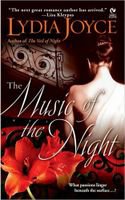
I adored Lydia Joyce's debut, The Veil of Night, loved the plot, the characters, the writing, everything! Therefore, the minute her latest release, The Music of the Night (excerpt) I bought it and had it couriered to Montevideo. Well, to be honest, I'd have done the same even if I hadn't read TVON. The reviews I read made it sound fascinating, and knowing it was set in 19th century Venice was too good to resist!

Sarah Connolly has left her bleak life of desperate poverty to become a lady's companion to an elderly woman. But in Venice, Sarah soon discovers there is a darker side to the family she has been thrust among, and walking just beyond her newfound hope is a mysterious, shadowy figure. What lurks behind his mask is a darkness that compels her...and a passion that makes her doubt everything she wants.

Sebastian Grimsthorpe, Lord Wortham, one enjoyed a carefree life, but it ended in an explosion of betrayal and violence. Escaping death, he embraces the appearance of it, concealing himself in shadows and behind masks so that he can exacta pitiless revenge upon the man who so nearly destroyed everything he holds dear. But his quest will take an unexpected turn when he is suddenly shaken by a woman whose tragic eyes mystify him--and seduce him into a world of secrets and deceptions.
Like TVON, this has to be among the freshest, most original and just plain different books I've read this year. They are quite different from each other, both of Joyce's books, but they share the most important things: wonderful characters, good writing and fascinating stories. Dark, lush, erotic and exotic, TMOTN is all that and more. A B+, and only some quibbles with the ending kept it from getting a higher grade.

As much as I adored the setting (and it was beautifully done, vivid and atmospheric and evocative), it was the characterization of Sebastian and Sarah that made the book rise so high above the norm. Joyce has created two characters who aren't perfect and know it very well, and who have a huge core of raw honesty inside them, especially when it comes to themselves.

I especially loved Sarah. I appreciated her pragmatism and admired her, both for the way she'd pulled herself up by the bootstraps after a truly horrid beginning and made something of herself, and for being painfully honest to herself about her motivations and wants. There's no coyness or missishness in her at all, but neither does she do the "I'm such a horrible person for having been a prostitute" song and dance. She doesn't beat herself up about the choices she's had to make. She knows perfectly well she did the best she could and she's reached a point in her life in which she respects herself. And yet, she isn't perfectly strong and invincible, both because her station in life is still precarious and because the pox-marks on her face have really done a number on her self-confidence. Not only does she feel utterly unattractive, and is thus easy prey for a man who seems to be attracted to her (and she knows perfectly well that this is so), she knows her scars tell people more about her childhood than she would like them to know.

I'm very pleased to say Joyce handles the revenge plot that's central to her story wonderfully. I tend to find revenge stories unsatisfying. I've read plenty of books in which the hero has no problem punishing an innocent for his or her father/mother/whatever's sins... the "he ruined my innocent sister so I'll ruin HIS innocent sister" school of thought, which is the quickest way to make a hero not be a hero in my mind. Or the perceived slight amounts to nothing more than hurt pride and yet the hero (because it's usually the hero, in these cases) seems bent on unleashing the most horrible consequences on his opponent and everyone around him.

In this case, it's not like that at all. Sebastian had very, very good reasons to want revenge against de Lint, and I appreciated the complexity of his feelings about this, his self-loathing and his doubts about whether he's not just as bad as the man he wants revenge against. Also, while his plot is slightly beyond the pale in certain ways (I'd definitely agree with Sarah in this), I think I'd forgive this aspect. It doesn't stem from a cruel intention to wound, but from a miscalculation. He really didn't mean for his plan to have the effect it would have had on this person (I hate to have to be cryptic!), and he let himself be blinded by his need for revenge about the fact that it would.

I thought Sebastian's behaviour towards Sarah was perfectly done. His misconception about her was wholly understandable, and I liked that he was still unaccountably attracted to her even when he thought she'd been de Lint's accomplice. And in apparent contradiction to this, I also liked that his convictions were strong enough that he acted on his revenge against Sarah (who he didn't really *know* at this point, let's be clear) in spite of his attraction towards her. He is attracted to her, but he doesn't compromise his principles because of it. And when he realizes he's been wrong, he's suitably chagrined and he is, again, completely honest to himself about why he might have made that mistake.

The relationship between these two is just beautiful. I loved how Sebastian is so completely unjudgemental about Sarah's past and how he immediately sets out to give her what she craves and needs, a sense of authority and control over her surroundings. I truly got the sense that it was real love that was slowly developing between them, and the obstacles to that love seemed perfectly justified on both sides.

The only area in which I though the story faltered somewhat was in the very last pages, when the truth finally comes out. I can't really discuss this without spoilers, so just highlight the next few lines to read it:

Whitby's whole convoluted plot was just too, well, convoluted to be believable. I never suspected, I must acknowledge that, even if Joyce did give us a little clue about Gian in his suggestion that it might be easier to provide de Lint with real reluctant virgins instead of whores who could pretend to be reluctant virgins.

Apart from this, the whole "de Lint isn't truly evil" realization Sebastian has... I was going "no, no, no!!!" all the way through. I'm sorry, but the man is evil. He didn't rape Sebastian's 12-year-old daughter, ok, but he was perfectly happy to deflower unconsenting 12-year-old Venetian girls sold to him by their mothers! And he very definitely would have raped Sarah. Is that not evil enough? He deserved SO much worse than he ultimately got!


And after this huge spoiler, I'll close this by saying that, with these two books, Lydia Joyce has now comfortably settled in my (very short these days) autobuy list.

Read more...

Top 10 picks of 2005

>> Thursday, December 29, 2005

Kristie started it. I've actually only read 31 2005 titles (they take time to get here, unless I pay to have them couriered), so I thought I probably wouldn't get to 10 picks, but it seems the 2005 books I've read have been just wonderful, because I did, and I even had to add 3 honourable mentions. I added the link to my review for the ones that have already been reviewed, but a couple haven't, because I've just finished them. In no particular order:


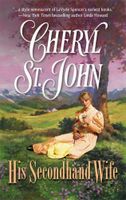
His Secondhand Wife, by Cheryl St. John: A very sweet and tender Western, a genre I'm not usually a fan of, but I loved it here. The very tortured hero is to-die-for.


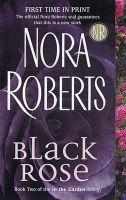
Black Rose, by Nora Roberts: I'm absolutely loving this trilogy. I especially appreciated the more mature hero and heroine in this particular title. I can't wait for Red Lily to get here!


Harry Potter and the Half-Blood Prince, by J.K. Rowling: What can I say? I'm a huge fan of the HP series, and this book didn't disappoint.


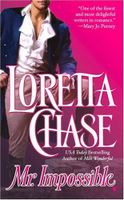
Mr. Impossible, by Loretta Chase: Fun, fun, fun! Loretta Chase's beautiful writing + a wonderful hero and heroine + lovely Egyptian setting.


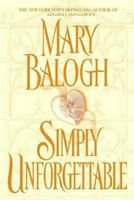
Simply Unforgettable, by Mary Balogh: After Slightly Dangerous, I was expecting a bit of a dip, but SU was almost as good.


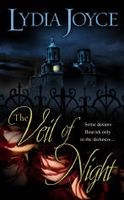
The Veil of Night, by Lydia Joyce: What a wonderful discovery Lydia Joyce was! Her books are deep, lush, intense and complicated, and utterly fresh. I loved this gothic-tinged, almost claustrophobic and very romantic story.


The Music of the Night, by Lydia Joyce: As good as TVON. Characters who are just as complicated, a story just as romantic and fresh, plus a Victorial Venice setting. Wonderful!


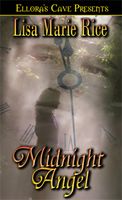
Midnight Angel, by Lisa Marie Rice: Another great discovery, and the first author I've read who was first published in ebook form. I love how she combines steamy sex with tenderness. This one is my favourite by her, and I've now read her entire backlist!


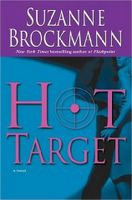
Hot Target, by Suzanne Brockmann: I definitely haven't yet tired of Brockmann. This one has a very solid romance and suspense plot, and I just adored Jules' secondary storyline.


Crossing the Line, by Stephanie Vaughan: My first all-gay romance, and it was wonderful. Hot and tender and passionate, I loved it!


Honourable mentions:


Jigsaw, by Kathleen Nance: Smart techno-thriller, with a lot of AI I enjoyed almost as much as the romance.


Dedication, by Janet Mullany: Not a perfect book, but it shows lots of promise. Probably the most different Trad Regency I've ever read.


What a Woman Needs, by Caroline Linden: Another one with more mature than usual characters. Wonderfully sensual.

Read more...

Genuine Lies, by Nora Roberts

This is amazing. Whenever I think I've reread all the Nora Roberts books I've forgotten about or never read at all, I always find another one I somehow managed to skip when I looked at my shelves. Last week I finally noticed Genuine Lies, hiding there behind all the others.

A book to die for...

Eve Benedict is the last of the movie goddesses, a smoky-voiced sex symbol with two Oscars, four ex-husbands, and a legion of lovers to her name. There is no secret, no scandal she doesn't know. Now Eve has decided to write her memoirs--no holds barred. All Hollywood begs her not to. But Eve has her reasons....

Julia Summers is the biographer Eve has handpicked to tell her story. Transported from her quiet life in Connecticut to glitzy Beverly Hills, Julia hates the limelight but loves her work--and the home it built for the ten-year-old son she's raising alone. How can she refuse this chance of a lifetime?

But Eve's elegantly sexy stepson, Paul Winthrop, will challenge Eve's determination to tell her story--and Julia's resolve to guard her heart. And as Julia learns just how far Eve's enemies will go to keep her book from publication, she also discovers that Eve has one last, dark secret to share. It is one that will change Julia's life--and could cut it brutally short.
Well, no wonder this one wasn't at all memorable. It was borderline ok, a B- hovering very near a C+. The middle section saves it, because the first and last parts weren't very enjoyable to me.

So what was the problem? Well, to borrow a a phrase from P.Devi, this was more Judith Krantz than Jayne Ann Krentz. Lots and lots of glitter and glitz and life of movie stars and sleazy scandal, which just isn't something that attracts me. Ever seen that "Move over, Sidney Sheldon: the world has a new master of romantic suspense, and her name is Nora Roberts." quote printed on the cover of one of Nora's books? It's always baffled me, because I really don't see much in common between the two. This book, however, givesme a glimmer of what that person could have been thinking. It does have that flavour to it, especially the first and last sections.

The book combines a present-day story with lots and lots of delving into the past, which is a device which I often love. Julia Summers is a writer of celebrity bios, and she's offered the chance to do the authorized biography of Eve Benedict, quintessential Hollywood star and still a very sought-after and sexy leading lady even as she nears her 70th birthday. Eve has decided to tell all, every single one of her secrets, and given her long career in Hollywood, these secrets are particularly juicy and involve a large number of people, many of whom would do anything to keep them secret.

So on one hand we've got Julia's story, as she settles in Eve's estate with her young son and works on the bio and falls in love with Eve's stepson. On the other, we've got the story of Eve's life and career in Hollywood, narrated both via flashbacks (not very many) and straight narration by Eve.

I actually thought the info about Eve's life story was well-integrated into the story. Unfortunately, it just wasn't a story that interested me. The 70-year-old Eve was an interesting character, but her past, not so much.

The thing is, I've never been fascinated by movie stars, and I've never been able to understand why people idolize them. Neither do I find the stereotypical "Hollywood romance" particulary romantic, and Eve's big love story is very stereotypical. She and Victor (whose last name has fled my mind right now) have supposedly been in love for years and years, but Victor can't leave his wife and live openly with Eve because his wife's sickly and a devout Catholic and he feels too guilty to leave her, because her health began to suffer when she miscarried a child. Is it supposed to be romantic that a guy cares more about his guilty conscience than about making the woman he's supposed to love happy? I don't think so.

There are lots more episodes in Eve's past which were like this: supposed to affect me one way, but actually affecting me in a completely different one. I guess I was supposed to find all that celebrity gossip exciting and glamourous, but I mostly found it sleazy and boring.

I wanted more on the present day story. I wanted more of Julia, of Julia and Paul, of Julia and Eve interacting, of Eve and Paul, even of Paul and Julia's son Brandon. The middle section concentrates on that a bit more, and it was good enough that it almost compensated for the rest of the book.

Oh, and I mustn't forget to mention the prologue. That was really BAD! I'd very much suggest skipping it to anyone who wants to read the book. It's one of those which show you a scene from very late in the book... in this case, Julia leaving the courthouse after being arraigned for the murder of a female, unnamed someone, who I immediately assumed was Eve (I won't say if I was right about that). She leaves the courthouse and goes into a car, where she's given a glass of champagne by someone, who I immediately assumed was Paul (won't say if I was right about that, either) and who asks her "Well, did you kill her?"

I hated that! First, because I spent the entire book waiting for that to happen, and second, because when it happened, it turned out something in that scene was definitely cheating on Nora's part. That "Well, did you kill her?" ? Very misleading. And this trial thing marked the moment in which the story turned into a bit of a courtroom drama, completely changing the tone of the book. Not very satisfying.

Oh, well, at least it was quick reading, even if it was 550 pages long!

Read more...

Love Song for a Raven, by Elizabeth Lowell

>> Wednesday, December 28, 2005

In spite of the fact that I'm extremely leery of early Elizabeth Lowell titles, I bought Love Song for a Raven because I heard it has an extremely kind, gentle hero, a novelty for Lowell in those days.

Carlson Raven had no choice but to rescue Janna Morgan—the beautiful, courageous woman who struggled against the stormy sea. When he pulled her from the choppy waters and revived her with the heat of his body, his yearning was as unexpected as it was enduring. But Carlson Raven was as untamed and enigmatic as the sea he loved. Would Janna be the woman to capture his wild and lonely heart?
I don't know if it was that I wasn't in the mood, or what, but I was supremely bored by LSFOR. It was a solid C for me.

I really can't believe it. If there's something I've never felt for an old Lowell category title, it's indifference. She kind of specialized in provoking strong emotions back then. Most of them were extreme irritation and a need to bang the book against the wall, but I can't deny her books were, at least, always exciting.

Not LSFOAR. Yes, Carlson Raven is a real nice guy, but his relationship with Jenna Morgan had the most tedious conflict possible. It's one that it's perfectly possible to do right and it has the potential to make for a very poignant romance, but here it falls flat. Raven thinks he's unlovable, and that all Janna can ever feel for him is gratitude. He holds on to that belief against all evidence to the contrary (and there's quite a lot of it, what with Janna constantly trying to tell him she loves him). Janna thinks she has absolutely no sex appeal and that a man like Raven could never want her (she was married to a gay man, see). She holds on to that belief against all evidence to the contrary (and there's quite a lot of it, what with Raven getting constantly hard the minute he sees her).

That would be ok for a while, but that's all there is to the conflict. That's exactly how they each feel at the beginning of the story and it's exactly how they each feel at the end of it, except for the final 2 pages in which they come to their senses. All that happens during the book is that they have sex, and then some more sex, and then yet more sex, ad infinitum. I usually love Lowell's love scenes, but these were plain boring, because there's nothing happening. No growth, no development, nothing. I am especially fond of books with no suspense subplots, books which concentrate solely on the romance, but really, if you're not having anything happen outside of the main characters, you need to have something happening inside them!

Some other short notes:

- Raven kept calling Jenna "small warrior". Always. I don't mean he refered to her as a small warrior, he actually called her that, in a "Yo, small warrior, what's for dinner?" kind of way. So, so Lowell, that kind of thing. I guess it was better than "Fancy Lady", which was what the hero called the heroine in one of her Only books, but it was still irritating.

- Lowell is a true wordsmith. Her language is beautiful, even if at certain points it went beyond poetic into purple territory.

- This book is a kind of sequel to A Woman Without Lies, and you'll probably feel a bit lost if you haven't read that one. I know I was. There are lots and lots of mentions to the relationship between Raven and Angel (the heroine from AWWL), and I still haven't been able to work out what happened between them.

- There's a very funny thread at one of the AAR message boards. The discussion centers on how certain small, unimportant details like the hero's hair color, or the characters' names, or a book's title can be a deal-breaker sometimes, and the posters call this being citizens of Shallowland, a country of many regions (see here). Well, I guess I'm a citizen, too, and the city I live in is called Moustacheville. What is it with Lowell and moustaches and beards? Ugh!

Read more...

Standing in the Shadows, by Shannon McKenna

>> Tuesday, December 27, 2005

My first Shannon McKenna, Behind Closed Doors, blew me away. I just couldn't believe I'd enjoyed it so much, mainly because the hero was of the alpha caveman variety. Standing in the Shadows (excerpt) seemed to be more of the same (and a friend assured me it was), so I simply couldn't resist.

Ex-FBI agent Connor McCloud can never forget the day he was set up to die at the hands of trusted friend and fellow agent Ed Riggs. Hard justice and loyalty to his badge have cost Connor what he wants most--Ed's shy, studious daughter, Erin. He can never have her now, but her beauty still haunts and torments his every waking hour and his most fevered erotic dreeams. But now that his old enemy, Kurt Novak has returned, Connor is prepared to do anything to protect the vulnerable young woman from a killer who has vowed a brutal payback . . . a killer with a predator's lethal patience.

Erin has been harboring secret fantasies about Connor McCloud since she first laid eyes on him--but that was before his testimony sent her father to jail. Her world is falling apart and it's all she can do to hold her family together. But now Connor is knocking on her door, telling her she needs his protection, whether she wants it or not. He won't give up and he won't stay away. He's sworn to guard her life with his own and his fierce protectiveness awakens long-buried feelings--and a fiery sexuality deep within her soul . . .
It definitely was more of the same, and I enjoyed it just as much as I did BCD. A B+.

I just love how absorbing, how intense McKenna's books are. They're usually pretty long, way over 400 pages (at a time when books seem to be getting shorter and shorter), and I think I must have read both in pretty much one sitting. Once I started SITS, it sucked me in. That's probably because the whole book was fairly vibrating with passion. Not just the love scenes (which were steamy, long and plentiful... more about that later), everything. What I mean is, McKenna obviously enjoyed writing every minute of this story: the romance, the suspense, the McCloud family scenes, every single part of the book, and as a result, it feels alive and fresh. I never, ever felt the need to skim even one paragraph, and that is rare.

As much as I enjoyed the book, I realize it's definitely not for everyone. Take Connor, the hero. Like Seth in BCD, there's a bit of the caveman in him. Professionally, he's great, even subtle in his thinking, but that very definitely does not cross over to his personal life. And guess what? I still found him an appealing character. I think it must have been because the way he cares about Erin (is crazy about her, actually, from the very beginning) just shows through everything he does. Even when he's lusting after her (heavy-duty, big-time, obsessive lusting), there's an undertone of tenderness there.

Erin was the weakest part of the plot. While she is stronger than I expected after reading BCD, she does have some episodes of stupidity. Typical stuff, refusing to be careful and take care when it's possible that she is under threat. I mean, even if there was only a small, tiny chance that there might be an animal like Novak after me, I'd probably be camping out at the police station! I don't expect such extremes, but I do want the heroine (and the hero, for that matter, but it's usually the heroine), to be a bit more vigilant, just in case. Other than that, she was ok. And when she was with Connor, she was definitely not a weak, powerless idiot. She has such power over the man, because of how he feels about her, and she does use it.

And this brings us to the sex. Now, this is exactly what I want from a hot book. I don't need gimmicks or exotic positions or anything like that. All I need is two characters who obviously turn each other on, as Connor and Erin do. And McKenna definitely has a way with love scenes. The first one is, IIRC, over 50 pages long (it's a couple of times in a row, actually), and I didn't feel tempted to skip one word.

Actually, McKenna writes this area dangerously close to the limits of my comfort zone. Most of the time she stays just a hair within it, which makes her scenes exciting, but I do have to say she loses me in the few instances in which she steps over the line. The scene in which Connor gets so angry at Erin for consenting to wear that dress when she visits her suspicious client was one of them, for example. It made me more uncomfortable than excited.

The suspense subplot is good, taut and suspenseful. I actually see quite a few things in common between McKenna and one of my new favourites, Lisa Marie Rice, and this is one of the areas in which they're similar. Both have got the hot-tender mix pitch-perfect and both create better-than-usual suspense subplots.

The only thing I'm not to happy about in this case is that the mystery was a bit too closely related to the one in BCD. Even having read that book not all that long ago, I didn't remember every detail, and I was a bit lost at the beginning. Still, it was a good one. I especially liked the way she had her villains play with Connor's head, making him feel a degree of helplessness and vulnerability that really enhanced his humanity and made him a bit less larger than life. And the conclusion was just amazing!

I really, really can't wait to read Out of Control now. Unfortunately, McKenna seems to be one of those authors which people tend to keep, so there just aren't that many used copies of it floating around, so I don't know when I'll be able to get to it :-(

Read more...

The Forbidden Daffodils, by Mary Balogh

>> Monday, December 26, 2005

The Forbidden Daffodils is a short story by Mary Balogh, published in the Blossoms anthology.

Kate Buchanan was ruined when she was 18. After a disastrous elopement and being rescued by the Marquess of Ashendon, she refused to marry her rescuer, even though they'd spent two nights on the road together and everyone knew about it. Her father, angry at her defiance, condemns her to live the rest of her life in exile in a remote Welsh village.

Five years later, Kate has resigned herself to her new life, and is actually at peace and as happy as she can be, considering the circumstances. But who should arrive to perturb her contentment but Ashendon himself, who still seems to be so determined to do his duty that he keeps proposing to her, no matter how much she protests she hates him?

I really loved this story, it was an A- for me. It actually reminded me a bit of Slightly Dangerous, with a hero who has trouble showing that there are, indeed, very strong feelings behind his cold, seemingly impassive façade, and a heroine who has strong feelings for him, but rejects him because she doesn't want to spend her life with someone who doesn't return them.

It's a big misunderstanding story, but it works just fine because it was a perfectly believable one. It was one that was driven by the characters' personalities, not by the needs of the plot, and it made for a particularly poignant read. Ashendon is just so, so wonderful. Those scenes from his point of view, in which you really see his vulnerability, were amazing and had me almost crying.

At 70 pages, the story was the perfect length, too. A bit longer, and Kate would probably have begun to grate, but as it is, it was almost perfect. The only slightly false step was the revelations about what really happened that night 5 years before (Kate's "reasons"). That was an unnecessary whitewash of the heroine; I would have prefered the version that made her a more imperfect character. Still, that was a small thing, and it didn't make me love the story any less.

Googling this story gives me the impression it's something of a buried treasure. There just isn't much about it (or the rest of the stories in the anthology) online. Actually, the only thing I was able to find was a post by Alyssa, who listed it among her top 100 romances. I'd agree!

The rest of the stories, in case anyone's interested, are: A Golden Crocus, by Patricia Rice, Hyacinths for Victoria, by Patricia Oliver, The Apple Blossom Bower, by Margaret Evans Porter and Violets are Blue, by Karen Harper. I made a half-hearted attempt to read them, but I stopped after a few pages of A Golden Crocus because I just wasn't interested, and since I borrowed the book from a friend, I felt no obligation to finish it. Unless someone tells me one or more of the stories are truly wonderful, I'll just return this to my friend with only the Balogh story read.

Read more...

Winterset, by Candace Camp

>> Friday, December 23, 2005

Winterset is the third book in Candace Camp's Moreland family series, of which I read the first book, Mesmerized.

Mesmerized was my second try of an author I hadn't much liked in her bodice-ripper incarnation, many years ago, and it was a pleasant surprise. It didn't blow me away, but it was a nice enough read that I was interested in Winterset.

Despite its graceful beauty, Winterset remains shrouded in the mystery of its dark past. . .

Ever Since Anna Holcombe inexplicably refused his proposal, Reed Moreland has been unable to set foot in the home that was the backdrop to their romance—Winterset. The eerie beauty of the Gloucestershire mansion and the mystery that surrounds it have always captivated him, and he can neither continue living in the house nor give it up completely despite the painful memories it stirs in his heart.

But when Reed begins having his troubling dreams about Anna being in danger, he puts his heartbreak and bitterness aside and directs his carriage back to Winterset, determined to protect the woman he cannot stop loving. Once again passion flares between them, but the murder of a servant girl draws them deep in to the foreboding, deadly legends of Winterset. . .and a destiny neither Anna nor Reed can escape.
To a lesser degree, my experience with Winterset to the one I had with Susanna Kearsley's wonderful The Shadowy Horses. This was a book I enjoyed even while realizing it had certain flaws and that most people wouldn't like it nearly as much. My grade is a B, then, but I'm pretty sure it will be lower for the majority of its readers.

This is quite a quiet story, considering the events surrounding it. It combines a second chance romance with a gothic- and paranormal-tinged mystery, and both very much engaged my attention.

Three years before the start of the story, Reed Moreland fell in love with Anna Holcombe on a visit to his newly purchased estate, Winterset. He had good reason to think she returned his feelings, and the courtship proceeded swimmingly, but when he proposed, she rejected him in terms that didn't leave him any grounds for hope. He immediately left Winterset and never went back.

The story starts as Reed wakes up after a truly scary dream about Anna, which convinces him of the fact that she's in danger. See, after his sisters' experiences with the paranormal (narrated in the two previous books) Reed is pretty open-minded about this kind of thing. Still, he can't very well write to Anna about it, so he decides to go to Winterset for a while, with the excuse of looking it over in order to sell it, which he realizes he really should seriously consider.

When he arrives everything seems just fine... until the body of a maid employed at Anna's house is found, clawed to death by what seems to be an animal, only there are no animals that big in the environs. Fifty years before there was a case just like that one (same claw marks, similar victim), which only adds to the mystery, especially when another body is found, also exactly echoing the old murders.

And then there's the fact that Reed's feelings for Anna are still very much alive, and that he still seems to get the feeling that Anna is very much attracted to him, too. As they team up to investigate the murders, the romance quickly flares up again.

Now, let's just look at the romance angle. The first thing I thought when I read the first few pages what that Anna had better have a very good reason for her actions of three years before. If she'd rejected Reed because she wasn't good enough for the son of a duke, or because she needed to take care of her brother and father, I thought, I'd probably have banged the book against the wall. Fortunately, the reason Camp gives her is a very good one, and her actions make perfect sense. Furthermore, she doesn't cling to the secret overlong. It's something she'd obviously want to keep a secret, but she tells Reed at the exact moment it made sense for her to do so.

Reed and Anna's romance is not a particularly exciting one -no fiery passions, no high tempers- but I liked it. These two people obviously liked each other immensely, as well as being attracted to one another. They enjoyed simply spending time together and talking, and I got the feeling they were perfectly suited.

Reed is quite a nice guy. His characterization wasn't particularly deep, but I liked what there was of it. As for Anna, she won my heart unconditionally with her good sense when, after the attacks, she decided to take precautions and give up her freedom to go for rides alone for a while, taking a groom with her instead. So refreshing!

The mystery was a truly interesting one, and I enjoyed the investigation. I realize I haven't mentioned it yet, but Anna is a bit of a psychic herself, and has spells in which she, for instance, kind of connects to the violence that happened at a certain place and feels what the people are feeling. That is crucial to the investigation, but it didn't feel like a cop-out. It and the more normal fact-finding activities were well combined and made for an interesting case.

My only problem with Winterset was the writing style, something that's a bit strange, considering how long Camp has been writing professionally. She kept jerking the POV around. I don't mind head-hopping from the hero to the heroine (or even to other characters, occasionally), as long as it is well done, but Camp would keep sticking bits of omniscient POV in there. She'd be in Anna's head, as she dressed up in her oldest clothes and went to meet Reed, and then, in the same paragraph, point out that what Anna didn't know was that those clothes made her look beautiful. This wasn't something I'd even have noticed a few years ago, but I did this time, and it kept throwing me out of the action.

As I mentioned, Winterset is part of a series, but it stands alone just fine. There are some characters from the previous books, and certain events mentioned, but they aren't much of a bother. In fact, the hero and heroine from book 2, Beyond Compare ,show up, and even though I didn't read that one, I was never lost.

Read more...

Kiss of the Highlander, by Karen Marie Moning

>> Thursday, December 22, 2005

Ok, I'm about to start Kiss of the Highlander (excerpt, etc.), by Karen Marie Moning. If you take a look at my index, you'll see pitiful few time travel romances there, and that's for a reason: I'm really not into them. Same thing with Scottish set historicals, you won't find all that many of them in my index. Nothing against Scotland or Scottish men, I just don't usually enjoy the romance novel version of them.

So what am I doing starting a novel with the word "Highlander" on the title and a watch on the cover? Why, trying a new author for the Author of the Month at my Historical Romance Chat group! Moning was chosen this month, and since she has nothing BUT highlanders and time travels, usually both together (or at least, the two Monings my friend had that I could borrow were highlanders and time travel), I'm reading exactly that. I promise to keep an open mind and really try to enjoy this, no matter how unlikely I think that is, a priori. After all, I've heard good comments about Moning from plenty of people whose taste I trust.

A laird trapped between centuries...
Enchanted by a powerful spell, Highland laird Drustan MacKeltar slumbered for nearly five centuries hidden deep in a cave, until an unlikely savior awakened him. The enticing lass who dressed and spoke like no woman he'd ever known was from his distant future, where crumbled ruins were all that remained of his vanished world. Drustan knew he had to return to his own century if he was to save his people from a terrible fate. And he needed the bewitching woman by his side....

A woman changed forever in his arms...

Gwen Cassidy had come to Scotland to shake up her humdrum life and, just maybe, meet a man. How could she have known that a tumble down a Highland ravine would send her plunging into an underground cavern—to land atop the most devastatingly seductive man she'd ever seen? Or that once he'd kissed her, he wouldn't let her go?

Bound to Drustan by a passion stronger than time, Gwen is swept back to sixteenth-century Scotland, where a treacherous enemy plots against them ... and where a warrior with the power to change history will defy time itself for the woman he loves....
I'll be trying something new here. I'll write every now and then and record my impressions as the book progresses. Let's see how it goes.

Just started, page 12. Groan. Right, the heroine's a 25-year-old virgin with a PhD, tromping around Scotland trying to lose her virginity. Someone kill me now! No, really, I promise, I'll keep an open mind and I truly will try to enjoy this!

page 57: I'm quite enjoying this! Gwen has just found Drustan and serendipitously woken him up, and he's just realized he's in the 21st century. It's fun. Drustan's quite arrogant, of course, very caveman-ish, but there's a certain kindness there that tempers it.

page 158: oh, wow, I planned to make a little note every 50 pages or so, but the story has really grabbed me, and I completely forgot. The only reason I stopped now is because I had a phone call, and since I'm at a bit of a crisis point in the book, it's a good moment to appraise.

So far, the book's been surprisingly good. I really liked the scenes of Drustan confronting the advances of the 21st century. Making him a powerful druid, with a certain concept of time travel already, makes it more believable that he'd take this all pretty much in stride. And the scenes in the clothing store and the car were fun. Things like Drustan wanting to buy a purple sweatsuit tickled my funny bone. Also, there's quite a bit of chemistry between Drustan and Gwen, and they really sizzle together. I especially like the way Drustan is so smitten by her, the way he's so sure she's the woman for him, that it was worth it for him to travel 500 years to the future to find her.

I'm not 100% happy about where the story is right now. Drustan's decision to, as far as I understand, take Gwen back to the 16th century with him, without her approval, or even knowledge, is *very* iffy for me. I'd really, really hate to have to live back then!

Let's see if I'm right about what will happen (I promise not to delete this if I'm wrong, so you can see just how off base I was at this point): the version of Drustan that's been in the 21st century will disappear (if I understood what he said about the danger of two versions of the same person being in the same time and approximate space), because he'll have been slightly wrong about the symbols. Gwen will be stranded in the 16th c. and have no idea what to do. She (again, if I understood correctly) will just need to find 16thc!Drustan and recite the poem 21stc!Drustan made her memorize, in order to restore his memory, but he never explained that, so she won't do it for a long time. And obviously, 16thc!Drustan will not believe anything she says. I kept wondering as I read why he didn't write the instructions down on a piece of paper. After all, he knew there was a good chance he was going to screw it up!

Ok, I'm going back to the book to see just how wrong I am!

page 232: Just as I suspected. Gwen protests and protests and Drustan won't believe her. These past 75 pages have been somewhat frustrating. Come on, Gwen, think!!

page 335: At last! Gwen thought, and did what she should have done days before. Still, the whole process (at least, these past 100 pages, once Gwen realizes she's going to have to keep trying and that' that) was better to read and less frustrating than it could have been, and there were some lovely scenes there. Their conversation with Drustan locked in the garderobe was one of them. When Gwen repeats a certain something that Drustan said to her in the future, wow! So now things are just lovely between them.

And that is a bit of a problem... the story is all but over on the romance front, and we still have some 65 pages to go. I guess the action will shift to the problem of who Drustan enemy was, something that had been pretty much forgotten up until now. It's also something we readers know already, though, so where is the tension going to be coming from?

The end: Well, the suspense subplot was dispensed with in a hurry (good news for me, since I wasn't particularly anticipating long, drawn-out battle scenes), and Moning did manage to get some conflict there that I should have guessed but didn't, and it was pretty good. I quite liked the solution to how they can be together from now on (and I'll say no more about this).

And that thing at the end, the setup for Drustan's brother book? Should have irritated me to no end, but all it did was make me want to read his book, Dark Highlander, even if the AAR review sounds dire.

Final verdict: This was pretty damn good! I'd rate it a solid B. Drustan was a nice alpha: a bit possessive, a bit dominating (Gwen could stand up to him just fine, so that was ok), but his basic kindness just came through and he had enough vulnerability to make him interesting. As for Gwen, she was actually pretty smart and fun and didn't grate as I feared she would when she was first introduced.

I've got to thank Sandy for choosing Moning, as I would never have picked up one of her books if I hadn't been forced to. That's what AOM is all about! :-)

Read more...

Blog template by simplyfabulousbloggertemplates.com

Back to TOP