The Year of the Runaways, by Sunjeev Sahota

>> Friday, August 28, 2015

TITLE: The Year of the Runaways
AUTHOR: Sunjeev Sahota

COPYRIGHT: 2015
PAGES: 480
PUBLISHER: Picador

SETTING: Contemporary England and India
TYPE: Fiction
SERIES: None

The Year of the Runaways tells of the bold dreams and daily struggles of an unlikely family thrown together by circumstance. Thirteen young men live in a house in Sheffield, each in flight from India and in desperate search of a new life. Tarlochan, a former rickshaw driver, will say nothing about his past in Bihar; and Avtar has a secret that binds him to protect the chaotic Randeep. Randeep, in turn, has a visa-wife in a flat on the other side of town: a clever, devout woman whose cupboards are full of her husband's clothes, in case the immigration men surprise her with a call.

Sweeping between India and England, and between childhood and the present day, Sunjeev Sahota's generous, unforgettable novel is - as with Rohinton Mistry's A Fine Balance - a story of dignity in the face of adversity and the ultimate triumph of the human spirit.

This almost never happens, but sometimes a single scene can just make me stop dead and not want to continue reading an otherwise enjoyable book.

The Year of the Runaways is another book from the Man Booker longlist. It tells the story of a group of young Indians. As the book starts, the men are living together in a cramped little flat in Sheffield, working illegally and putting all their energy into their objectives. The action then moves back to India for each one, showing us what brought them to Sheffield and what they're working towards.

Initially, the comparisons to Rohinton Mistry's A Fine Balance made me give this the side-eye a bit, as I found that book unbearable. But this is very different. Bad things happen, too, very bad, but there is a fair bit of decency and goodness from characters big and small, and that makes it bearable. It also doesn't minimise the tragedy and unfairness in the least. In fact, I feel it makes the structural injustice and the horrible stuff work better, because it all becomes more believable. When everything is horrible and there's no one drop of goodness at all, my mind sort of shuts down and I stop caring about the characters, because I just don't believe the situation. The way this was written in this book made the tragedy even more tragic and affecting.

It's a nice, diverse group of people, as well, with very different backgrounds. There is no one motivation for immigration and no one story. These were stories I hadn't read before. I was looking forward to reading more.

But then I got to the scene I found unacceptable. This was at about 1/3 of the way in. In this scene, a really sympathetic character tries to rape a young woman. This is portrayed as him being overcome by his love and need for this girl, rather than, say, an attempt to punish or to control. My mind just stopped and went "No". This conception of rape as being about men not being able to control themselves because they just feel too much (lust, love, whatever) for the woman is toxic and harmful and disgusting. It's not a character self-justifying, which I would have been fine with (some men do, after all). The problem is that it's the narrative portraying the rape attempt this way. I might be overreacting. I've had a look at several reviews and no one even mentions this. Do you think I'm overreacting? The scene I section I object to is below. And in case you're wondering, the man is stone-cold sober at the time, so his obliviousness is not about that. Also, he's previously been a real sweetheart.

"You're the only one who understands", he said, easing her down, her head on the pillow. A nervous look crossed her face, which she tried to smile away. They resumed kissing. Her hands roved around his back as if not sure what they should be doing. His were on her waist, then her bottom. She pushed against his shoulders, but when he insisted on kissing her neck, she seemed willing to let him. He wanted to show her how much he loved her. How much it meant to him that she understood. He pushed up her top and couldn't believe that under it were her breasts. Just there under this thin top. The pink-brown tips revealed. He heard her say something and try to move away but he knew she liked him and he held her arms and kissed her breasts. She was saying it louder now, and the louder she said it the stronger his grip, the more fiercely he applied his mouth to her body. He felt her knees in his stomach, pushing him away. That didn't make sense. He rubbed his cock against her and she screamed, but he was groaning himself and he bit her breasts and dug his fingers into the maddeningly soft flesh of her arms and pushed his weight down, down on her. He was telling her how much he really loved her when he felt a pair of arms around his waist yank him violently away."
I'd also been bothered before this scene by how all the women were grasping and needy and selfish and constantly put the men under huge pressure to give them money: their husbands, their sons, all of them. But I was hoping that this characterisation would become more nuanced as we got to know more female characters. After the above, though, I just don't trust the author, and I refuse to read any further.

MY GRADE: A DNF.

Read more...

A Wish Upon Jasmine, by Laura Florand

>> Saturday, August 22, 2015

TITLE: A Wish Upon Jasmine
AUTHOR: Laura Florand

COPYRIGHT: 2015
PAGES: 323
PUBLISHER: Self-published

SETTING: Contemporary France
TYPE: Romance
SERIES: Part of the La Vie En Roses series

Ruthless. That was what they said about Damien Rosier. Handsome. Wealthy. Powerful. Merciless. No one messed with his family, because to do so they would have to get through him. No one thought he had a heart. Not even the woman he gave his to.

Cynical. That was what they said about Jasmin Bianchi. A top perfumer of her generation, Jess had achieved commercial success by growing a protective shell over a tender heart. The one time she cracked it open to let Damien in, he crushed it--after a night of unbelievable passion.

Lovers. That one magical night couldn't survive the harsh light of dawn. When Jess woke up to discover the man in bed beside her had stolen her company, she fled.

Enemies. Now she's come to the south of France with something of his. If he wants to reclaim both his family heritage and the woman who walked away from him, he's going to have to fight as dirty as only Damien can.

But Jess knows how to fight dirty, too. And these days, she has nothing left to lose.

Certainly not her heart.

Come explore the south of France, a world of heat and fragrance and tales as old as time, through the stories of the five powerful Rosier cousins and the women who win their hearts. A Wish Upon Jasmine, book two in Florand's addictive new series, La Vie en Roses.

Jasmin Bianchi is an extremely successful perfumer, the creator of Spoiled Brat, a scent that has been high in the list of most ordered perfumes for years. It's also a scent that has typecast her, to the point that all the briefs she gets (get me, speaking the lingo!) are for similar superficial, cynical fragrances. When she receives a gift of a small perfume shop in Southern France out of the blue, she sees it as the opportunity to escape the stereotype and decide what she wants to do.

The only problem is, the powerful Rosier family, hugely influential in the world of perfume, consider the shop a crucial part of their ancestry. It might legally belong to their old aunt Colette, but she doesn't have the right to just give it away, even to the descendants of her long-lost adopted son. The obvious person to send out to sort this out is Damien, the merciless money man who has made Rosier SA into a huge, strong business and whose work allows the family's artistic members to do what they do without worry.

But Damien and Jess have a history, a one-night stand some 6 months earlier which ended badly when Jess realised who Damien was and that he'd just taken over the new business venture on which she'd pinned all her hopes for change.

Sigh. It's looking more and more like Florand is just not for me. The annoying thing is that I could have loved this book. Damien was a type of hero I really love: the guy who's been placed by his family in the role of the hard-hearted enforcer, and who's now perceived as being just that in personality as well. Meanwhile, the guy is desperate for some softness and warmth and romance. I felt Damien was very well done in that sense.

And Florand can write a good, angsty scene. There's a stretch round the mid point with Damien and Jess remembering what happened when they first met, the feeling of warmth and trust when they made love, and then Jess's feeling of betrayal when she realised who Damien was, and Damien's desperation when he felt something precious that had been offered to him had been withdrawn. And then when he realises all that had been going on in Jess's life when they first met! Oh, I had such a lump in my throat while I was reading that!

I'd been struggling with the book a bit before I got to that section. There's a lot of clutter here, backstory here that must have been introduced in the previous book in the series. There's all the stuff around the hunt for the long-lost son's descendants and how that got started during the 2nd World War, when Aunt Colette and her brother and the child's birth mother were part of the Resistence. There's pointless matchmaking and a constant stream of happy couples from previous books. There's sequel-baiting with references to characters who have nothing to do with this particular story.

I was getting bored with all of that, and I wasn't too engaged with the romance. I'm getting sort of humourless these days, not willing to buy into the fantasy aspect of how romance heroes behave and seeing it all too literally. Damien's behaviour kept making me go "inappropriate!!!" in my mind, and that was annoying. Plus, the writing. Oh, man, Florand's writing drives me crazy. I find the way she does dialogue almost unbearable. There are looooong bits of internal monologues in between every single bit of reported speech. A bit of that is fine, but this is just way too much. My mind kept wandering away.

And then I got to that lovely, angsty stretch and thought "Oooh, this is getting good!". Well, the second half was a tiny little bit better than the first. There's some interesting stuff about family expectations and beign typecast, and two characters finding out what they want from life and each other and going for it. But it was just much too long and unfocused. Once Damien and Jess had had their confrontation, there really wasn't much conflict there. Florand tried to stretch it out, but their behaviour ended up not really making sense to me. They kept going round and round and it all felt pointless.

And, while Damien mostly made sense to me as a character, Jess did not. Her past is sketchy and doesn't really explain why she is who she is: how she developed such a lack of belief in herself when she's been so incredibly successful in her career, why she's still such a sexual innocent (we get absolutely nothing on her romantic past). It needed more development.

According to amazon, this book is about 320 pages, but I'm pretty sure it's quite a bit longer than that. And it should have been shorter. About a third of it could have gone and it would have improved the book.

MY GRADE: A C+.

Read more...

Two DNFs from the Man Booker longlist

>> Wednesday, August 19, 2015

One of my "rules" for my yearly Man Booker reading is that, although I will try as many of the books as possible, even the ones that sound like they really won't be my sort of thing at all, I am allowed to DNF them as long as I've read enough of them to get a good sense of what they are like. These two really appealed to me a priori, but both turned out not to be for me.

TITLE: The Chimes
AUTHOR: Anna Smaill

The Chimes is set in a sort of post-apocalyptic London. The written word is not available any longer, and people's lives are a constant struggle to keep memories. Anything not somehow anchored (as bodymemory, on an object) fades away pretty quickly. The whole world is music, from the Chimes several times a day (which seem to have a strong mental effect on the entire population), to the way people communicate (complex directions are always given in song).

We meet Simon as he arrives in London, not long after his mother's death. On his first day he follows a mysterious song and finds a lump of a very special metal (or mettle, as the word has evolved), which brings him into a small group of mudlarks who hunt for that mettle in a certain part of the river.

The beginning of this book was a huge struggle. Everything was really confusing, and it was tough to understand what was going on. After the first quarter or so I started to get it a bit more, but unfortunately, it still didn't work for me. I think the main problem was the issue of memory. I just didn't feel the way it was supposed to work here made sense. There seemed to be no rhyme or reason to what people remembered and what they forgot after sleeping.

And the characters didn't make much sense to me either. This is something that is probably a problem with me as a reader, since unbelievable characters clearly are no obstacle to books being considered "Good Literature", but I personally need characters that make sense and who react in ways that feel believable. This doesn't mean that they have to react like me; in fact, some of my favourite books have characters that, because of where or when they live, or because of their past experiences, react in ways that are completely foreign to me. That's fine; it just has to make sense. Here, it doesn't, and this is an issue I've had with quite a few Man Booker longlisted books (e.g. the much-adored How To Be Both, last year, or Swimming Home, a couple of years earlier).

Anyway, I gave up after about a third. Too bad, because the premise sounded interesting, a bit like Philip Pullman's The Dark Materials books!

MY GRADE: A DNF.


TITLE: The Green Road
AUTHOR: Anne Enright

Like A Spool of Blue Thread, which I loved, The Green Road is about a family. Unlike in the former, though, the author's voice got in the way of my enjoyment of the latter.

The premise is that the far-flung members of an Irish family reunite after many years. I didn't get very far into it. I saw the beginning, when eldest son Dan decides he's going to be a priest, sending his mother into paroxisms of grief. Then I saw the second part, a few years later, when we see Dan living in New York in the early 90s, trying very hard not to be gay. I gave up not long after that, after about a third, so I didn't read the stories of all the other siblings. I did push on long after I started wanting to put it down, but gave up after a few days of forcing myself to pick it up.

My problem with The Green Road was mainly the voice. It put me off terribly. It's always hard to pinpoint why a particular writing style doesn't appeal, but basically, I found the style pretentious and annoying, and saw the author behind it a bit too transparently. The second section should have been great. It was a tragic time for the community she was portraying, right during the AIDS epidemic. It just felt horribly objectifying. The voice in which those young men were portrayed was very clearly from the gaze of the opposite sex and felt prurient and horrible. I also felt very detatched from the characters. I didn't care.

MY GRADE: A DNF.

Read more...

A Spool of Blue Thread, by Anne Tyler

>> Saturday, August 15, 2015

TITLE: A Spool of Blue Thread
AUTHOR: Anne Tyler

COPYRIGHT: 2015
PAGES: 368
PUBLISHER: Knopf

SETTING: Contemporary and 20th century US
TYPE: Fiction
SERIES: None

“It was a beautiful, breezy, yellow-and-green afternoon. . .” This is how Abby Whitshank always begins the story of how she fell in love with Red that day in July 1959. The Whitshanks are one of those families that radiate togetherness: an indefinable, enviable kind of specialness. But they are also like all families, in that the stories they tell themselves reveal only part of the picture. Abby and Red and their four grown children have accumulated not only tender moments, laughter, and celebrations, but also jealousies, disappointments, and carefully guarded secrets. From Red’s father and mother, newly arrived in Baltimore in the 1920s, to Abby and Red’s grandchildren carrying the family legacy boisterously into the twenty-first century, here are four generations of Whitshanks, their lives unfolding in and around the sprawling, lovingly worn Baltimore house that has always been their anchor.

Brimming with all the insight, humor, and generosity of spirit that are the hallmarks of Anne Tyler’s work, A Spool of Blue Thread tells a poignant yet unsentimental story in praise of family in all its emotional complexity. It is a novel to cherish.

A Spool of Blue Thread is another of the books on the Man Booker longlist. I seem to have started with the female authors, and I suspect that's the way I'll keep going for a little while, as those books are the ones that appeal to me the most.

This is the story of a family, the Whitshanks. It's about the individuals that make it up, but it's also about a lot more than that, about the things that make them a more than just a collection of individuals with the same name. It's about the relationships between them all and about the stories that they've accumulated and give them a sense of themselves.

We start out in the present, with Abby and Red Whitshank and their grown-up children and their children. But we don't stay there for the whole book, and we get to see what's behind some of those stories that the family tells, as well as the ones they don't.

It's a very domestic book, one about a pretty ordinary family, and if you look at it superficially, there's nothing unusual going on. Nothing hugely dramatic, just the usual stuff that happens in normal families. Big stuff for those families, but nothing surprising or particularly remarkable. It's boring, you might say. You'd be wrong. I was completely gripped by this story. I think the key is the way this feels true. Every few pages I'd find a little insight that made me stop in my tracks, a little twist in a character that made me reevaluate and see them in a different way, a little moment that made me want to cry. It's beautiful writing, with characters drawn by just a couple of strokes who feel much more real than some characters after an entire novel, and a low-key, subtle humour that, nonetheless, often had me laughing out loud.

It cut a bit too close sometimes. Denny, one of Abby and Red's sons, felt so familiar that it was on the verge of being upsetting. Tyler shows the way he punishes the parents with his absence and withdrawal so effectively that they end up walking on eggshells around him, terrified of asking any question and being punished for their nosiness by Denny disappearing again, and I kept thinking "Yes, yes, that's what he does!" There's also the fear of parents getting old, something I'm experiencing at the moment, only here we also see it from the point of view of the parents themselves, which was something I probably really needed to see.

So yeah, this is all about about domestic life and families, and I love it that this is recognised as valuable and important and deserving of a Booker nomination.

I read an Anne Tyler book many, many years ago (The Accidental Tourist) and it didn't make a huge impression on me. If A Spool of Blue Thread is a good example of what her writing is like, I suspect I might have been a bit too young for her at the time (I was in my mid-teens, I think). I look forward to exploring her backlist, including reading The Accidental Tourist again. I'm sure I'll appreciate her more these days.

MY GRADE: An A-.

Read more...

Day Four, by Sarah Lotz

>> Tuesday, August 11, 2015

TITLE: Day Four
AUTHOR: Sarah Lotz

COPYRIGHT: 2015
PAGES: 352
PUBLISHER: Hodder & Stoughton

SETTING: Cruise ship in the Caribbean
TYPE: Horror
SERIES: Related to The Three

The trip of their dreams becomes the holiday of their nightmares: DAY FOUR is Sarah Lotz's extraordinary, unmissable follow-up to the book that made headlines around the world, THE THREE - perfect for fans of The Shining Girls, The Passage and Lost.

Four days into a five day singles cruise on the Gulf of Mexico, the ageing ship Beautiful Dreamer stops dead in the water. With no electricity and no cellular signals, the passengers and crew have no way to call for help. But everyone is certain that rescue teams will come looking for them soon. All they have to do is wait.

That is... until the toilets stop working and the food begins to run out. When the body of a woman is discovered in her cabin the passengers start to panic. There's a murderer on board the Beautiful Dreamer... and maybe something worse.

I loved Lotz's The Three. It wasn't perfect, but it was immensely creepy and gripping, and I enjoyed every minute I was reading it. When I heard she had a book coming out that was sort of along the same lines, it went straight on my purchase list.

The action here takes place on a cruise ship sailing the Caribbean, with the narration moving between a small number of characters in each chapter. There's a young woman working as assistant for a dodgy celebrity psychic, there's a blogger determined to expose the psychic, there's a Filipina cabin attendant dealing with an unwanted pregnancy, and several more, including a rapist, a drug-addicted doctor and an older woman who's part of a suicide pact.

Everything's going well until the fourth day of the cruise, when a fire breaks out. It's not a huge fire and it gets put out soon enough. Should be easy enough to do some quick repairs and get going again. Except that doesn't happen. The ship is dead. It's not moving and none of the communications systems are working. Generators keep things working for a little while, but then, little by little, all systems begin to fail. No running toilets, no electricity, no air conditioning. Not to mention a lot of really creepy things going on.

This was mostly fun, but quite disappointing. I think the style in The Three served to cover the shortcomings of Lotz's writing, which were unfortunately evident here. She's very unsubtle and unconvincing in her psychology. In The Three, since the book was structured as a collection of different bits of material -interview transcripts, online chats, reports- we were looking at characters from the outside. Sometimes the lack of subtlety shone through anyway (especially in the case of the religious loony American characters), but mostly, it was ok.

In Day Four, we get chapters cycling through the different main characters, and it's third person point of view, from deep in each of their minds. The problems are obvious, and the psychological make-up of the characters completely unbelievable. I keep using this word, but "subtletly" is the key. These characters are not complex in the least, and therefore they feel like stereotypes, not real people.

The creepiness was ok, but again, not as disturbing as in The Three. It seemed a lot more based on gross-out and what in a film would be the classic "quiet, quiet, quiet, LOUD!" tactic.

There was also something that bothered me as I was reading, having read The Three. I mentioned one of the characters, Celine, is a show-biz psychic. We know she's a fake (her assistant, Maddie, makes it clear that part of her staff's jobs is to dig for info on the audience and feed it back to Celine). The blogger character who's on the ship determined to expose her is particularly angry about a recent case, where Celine insisted that a little boy and his mum had survived a plane crash, and made the kid's grandmother spend a fortune trying to find them. Turns out the bodies of both were then found in the wreckage and identified by their DNA. Who were these? The boy was Bobby Small, mum was Lori, and the grandma Lillian. Readers of The Three will recognise those names. Bobby was one of the Three, one of the children who survived, and he was found immediately after the crash. I didn't quite know what to make of the inconsistency. Well, I'll just say that this made sense in the end!

Which brings me to the ending. I won't spoil it. I'll just say it didn't completely satisfy me, but things did make some sort of sense. And the very final bit was really properly creepy, which was great!

MY GRADE: A C+.

Read more...

The Moor's Account, by Laila Lalami

>> Tuesday, August 04, 2015

TITLE: The Moor's Account
AUTHOR: Laila Lalami

COPYRIGHT: 2014
PAGES: 336
PUBLISHER: Vintage

SETTING: 16th century North America, Barbary and Spain
TYPE: Fiction
SERIES: None

In these pages, Laila Lalami brings us the imagined memoirs of the first black explorer of America: Mustafa al-Zamori, called Estebanico. The slave of a Spanish conquistador, Estebanico sails for the Americas with his master, Dorantes, as part of a danger-laden expedition to Florida. Within a year, Estebanico is one of only four crew members to survive.

As he journeys across America with his Spanish companions, the Old World roles of slave and master fall away, and Estebanico remakes himself as an equal, a healer, and a remarkable storyteller. His tale illuminates the ways in which our narratives can transmigrate into history—and how storytelling can offer a chance at redemption and survival.

For the last few years I have read (or, at least, attempted) as many books as possible on the Man Booker longlist, and all of the ones on the shortlist. Last year was a particularly good one, and I discovered several books that ended up on my Best of 2014 list (if you haven't read them yet, do pick up The Wake, We're All Completely Besides Ourselves and The Bone Clocks; they're fabulous).

I start as soon as the longlist is announced, so I always read a few that don't go through as well. I have previously tried to guess which ones would go through and start with them, but I'm crap at guessing. I will therefore just start with whichever one sounds most interesting to me. This year, that was The Moor's Account.

The Moor's Account tells the story a young man from what's now Morocco who becomes enslaved by the Spanish and is taken by his master on an expedition to La Florida. We know from the start that the expedition was a disaster, and that he was one of only 4 survivors.

The official accounts of this (very real) expedition are based on the testimony of the three Castillian survivors. All we know about our protagonist is statements that the fourth man was a Moorish slave called Estebanico. Lalami imagines this man's story and gives him a voice and a name, Mustafa al-Zamori, distinct from the one imposed on him at his (most likely involuntary) conversion.

We see his early life and the circumstances that lead to him being enslaved. We also see the Spanish expedition and the interactions between Castillians and Native Americans through the eyes of a man who is neither, one whose self-interest sometimes clashes with his ideals of justice.

Mustafa is an interesting character. He starts out as someone whose loss of freedom has led to a loss of hope. He sees principles as a luxury he can't afford, as a slave and sees his only chance of freedom as being a favour from a grateful master. But as disaster and suffering equalises master and slave, he changes and becomes a different man, one who realises he can't rely on someone who would own another man and can only take his freedom himself. It's a really interesting character arc, but the morality tale element of his story is maybe a bit too 'on the nose'. He's now a slave, but when he was a merchant, he traded in slaves. He was too enamoured of the process of buying and selling, he's now the object of buying and selling. It feels almost too neat.

In the end, though, what worked for me most was that this is about erasure and the power of being able to take your own story. Lalami's account tries to undo the erasure from the official record of both a particular man and of the brutality and evil of the Conquest. The message is that stories and histories have power. The official, cleaned-up account of the expedition had power, but so does this story.

MY GRADE: A B+.

Read more...

July 2015 reads

>> Saturday, August 01, 2015

Still very busy, but I'm seeing the light at the end of the tunnel. Regular blogging should resume soon! :)


1 - Why I Killed Pluto and Why It Had It Coming, by Mike Brown: A-
review here

Astronomer's memoir covering the discoveries that led to Pluto being demoted from being a planet. Really fun and exciting, loved it.


2 - The Casual Vacancy, by JK Rowling: A-
review here

I read this a while ago and thought it was fantastic. I reread it this month for my book club, and it held up very well to a reread. It was, however, really dispiriting to read this after the election in May. All I could think was "That vile Shirley Mollison has won".


3 - Beneath the Surface, by Kate Sherwood: B+
review coming soon

Romance between a farmer and a lawyer doing PR for a company building a gravel pit next to his (the farmer's) land. This had the mix of low-key romance and family angst that I like so much in Sherwood's books.


4 - Finders Keepers, by Stephen King: B+
review coming soon

Connected to Mr. Mercedes, which I loved (different case, but Hodges and the gang get involved). Really fun plot, all about obsession with a writer's work.


5 - Trust No One, by Jayne Ann Krentz: B-
review coming soon

The good news is that JAK has now moved completely away from the Arcane Society. The bad news is that she's still fond of overcomplicated suspense plots that really don't come off. Still, a nice enough romance and elements that were reminiscent of my favourites by her.


6 - The Ghost Network, by Catie Disabato: DNF
review coming soon

It sounded interesting: investigation into a mysterious disappearance, secret societies, a "found document" format. But I couldn't really get into it, mainly due to the fact that pretty much all the characters were celebrity-obsessed and had their heads far up their own arses.


7 - Sweet Deception, by Heather Snow: DNF
review coming soon

I'm having trouble getting into your average historical romance these days. The subversive ones I'm ok with, but the trops I used to be absolutely fine with just grate. Nothing wrong with this one, I was just rolling my eyes too hard at things like "If I'm right I get a kiss".


8 - Speak, by Louisa Hall: still reading
review coming soon

What sold me on this one were the comparisons with Cloud Atlas (I do adore David Mitchell). It's made up of several different stories from different time periods, from the 17th century to 2040, all somehow connected to the issue of artificial intelligence. Really intriguing so far.


9 - The Moor's Account, by Laila Lalami: still reading
review coming soon

On the Man Booker longlist, which I'll be reading as usual. This was the most interesting to me of the lot, so I started with it. It's an account of a doomed 16th century Spanish mission to La Florida, from an enslaved Moroccan man. So far so good.

Read more...

To Kill a Mockingbird, by Harper Lee

>> Sunday, July 26, 2015

TITLE: To Kill a Mockingbird
AUTHOR: Harper Lee

COPYRIGHT: 1960
PAGES: 384
PUBLISHER: Grand Central

SETTING: 1930s Southern US
TYPE: Fiction
SERIES: Hmmm...

The unforgettable novel of a childhood in a sleepy Southern town and the crisis of conscience that rocked it, To Kill A Mockingbird became both an instant bestseller and a critical success when it was first published in 1960. It went on to win the Pulitzer Prize in 1961 and was later made into an Academy Award-winning film, also a classic.

Compassionate, dramatic, and deeply moving, To Kill A Mockingbird takes readers to the roots of human behavior - to innocence and experience, kindness and cruelty, love and hatred, humor and pathos. Now with over 18 million copies in print and translated into forty languages, this regional story by a young Alabama woman claims universal appeal. Harper Lee always considered her book to be a simple love story. Today it is regarded as a masterpiece of American literature.

I thought this was going to be a reread. When we decided to pick To Kill a Mockingbird for my book club, I thought "Good, I haven't read it in ages!". But when I started reading it, I quickly realised that I actually never had before. I might have watched the film, and I have certainly read many a discussion about it, but this was my first proper read of the book, and it was an interesting experience.

I read it in May, long before Go Set A Watchman came out, and intended to post a review before then. I made my usual disjointed notes as soon as I finished it, but then I hit a really busy patch in the last few months and all blogging went out the window. It would be pretty much impossible to write a review now that's not coloured by what I've heard about Watchman, so what I'll do is to simply copy those few notes (with some minor edits for grammar and readability -they really were disjointed!) below and be done with it:

- I didn't expect the humour. There were scenes that had me laughing out loud, like Scout's first teacher and the ladies' tea party.

- The characters, even many of the secondary ones, are so well-realised that I could see the events in this book being written from several points of view. The story would then be about something else, though. Which might not be a bad thing...

- From all I knew about it, I expected the book to be about Tom Robinson's case and the trial. It wasn't. It was about Scout and Jem growing up and understanding the world they're living in. Tom Robinson's story was unimportant, other than as an example of injustice. The whole point of it was to be the catalyst for Scout and Jem's coming of age. Very uncomfortable about that. Feels like when the whole point of a disabled character is to change the life of the able-bodied protagonist, that sort of thing.

- This reminded me of Lean In, in that it seems to be all about learning to live in a fundamentally unfair, imperfect system and how to manipulate it to get a little bit of justice. I lost a lot of respect for Atticus for seeing enough value in the system to want to continue living in it, to think it was worth the effort. Probably immature of me. I wanted him to want to change the system. I wanted him to recognise that a system that works as his society did has no value. I wanted him to want to say "fuck the system" and want to tear it down and burn it to pieces. Because that society? That's what should have happened to it. And someone who would be part of a lynch mob is not "basically a good man", just with some blind spots. I found that attitude really troubling.

MY GRADE: It feels like sacrilege, but although I recognise how good a writer Lee was and I enjoyed the story while I was reading it, too much about it bothered me. It was a B for me.

Read more...

Why I Killed Pluto and Why It Had It Coming, by Mike Brown

>> Friday, July 24, 2015

TITLE: Why I Killed Pluto and Why It Had It Coming
AUTHOR: Mike Brown

COPYRIGHT: 2010
PAGES: 288
PUBLISHER: Spiegel & Grau

SETTING: Contemporary
TYPE: Non Fiction
SERIES: None

The solar system most of us grew up with included nine planets, with Mercury closest to the sun and Pluto at the outer edge. Then, in 2005, astronomer Mike Brown made the discovery of a lifetime: a tenth planet, Eris, slightly bigger than Pluto. But instead of adding one more planet to our solar system, Brown’s find ignited a firestorm of controversy that culminated in the demotion of Pluto from real planet to the newly coined category of “dwarf” planet. Suddenly Brown was receiving hate mail from schoolchildren and being bombarded by TV reporters—all because of the discovery he had spent years searching for and a lifetime dreaming about.

A heartfelt and personal journey filled with both humor and drama, How I Killed Pluto and Why It Had It Coming is the book for anyone, young or old, who has ever imagined exploring the universe—and who among us hasn’t?

The excitement about the wonderful pictures of Pluto coming from the New Horizons probe reminded me that I had this audiobook in my mp3 player. There wasn't going to be a better time to listen to it!

This is basically a memoir, covering the years in the early-mid 2000s when Brown, an astronomer at Caltech, was heading a succession of projects looking for planets. These projects culminated in a discovery that forced astronomers to reconsider the very definition of what "planets" are. And thus, Pluto's demotion from one of the planets to a "dwarf planet", one of many, and Mike Brown's alter-ego of "Pluto killer".

I loved every minute I spent listening to this audiobook. The science is pitched just right. I know very little about astronomy, but I'm a reasonably intelligent layperson. Brown's explanations had the perfect amount of technical detail, explained in a way that made sense but didn't feel oversimplified or patronising. I have a much better idea now of what an astronomer like him does day to day (including doing a surprising amount of reading about mythology, if they ever discover anything significant!). Most importantly, Brown really conveyed the wonder and awe of his work, what makes the drudgery worth it!

But it's not all descriptions of solid science. There's a surprising amount of skullduggery and plotting and detective work, and this is even before we get to the section on the politicking around the reclassification of Pluto. Those sections were incredibly exciting. I was lucky enough that I was just getting on a train as that part started, so I spent all 2 hours of the journey just sitting there, listening intently.

There's also a really nice balance between the astronomy and the personal stuff. Brown meets his wife around the time when his planet-hunting projects are getting started, and his daughter is born, with great timing, exactly in the middle of a spate of important discoveries. While not the focus of the book, these elements really enhance the astronomy sections and give them yet another layer of meaning.

It all works so well because Brown is a wonderful narrator (that is, someone else reads the audiobook, I mean narrator as in the person from whose 1st-person POV we see the action). He comes across as endearing, both in his enthusiasm about astronomy and the way he's clearly besotted with his wife and daughter. And I appreciated that in the sections where he's basically accusing other scientists of wrong-doing, he seems to be making the effort to be even-handed and give them the benefit of the doubt. I did try to keep in mind that I was getting only Brown's side of the story, so I have done a bit of googling to read the other scientists' accounts, but I didn't find those very convincing. They did make me wonder, though, if the situation had been reversed and it had been Spanish astronomers accusing a US team of the same things, with the same evidence, if they would have had the same reaction from the astronomy establishment.

A fantastic book, and one I highly recommend, even for readers who are not particularly interested in astronomy (by the end of this, you will be!)

MY GRADE: An A-.

Read more...

The Liar, by Nora Roberts

>> Sunday, June 21, 2015

TITLE: The Liar
AUTHOR: Nora Roberts

COPYRIGHT: 2015
PAGES: 512
PUBLISHER: Putnam

SETTING: Contemporary US
TYPE: Romance
SERIES: None

Shelby Foxworth lost her husband. Then she lost her illusions...

The man who took her from Tennessee to an exclusive Philadelphia suburb left her in crippling debt. He was an adulterer and a liar, and when Shelby tracks down his safe-deposit box, she finds multiple IDs. The man she loved wasn’t just dead. He never really existed.

Shelby takes her three-year-old daughter and heads south to seek comfort in her hometown, where she meets someone new: Griff Lott, a successful contractor. But her husband had secrets she has yet to discover. Even in this small town, surrounded by loved ones, danger is closer than she knows—and threatens Griff, as well. And an attempted murder is only the beginning...

I've long been a Nora Roberts fan, although there were periods where some of her books went in directions I didn't like (e.g. her 'glitz and glamour' single titles in the late 80s early 90s). Nora and I kind of are in a period like that now. The In Death books are still hitting the spot, but I haven't been in love with her latest few single title Romantic Suspense novels, nor with her latest trilogy. I still read them them, though, and I picked up The Liar soon after it came out.

Shelby Pomeroy married very young. Her husband was a rich, powerful asshole type, and he gradually undermined her and isolated her from her close-knit Tennessee family. Four years after the wedding, Shelby feels she's worthless and stupid and can't do anything right. Richard doesn't abuse her physically, but he does in every other way, and he controls every detail of her life.

And then the yacht in which Richard was taking a holiday sinks in a storm (Shelby and her young daughter, Callie, were supposed to be with him, but Callie got sick and Richard decided to go on holiday on his own, which tells you a lot about the relationship!). His body is never recovered, but it's clear enough to the authorities that he's dead that Shelby gets the power of attorney necessary to deal with his business (would this happen? Not sure, but I wasn't too bothered and just read on). And when she starts looking into Richard's financial affairs, which she knew absolutely nothing about, she gets a surprise. Their entire life is basically a house of cards, built on massive debts.

And it turns out that this is not the worst of it. It soon becomes clear to Shelby that Richard wasn't simply a crap businessman, but a criminal. And when Shelby decides to move back to her family in Tennessee, the trouble he created follows her there.

I have mixed feelings about The Liar. I enjoyed a lot about it, but there were several major niggles.

I liked how the core of the book is about Shelby building a life for herself after her emotionally abusive marriage. It all starts out with a bit of over-the-top competence porn, as she sells off everything she can to begin paying the massive debts Richard's left her with. This was done in excrutiating detail, but it did establish who Shelby was (as did the fact that she's determined to pay this debt that she could probably have got out of quite legitimately... I know I would have not done what she did). Once she's back in Tennessee her rebuilding is better integrated into the story and the romance, but just as impressive. And it's not just about rebuilding a material life, it's also about rebuilding the relationships that have been damaged by neglect. I particularly liked seeing her tending to her relationship with the woman who used to be her best friend and who was really hurt when Shelby basically cut off communications.

The romance was also nice (much nicer than the fact that I haven't mentioned it up to now might indicate). Griff is your typical Nora Roberts hero: hunky, beta, works with his hands, and is completely bowled over by Shelby the minute he sees her. He's also almost as bowled over by Callie. There's not much internal conflict here, beyond a half-hearted "how can I trust a man again after what Richard did" moment from Shelby, which means the romance is pretty low-key. However, I did like it, and I loved that Griff supports Shelby's rebuilding but doesn't seek to take it over and do it for her.

And now we come to the niggles, and the first is Shelby's family. I had some trouble with them. Part of it, I suspect with embarrassment, might be internalised snobbery on my part. But not all. They are nice, but they felt to me like the kind of "traditional" people who would disapprove of vegetarians and think they're doing it for the attention -you know what I mean? Shelby's mother and grandmother also constantly police her femininity, which got my back up. It's all aggressively heteronormative. Nothing wrong with conforming to societal norms if that's actually what brings you satisfaction (and I did buy that this was the case for the characters here), but I tend to prefer a little bit more subversion in my stories. I did like that Shelby was disturbed by the constant "I'm glad Griff is now taking care of you" from everyone, and that she does save herself in the end, but it wasn't enough.

Another thing that put my back up is how the town is portrayed. It's presented as a wonderful place, somewhere where Shelby can be protected and where people have got her back, but what I couldn't help but see in that was the unfairness of it. It's the way you only get that wonderfulness if you are an insider, "one of us". As an outsider, you don't even get your basic rights respected. Take, for instance, a character who's a private detective and is looking at Shelby. Thinking about it from his point of view, Shelby is suspicious and there's a good chance she knows what her husband did with the money (I mean, a woman living with a man for 5 years and honestly having no idea what he did for money? Hmmm). Investigating her is perfectly legitimate. The guy's actions in coming into her house on false pretenses at the beginning were questionable, but once he follows her to Rendezvous Ridge and starts asking people about her, it's all completely above board. And yet what the guy gets for his troubles is Shelby's cop brother harassing him and forbidding him from doing his perfectly legitimate job, under threat of being thrown in jail (because the judge is a distant cousin, and won't look kindly on someone doing something that upsets his sweet cousin Shelby). I cry foul, especially because there's zero awareness that this is a problem.

I also didn't think the suspense plot was great, mainly because the big surprise is just incredibly predictable, to the point that I'm almost sure that revealing it here wouldn't be a spoiler. Surely we as readers are meant to know that in a book, if someone dies and his body isn't found, they're obviously not actually dead? I get the feeling, though, that it's meant to be a surprise. There isn't a knowing tone in how it's written, it's dead serious. To be honest, I kind of thought less of Shelby and Griff's intelligence for never even thinking of it, even when things about Richard started being revealed. And Richard himself didn't feel particularly believable, especially in the final confrontation. Too much of a cartoon villain.

Finally (and this will seal my status as a total grinch) every time little Callie came on I felt I was in danger of going into a diabetic coma.

MY GRADE: I'm hovering between a C+ and a B-. I think it's a B-, as the issues I had with it didn't really ruin my enjoyment.

Read more...

April 2015 reads

>> Sunday, May 10, 2015

I'm very late with this, but I've been on holiday and then really busy on my return (not to mention, feeling pretty depressed and disheartened after the UK election result, so I haven't really been in the mood for blogging, or even reading). Anyway, here's what I read in April.


1 - A Civil Campaign, by Lois McMaster Bujold: A
review coming soon

Culmination of the romance between Miles and his lady-love. Perfection!


2 - Shining Through, by Susan Isaacs: A
review coming soon

Reread of an old favourite, which has stood up wonderfully. It tells the story of Linda Voss, who at the start of the book is a legal secretary in 1940 New York. She doesn't stay a secretary for very long, let me tell you! Fun plot, great characters and I love Isaacs' voice.


3 - Fangirl, by Rainbow Rowell: B+
review coming soon

YA. Coming of age story. It features a socially awkward heroine who writes fanfic, and it was lovely to see her come out of her shell and start making a life *for herself*.


4 - The Shape of My Heart, by Ann Aguirre: B+
review coming soon

New Adult, third in a series which I love because it has characters who feel real. This one might be my favourite.


5 - The Long Way to a Small, Angry Planet, by Becky Chambers: B+
review coming soon

Sci-fi. It's basically about the multi-species crew of a spaceship having adventures, but it's very character-focused. I really liked it.


6 - The Three, by Sarah Lotz: B
review here

Horror. Four simultaneous plane crashes, 3 child survivors, people convinced something's not quite right with them. Creepy as hell. Not a great ending, but that was ok.


7 - Obsession in Death, by JD Robb: B
review here

Someone is obsessed with Eve and starts killing her "enemies" as a favour to her. Good, although there's a lot of reference to earlier books and I struggled to remember them.


8 - The Shamless Hour, by Sarina Bowen: B-
review coming soon

New Adult. I liked that it's about a heroine who loves sex and is unashamed of having lots of it, but I wasn't really crazy about the romance. And the crap Spanish annoyed me.


9 - Otherwise Engaged, by Amanda Quick: C+
review here

Historical romance. Good start, but lost steam. JAK always overcomplicates her mystery subplots.


10 - The Mammoth Book of Best British Crime 7, by Maxim Jakubowski (editor) and many authors: DNF
review here

Anthology containing a huge number of stories. I read about a quarter of them and they didn't appeal. Since they are all chosen by the same person and our tastes clearly don't match, I didn't see any point in reading the rest.


11 - To Kill a Mockingbird, by Harper Lee: still reading
review coming soon

Reread (I think. I'm pretty sure I did read it once, but many, many years ago). I'm really enjoying it, but I must admit that a big part of me bristles at the message that we must respect the views of even vile racists.


12 - Temeraire, by Naomi Novik: still listening
review coming soon

Fantasy, set in a version of the 19th century where dragons exist and the different countries' armed forces use them as weapons. The protagonist is a sea captain who accidentally bonds with a hatchling, which turns his life upside down. I'm liking it very much.


13 - Shadow Scale, by Rachel Hartman: still reading
review coming soon

Second in a series. I loved the first book, Seraphina, but I'm finding myself a bit bored with this one.

Read more...

May 2015 wish list

>> Wednesday, April 29, 2015

Some good ones coming up in May, although several here I'm really not sure are my thing.

Books I'm definitely planning to get


Once Upon a Marquess, by Courtney Milan (May 2015)

There's never a firm release date with Milan's books, but according to her website this will be out in April or May, so here's hoping it's early in the month. It sounds great, but Milan is an autobuy author, so I'd buy it whatever it was about.


A God in Ruins by Kate Atkinson (May 5)

This is a companion to Life After Life, which I loved.


Day Four, by Sarah Lotz (May 21)

I recently read Lotz's The Three and thoroughly enjoyed it. This seems to be along the same lines, so I'll be reading it.


Books that interest me and I'll keep an eye on


Sacrati by Kate Sherwood (May 4)

I'm not sure about this one at all. I love Sherwood's contemporaries because they're so grounded and real. This is fantastical and features slaves and possibly (from what I can glean from the blurb) a 'gay-four-you' plot. Not my sort of thing, but I might try this anyway.


Archivist Wasp by Nicole Kornher-Stace (May 5)

I added this one to my wish list a while ago based on someone's comments about it. I remember that much, but I can't remember exactly what this person said! It does sound quite interesting and different!


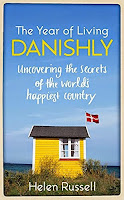
A Year of Living Danishly: My Twelve Months Unearthing the Secrets of the World's Happiest Country by Helen Russell (May 12)

I have a bit of an obsession with Scandinavia, so I might give this a try.


The Shore by Sara Taylor (May 26)

Not sure, sounds like a bit too much misery for my taste, but the blurb includes the line "Through a series of interconnecting narratives that recalls the work of David Mitchell and Jennifer Egan..." which does tempt me!


Sweet Agony, by Charlotte Stein (May 28)

I haven't liked all of Stein's books, but I keep picking up her new ones!

Read more...

Komarr, by Lois McMaster Bujold

>> Monday, April 27, 2015

TITLE: Komarr
AUTHOR: Lois McMaster Bujold

COPYRIGHT: 1998
PAGES: 384
PUBLISHER: Baen

SETTING: Futuristic
TYPE: Sci-fi
SERIES: 8th full-length title in the Vorkosigan series

Accident or Treachery? Komarr could be a garden-with a thousand more years work. or an uninhabitable wasteland, if the terraforming fails. Now the solar mirror vital to the terraforming of the conquered planet has been shattered by a ship hurtling off course. The Emperor of Barrayar sends his newest Imperial Auditor, Lord Miles Vorkosigan, to find out why.

The choice is not a popular one on Komarr, where a betrayal a generation before drenched the name of Vorkosigan in blood. In the political and physical claustrophobia of the domed cities, are the Komarrans surrounding Miles loyal subjects, potential hostages, innocent victims, or rebels bidding for revenge? Lies within lies, treachery within treachery-Miles is caught in a race against time to stop a plot that could exile him from Barrayar forever. His burning hope lies in an unexpected ally, one with wounds as deep and honor as beleaguered as his own.

I feel like a bit of a broken record, but best include the warning anyway: spoilers below for earlier books in the series! So if you haven't read those, just go and do so. Please, you won't regret it!

In Komarr, we see Miles in his new life. His supposedly temporary appointment as Imperial Auditor was made a permanent one at the end of Memory, and he's been assigned his first proper case. A ship has crashed into the Soletta Array, a system of solar mirrors that is crucial for the planet of Komarr to get enough sunlight for terraforming to take. It was a bit of an inexplicable accident, and given Komarr's history of rebellion against their Barrayarran Imperial masters, ImpSec want to be sure they can rule out sabotage. Thus, Miles is dispatched to investigate, together with a fellow and more experienced Imperial Auditor, Professor Vorthys.

But things get more complicated than expected. The Soletta incident has some bizarre characteristics, and there's also clearly something amiss in the terraforming project. Not to mention the personal entanglements. Professor Vorthys has family in Komarr, a niece who is married to one of the Barrayarran administrators. He and Miles stay with them, and the better Miles comes to know Ekaterin Vorsoisson, the more he likes her.

I enjoyed every minute I was reading Komarr. The investigation is twisty and really well done (Miles does NOT get involved in easy cases), and I was riveted by the embryonic romance. First of all, it was interesting to see Miles, right from the beginning, from a woman's point of view (the POV switches from Ekaterin and Miles). And Ekaterin herself was... unexpected. I, like most of his family, expected Miles would end up falling in love properly with some sort of exciting galactic lover, like the imposing women he's so often got involved with. Ekaterin is not that. She is, to all appearances, the perfect proper Vor lady. She married young and had a child and her life is subsumed in supporting her Vor husband. She's serene and demure. But her life hasn't been easy, and it becomes clear that her imperturbable serenity is more a defense mechanism than a part of her personality. It was particularly interesting to see her marriage in real time at the beginning of the book, rather than in some sort of flashback. It wasn't an over-the-top abusive marriage, but it was quite clear how her husband's emotional manipulation ground her down. It was sad and frustrating and oppressive, rather than scary. And by the end of the book, we see that Ekaterin is just as impressive as Miles' previous girlfriends, just in her own way.

I also loved the secondary characters: Ekaterin's Uncle and Aunt Vorthys and her son, Nicky (who's not some perfect plot moppet). Even Ekaterin's husband was well done, and felt completely real. Not to mention the setting, which gives us the opportunity to see more about how Barrayar is seen from the outside.

The thing is, Komarr didn't feel quite as satisfying as the previous few books have. I think that might be because it felt like Miles was having it too easy. Bujold has got me used to a certain approach, which is basically her putting her characters through the wringer and facing them with the very things they fear. This doesn't happen here. Miles' professional situation is stable and assured. He's in a job that's perfectly suited to his intellectual talents, but where there isn't (or rather, shouldn't be) very much risk, physical or careerwise. His status ensures that all those around him defer to him and scramble to do his bidding. He enjoys the respect of his peers, whom he respects just as well. I thought at the beginning that the angst was going to come from the fact that the woman to attract his attention is married. But even that obstacle disappears quite easily, and then the only thing between him and his objective is that Ekaterin has had a bad marriage and is now understandably skittish.

What it comes down to, I think, is that Miles is in an unusual position of power all through this book, where he can even dictate to ImpSec. For all his extremely privileged upbringing and background, circumstances conspire in all the previous books to put him at a disadvantage and having to struggle to overcome this. In previous books, I've always been afraid for him. I wasn't here. It makes the book very pleasurable to read, and I loved it, but it didn't punch me in the gut, like pretty much all the previous ones have.

On to A Civil Campaign!

MY GRADE: A B+.

Read more...

Tempting the Player, by Kat Latham

>> Saturday, April 25, 2015

TITLE: Tempting the Player
AUTHOR: Kat Latham

COPYRIGHT: 2014
PAGES: 228
PUBLISHER: Carina Press

SETTING: Contemporary UK
TYPE: Romance
SERIES: 3rd in the London Legends series

Libby Hart and Matt Ogden are perfect for each other—as friends. They've known each other for ages. They act as each other's plus-ones. They even share custody of a dog. And if there's always been a little spark between them, so what? It's never been worth jeopardizing their friendship.

Professional rugby player Matt is fighting for a starter position with the London Legends—and that's not the only thing he's fighting. A crippling fear of flying means he's struggling to get his career off the ground. He has no time for a relationship, even if Libby does make him ache. As an airline pilot, Libby's looking for a stay-at-home husband so she can have a family without sacrificing her high-flying career. Matt's certainly not that man.

But just because they don't have a future together doesn't mean they can't have a right now. When Matt asks Libby for help overcoming his fear, they agree to take a vacation from their platonic relationship—whenever they fly together, they can have sex. It's the perfect way to resolve all that built-up tension. As long as they can avoid getting a little too comfortable...

I've accumulated a fair few sports romances in the last few years, especially those with less common sports. I'm not into the celebrity fantasy and do not care to read about superstar athletes, so the less blockbuster sports tend to work better for me. Latham's books feature heroes who play Rugby Union, which is a sport I like (much as I love Rugby League, good adopted Northerner that I am). It fits the bill for me quite well, because while the top players are superstars and get the press attention and celebrity treatment, your average Premiership player gets a good but definitely not obscene salary and attention only if he does something outrageous.

The hero of this book is definitely in the latter category. Matt Ogden is actually struggling to get into his team, even fearing his contract might not be renewed at the end of the season. And his fear of flying isn't helping his cause. The team has to do a fair bit of travelling to away games, and every time it's a big drama.

Matt's neighbour, Libby, is the perfect person to help. Libby is a pilot, and she's got some ideas about how to get Matt over his fears.

Matt and Libby have been attracted to each other for quite a while, but both know they are not well-suited. Libby's pilot father, whom she adores, was a terrible husband. For reasons that made very little sense to me, this has led Libby to the conclusion that the only way she can be happy is by getting married to a man who's happy to stay home with their children. And Matt, younger than her and only just building a career of his own, is definitely not that man.

But the time they spend together while dealing with Matt's fears of flying feels like time outside of their usual lives, and they give in to temptation.

This was disappointing. Oh, there was a lot here I liked. I liked that Libby is confident and self-assured and good at her job. I liked that Matt is in a bit of a vulnerable position in his work, having moved to a bigger team from one in which he was the big star, and having found it hard to break into the starting line-up. His confidence is way down, and when he finally gets a break (in circumstances that are really sad), he's terrified of having his fear of flying mess everything up. Most athlete heroes are incredibly amazing and top of their fields, so this element was refreshing. I also liked that Matt and Libby are friends at the outset, and feel comfortable with each other. They co-parent a dog called Princess, which added some really nice moments.

All the other stuff, however, was not so great. I basically found the conflict unbelievable. The motivations, especially on Libby's end, didn't quite work. As I suggested when describing her big plan of demanding that any man she marries is a stay-at-home dad, I didn't get why her father's infidelities and him being a pilot would lead to her being so convinced that this is the only way forward for her. Also, while on one hand, I liked that Libby values her career and absolutely will not give it up, it felt like such an obviously bad idea. It’s so rigid, putting the fatherhood role above the relationship between her and her future husband. I’d have huge issues if it was the hero who did it, and it bothered me here as well.

I also hated the characterisation of Matt's horrible, evil first wife, whose fault it's intimated it is that Matt is a bit of a commitment-phobe. She's such a stereotype. She ‘trapped’ Matt into marriage, cheated on him with lots of men, told him about it in the most hurtful way possible, ensuring he destroyed his career at his club, threatened to go to the papers if he didn’t give her more money... need I go on? This was cartoonish and annoying. I’m getting quite sensitive to this sort of thing, to the point that if a review mentions a book has an evil other woman, I’m much less likely to buy the book.

This is the third in a series of connected books, and we see quite a bit of the previous couples and there are some suggestions that other characters will get their own stories. Nothing I saw here tempts me to read any of these.

MY GRADE: A C.

Read more...

The Three, by Sarah Lotz

>> Thursday, April 23, 2015

TITLE: The Three
AUTHOR: Sarah Lotz

COPYRIGHT: 2014
PAGES: 480
PUBLISHER: Hodder & Stoughton

SETTING: Contemporary, varied locations
TYPE: Horror
SERIES: None

They're here ... The boy. The boy watch the boy watch the dead people oh Lordy there's so many ... They're coming for me now. We're all going soon. All of us. Pastor Len warn them that the boy he's not to--

The last words of Pamela May Donald (1961 - 2012)

Black Thursday. The day that will never be forgotten. The day that four passenger planes crash, at almost exactly the same moment, at four different points around the globe.

There are only four survivors. Three are children, who emerge from the wreckage seemingly unhurt. But they are not unchanged. And the fourth is Pamela May Donald, who lives just long enough to record a voice message on her phone. A message that will change the world.

The message is a warning.

Pamela May Donald is on her way to visit her daughter, who's teaching in Japan, when her commuter plane crashes into a forest. We're with her as the plane goes down. We're also with her she lies dying on the cold ground, terrified by what she's seeing, and as she records a voice message on her mobile phone.

And then the perspective changes. It's months later, and we're reading a book published by an author who's been investigating the disturbing events sparked off by "Black Thursday". Because Pamela's plane wasn't the only one that went down that day. There were 4, each in a different continent. And in 3 of them, a single child survived.

Through fragments of different materials (interviews, chat transcripts, reports), we find out more about what it was that happened after the crashes. At first we only know that it was something really disturbing and that all sorts of conspiracy theories have flourished, and Lotz only gradually gives us more details.

The Three was terrifying. I read it compulsively, but I had to stop myself at least an hour before going to bed and read something fluffy and nice, otherwise I knew I'd have nightmares all night (that said, I did have a very strange dream the first night... David Cameron was reading me a socialist version of a Dr. Seuss book. Inexplicable).

The events that are being described are creepy enough. The children survivors are clearly a bit 'off', but the ways in which this is the case are really well done. The little girl, especially. *shivers* And the structure really helped. Having the narrator/compiler have the benefit of hindsight worked to ratchet up the dread. Even the innocuous, straightforward sections at the beginning, before people are really aware that something's wrong, were given a whole new perspective by the little introductory paragraphs. For instance, before the first chat transcript between two Japanese teens, one of whom is the cousin of one of the crash survivors, we're told these were recovered from their computers. I shivered. These little hints didn't feel annoying or manipulative, as they were exactly what an author would write if she was certain her readers would know what had happened already. It really worked.

I know some people have trouble with this sort of "found material" approach (the complaints I've seen centre around there not being a protagonist), but I love it. It almost always works for me, and it did so here. It wasn't perfect, mainly because if you have so many different voices they do have to sound different, and some of them didn't. The chatting Japanese teens, for instance, didn't ring 100% true and sounded a bit too similar to others. But on the whole, this was great. I loved having the different perspectives, and I loved that we had a sort of double layer of unreliable narrators. You don't know if the people telling their stories are being truthful or are lying (or even whether they're completely deluded and psychotic). You also don't know whether the author compiling the material, who ends up being a character in her own right, has an agenda, and is therefore manipulating what bits and pieces get included in the book. This structure worked beautifully with the subject matter.

For all that I enjoyed the hell out of these books, I did have some niggles. Mostly it raced along, but there was a spell round the middle where it felt like the narrative was going round in circles. The forward momentum was resumed after a while, but those sections needed better editing. I was also a bit queasy about some of the US characters, mainly Pastor Len and the people who start following him and his end-of-times theories. These characters felt a little too cartoonish, too unsubtle.

The big problem I had, though, was with the ending. No spoilers here, I'll be quite general. A lot of the enjoyment in this book was in the journey, the mysterious events and the wondering about just what on earth is going on, but you do need some sort of resolution. Lotz gives us one here, of a sort. It's not something definite, and the reader needs to decide what she thinks it means, but it's something. It felt unsatisfying, though. What I interpreted explained some things, but for a lot of them I still thought "But why would they...?". I'm not sure if the problem is in my interpretation or in us not being given enough to go on, but reading other reviews, it sounds like it might be the latter. Anyway, if any of you have read it, I'd love to discuss the ending, to see if you've reached the same conclusions I did.

Even with a problematic ending, I still really liked this. Lotz has another similar-sounding book coming out (not a sequel, but seemingly connected to this in some way), and I'll definitely be buying that.

MY GRADE: A B.

Read more...

Otherwise Engaged, by Amanda Quick

>> Tuesday, April 21, 2015

TITLE: Otherwise Engaged
AUTHOR: Amanda Quick

COPYRIGHT: 2014
PAGES: 352
PUBLISHER: Putnam

SETTING: Victorian England (mostly)
TYPE: Romance
SERIES: None

One does not expect to be kidnapped on a London street in broad daylight. Yet Amity Doncaster barely escapes with her life after meeting a man in a black silk mask who whispers the most vile taunts and threats into her ear. Her quick thinking, and her secret weapon, save her - for now.

But the monster known in the press as the Bridegroom has left a trail of female victims in his wake, and will soon be on his feet again. He is unwholesomely obsessed by Amity's scandalous connection to Benedict Stanbridge - and Benedict refuses to let this resourceful, daring woman suffer for her romantic link to him-as tenuous as it may be.

For a man and woman so skilled at disappearing, so at home in the exotic reaches of the globe, escape is always an option. But each intends to end the Bridegroom's reign of terror in the heart of the city they love, which means they must also face feelings neither of them can run away from...

Otherwise Engaged has a very exciting start, one that had me hoping that we were back to vintage Amanda Quick and eager to know what would come next.

Amity Doncaster is an explorer and an adventurer. Her accounts of her travels in the Flying Intelligencer are very popular and have gained her a nice following. Her latest trip has taken her to the Caribbean, and it's while on one of the islands that she hears someone calling her from a dark alley.

Amity is a sensible, intelligent woman, so she doesn't just go haring in. Cautious reconnoitering brings her to Benedict Stanbridge's aid. Benedict has been attacked and left to die in the alley, and he's desperate for someone to take a letter to safety. Amity agrees to do that, but she can do more. Her father was an excellent doctor, and through her travels with him she's learnt enough medical skills to be very good in an emergency. She performs some first aid and helps Benedict back to her ship (where he also has a cabin booked) and nurses him back to health.

He recovers and during their time on board while the ship travels to New York, they become close. But Amity is on her way back to London, while Benedict must go to California, for reasons he can't disclose (just as he can't talk about what happened back in the island and what was in that letter that was so important). He promises he will tell Amity the truth as soon as he's able, though, and promises to look her up when he's back in London.

The action moves to London some months later, when Amity is kidnapped by a serial killer known as The Bridegroom, who's been terrorising London. Amity manages to escape and we're told this makes her notorious for the second time. Why the second time, we readers wonder? A clue might be in why The Bridegroom claims he choose her as his next victim: she must not be allowed to trick an honourable man like Benedict Stanbridge into marriage. Huh? I couldn't wait to find out what was going on.

And then... it all got boring and plodding. Benedict and Amity team up with her sister and a police detective to try to discover the identity of the Bridegroom. There's also stuff going on around the secret mission Benedict was on when he was injured in the island, with someone (probably in the employ of the Russians!) chasing after the stuff he discovered.

That element was pretty bad. The suspense plot was preposterous and overcomplicated. Seriously, the conclusion was ridiculous, with 3 (count them, 3!) different villains operating quasi-independently and with motivations that, in two of the three cases, were basically "this person is insane". And the investigation was painfully predictable. Quick includes a particular scene in every single book she writes. The hero and heroine call on someone for information. They find the place deserted but go in anyway, and find that person collapsed in a pool of blood. Sometimes they're dead, sometimes merely knocked out. But they're always out cold. I sometimes wonder if she does it on purpose, as a sort of challenge. It's annoying, to be honest.

Also, Quick's writing is driving me crazy lately. She is painfully unsubtle. She bangs home every single point and logical deduction several times. It's as if she feels we readers are stupid. To be fair, I have only noticed this since I started listening to her books on audio, so it might be that the mind slides over it without noticing in written format. I'll be reading the next one, rather than listen to it (and I will read the next one; I'm not quite ready to give her up).

My review so far is mainly moaning, but I didn't hate this. The romance is kind of nice, and I liked Amity's sister and the supportive relationship those two have. I also liked the touches of humour, like the housekeeper, who's just as enthusiastic as her bosses about the investigation (and as effective in her enquiries!). And Benedict is cool. He's an engineer and wants nothing more than to be rid off this spy stuff and go back to engineering. Nice characters, all, but pretty thin.

MY GRADE: A C.

Read more...

Memory, by Lois McMaster Bujold

>> Saturday, April 18, 2015

TITLE: Memory
AUTHOR: Lois McMaster Bujold

COPYRIGHT: 1996
PAGES: 480
PUBLISHER: Baen

SETTING: Futuristic
TYPE: Sci-fi
SERIES: 8th full-length title in the Vorkosigan series

Dying is easy. Coming back to life is hard. At least that's what Miles Vorkosigan thinks and he should know, having done both once already. That was when he last visited the planet of Jackson's Whole, while rescuing his brother. Thanks to quick thinking on the part of his staff, and incredible artistry on the part of the specialist who revived him, his first death won't be his last. But his next one might be, a realization he finds profoundly unsettling.

Even after he returns to military duty, his late death seems to be having a greater effect than he's willing to admit. Unfortunately, his weakness reveals itself to the world at large at just the wrong time and in just the wrong way, and Miles is summoned home to face Barrayaran security chief Simon Illyan. But when things begin to go subtly wrong in Imperial Security itself, 'Who shall guard the guardians?' becomes a more-than-rhetorical question, with a potentially lethal answer. Things look bad, but they are far worse than Miles imagines, as he discovers his worst nightmares about Simon Illyan don't compare to Illyan's worst nightmares-or are they memories?

This is many readers' favourite in the Vorkosigan saga, and by the time I finish reading the series, it may well be mine. I'm going to try to not include spoilers in the review below, but I will need to be, well, spoilerish to properly discuss anything!

In Memory Miles faces the fall-out of some of what happened to him in Mirror Dance. Or rather, he tries not to face it, and his efforts lead to things going horribly wrong for him, and in front of Simon Illyan, too. Miles is left to face the consequences of his actions while stuck in Barrayar. But in the midst of a fog of misery, he finds a mission when Simon's memory chip goes wrong. Something about how ImpSec is dealing with it doesn't sit well with Miles, and he feels it his duty, both to the Emperor and to the man who's been like another father to him, to get to the bottom of things.

I was sure at the beginning that the book was going to be about how Miles got back this life he had created and that meant so much to him. It wasn't. It was about Miles becoming a whole person again by coming to terms with the Lord Vorkosigan part of his character, realising that he'd put his all into his Admiral Naismith persona and neglected what is actually a huge part of his character.

The way this was done was just perfection. First there's the crisis. That, while painful to read, had me thinking back to my secondary school literature classes, when we studied classical tragedy. Miles' downfall is not external. It's not something that happens to him, but something he does to himself. It's inevitable, being who he is. It all had the whiff of hamartia (the "tragic flaw" in the protagonist's character so many classical tragedies are based on).

But, and here's a big difference, here this is just the start, not the conclusion. Miles' reaction to seeing his life crash down on him is all about growth and change. There were some elements in his actions that I expected (his doggedness, his determination to do what is right), but his resilience and willigness to change the very course of his life surprised me (just as much as it did Cordelia, which I thought was a nice touch. She'd been coming across as almost supernaturally perceptive about her family in previous books, so it was good to see that some of Miles' depths were hidden from her, as well as from the reader).

That change in Miles' life marks a change of direction of the series as well, which is a move that I find hugely admirable. It's much easier to just keep giving readers more of what they want (have got used to?). More books about Miles having entertaining galactic adventures, again and again. It's much tougher to do what Bujold does here and change -and bring readers fully with her. It felt at the end of the book that this was a necessary change, both for Miles and for the series, and absolutely the right move.

Memory is much more understated in the adventure side than previous books, but that didn't mean it lacked excitement. There were plenty of emotional highs and lows, and the stakes were extremely high, easily as high as in previous books.

There's a bit of romance here, not for Miles, but for several characters I love. That was all lovely, both sweet and funny. We also get a mystery plot in Miles' ImpSec investigation. That is not just something for him to do while he comes to term with his new life, but an interesting, clever mystery in its own right. I feel quite proud that I figured it out right ahead of Miles, but because there was so much book left, I thought there might be a few more twists and turns left.

Turns out not, the mystery is resolved earlyish, and we get an extended aftermath, a bit like Jane Austen does in her novels, where all the conflict has been resolved, but you get more about how things work out for people. I actually loved this, although I must say I did get the impression I should have had stronger feelings about the final scene with Elli Quinn. The thing is, I found it hard to believe this was a hugely emotional thing for Miles. I never felt he really loved Quinn, a feeling strengthened by the revelation early in the book that Miles has also been sleeping with Taura all along, in a sort of friendly way. That was the only tiny bit of the book that I didn't think perfect, but it's a small flaw!

MY GRADE: An A.

Read more...

Blog template by simplyfabulousbloggertemplates.com

Back to TOP