Delicious!, by Ruth Reichl

>> Sunday, March 24, 2019

TITLE: Delicious!
AUTHOR: Ruth Reichl

COPYRIGHT: 2014
PAGES: 380
PUBLISHER: Random House

SETTING: Contemporary New York
TYPE: Fiction
SERIES: None

In her bestselling memoirs Ruth Reichl has long illuminated the theme of how food defines us, and never more so than in her dazzling fiction debut about sisters, family ties, and a young woman who must finally let go of guilt and grief to embrace her own true gifts.

Billie Breslin has traveled far from her California home to take a job at Delicious, the most iconic food magazine in New York and, thus, the world. When the publication is summarily shut down, the colorful staff, who have become an extended family for Billie, must pick up their lives and move on. Not Billie, though. She is offered a new job: staying behind in the magazine's deserted downtown mansion offices to uphold the "Delicious Guarantee"-a public relations hotline for complaints and recipe inquiries-until further notice. What she doesn't know is that this boring, lonely job will be the portal to a life-changing discovery.

Delicious! carries the reader to the colorful world of downtown New York restaurateurs and artisanal purveyors, and from the lively food shop in Little Italy where Billie works on weekends to a hidden room in the magazine's library where she discovers the letters of Lulu Swan, a plucky twelve-year-old, who wrote to the legendary chef James Beard during World War II. Lulu's letters lead Billie to a deeper understanding of history (and the history of food), but most important, Lulu's courage in the face of loss inspires Billie to come to terms with her own issues-the panic attacks that occur every time she even thinks about cooking, the truth about the big sister she adored, and her ability to open her heart to love.
Ruth Reichl is a food writer and journalist, and I understand her work is very well known in the US. She's written a few memoirs (including one I have on my TBR as well, covering her time as restaurant reviewer for the New York Times), but she's also written a novel, and this is it.

Billie Breslin is a young woman trying to make it in New York City. She happens to have an incredibly sensitive palate, and that and her fascination with food land her a job in the offices of famous food magazine Delicious. It's a lowly secretarial job, but there are definitely prospects for moving into journalism there, and Billie is soon taking steps in that direction.

And then suddenly, everything is up in the air. The magazine is closed down by the money-grubbing corporate owners, and the whole staff is out of a job. Everyone but Billie, that is, because there's one bit of Delicious that must continue. See, the magazine has always offered the "Delicious Guarantee", promising that if a recipe doesn't work, the reader gets their money back. And someone needs to deal with the enquiries that still regularly come in about it.

It is while answering sporadic Guarantee-related calls in the now-empty offices that Billie discovers some fascinating letters. It turns out that James Beard (even I have heard about him!) used to work for Delicious way back when, and the archive still contains letters sent to him by a young girl during the war. The girl's story, revealed through her side of the correspondence, grips Billie completely, and finding out the rest of the story requires her to embark on a treasure hunt designed by the ghost of librarians past.

I had such mixed feelings about this one! On one hand, Billie is the ultimate Mary Sue. She's got this supernatural palate, lands this amazing job through not real effort on her part, and everyone immediately adores her. She has a Very Tragic Past that makes her sad and stops her from doing what she's meant to be doing with her life, but absolutely no flaws. Everything about her feels clichéd. We even get a make-over scene where she figuratively takes off her glasses, gets some clothes that fit, and becomes a proper knock-out. Oh, and she's not only beautiful, but an instinctive genius at putting together incredibly cool outfits. That inborn genius matches well with her food-related inborn genius. Her story is basically wish-fulfilment, and she herself was incredibly boring.

The thing is, all the food stuff is the kind of wish fulfilment that works for me, unlike other kinds of wish-fulfilment books like the ones with the Plain Jane heroine falling for the rock star. Billie's New York City really is the city of dreams, filled with eccentric deli owners whose shops are veritable wonderlands and who want nothing but to feed the enchanting heroine mouth-watering morsels. That's a dream I can get behind!

So while I kept rolling my eyes as I was reading, I did enjoy myself quite a bit. The whole story-line about the letters was pretty ho-hum for me, but spending time in foodie New York with Billie and her cool friends was super fun in spite of my cynicism.

MY GRADE: It's a B-. Flawed, but it did work for me more than maybe it should have.

Read more...

The Reluctant Detective, by Martha Ockley

>> Friday, March 08, 2019

TITLE: The Reluctant Detective
AUTHOR: Martha Ockley

COPYRIGHT: 2010
PAGES: 256
PUBLISHER: Self-published

SETTING: Contemporary England
TYPE: Mystery
SERIES: First in the Faith Morgan series

Faith was a cop, and a good one. She and her boss (and boyfriend) Detective Inspector Ben Shorter tackled criminals and solved crimes across south-east England. They were a good team. But Faith grew disillusioned with Britain's tough police culture.

As her disquiet grows, she starts to ask bigger questions - and ends up as a priest in the Church of England, a job from which she considers she can do more good than any police investigation. In the process she and Ben part company: he can't stand God-botherers, and she finds his convictions-at-any-cost attitude treads on too many vulnerable people.

Faith may have quit the world of crime, but crime has not let her go. Newly ordained, she arrives in the village of Little Worthy, near Winchester, to look around the parish. Within an hour of her arrival she witnesses the sudden shocking death of a fellow priest. To her distress, the DI assigned to the case is Ben.

At the Bishop's urging, Faith stays on to look after the improbably named parish of Little Worthy. As she meets her parishioners she learns some surprising details about her apparently well-loved predecessor, and starts to suspect a motive for his death.

The cop may have donned a clerical collar, but the questions keep coming. How will she reconcile her present calling with her past instincts? Is she in danger herself? What should she do about Ben?
The Reluctant Detective's blurb put me in mind of one of my favourite mystery series, Julia Spencer-Fleming's books following Rev. Clare Fergusson and Chief of Police Russ Van Alstyn. Like Clare with her years in the military, Faith Morgan started out her life in a profession quite far from priesthood. She was a police detective, right up until she decided she couldn't do it any longer and decided to become a Church of England vicar. So she left her boyfriend, fellow detective Ben, and went off to pursue her calling.

As the book starts, Faith has just been ordained. The priest in the parish of Little Worthing (pretty much exactly the sort of small village the name evokes) is about to retire, and Faith has travelled there to take a look around, see if it seems like the right place for her. But she arrives just in time for a shocking event: the outgoing priest dies under suspicious circumstances, right while he's celebrating mass.

Faith is asked by the bishop to stick around for a while to help take care of the understandably shocked parishioners. She's not trying to investigate the death, just doing her (new) job and counselling her parishioners, but somehow she keeps discovering all sorts of interesting details that her police training tells her the investigators need to know. And the leading investigator happens to be none other than Ben.

This was... well, it was ok. I didn't love it, I didn't hate it. These sorts of reviews are the hardest to do!

There were good things about it. It flowed well, and the mystery was well-constructed. I was interested in finding out what had happened, and I liked that Faith is genuinely not trying to play detective. She behaves perfectly sensibly and reacts in what I thought were believable ways. And though the book was probably in the 'inspirational' subgenre, any inspirational elements were relatively subtle and definitely non-preachy (at least, nothing that annoyed this atheist reader).

There were also some things I didn't like. My main problem was that several characters felt a bit off. Everyone seems quite... well, the word that comes to mind is 'uncool'. That was fine for some of the characters, but for others that vibe really didn't fit.

I also got a bit frustrated because we get lots of hints about what exactly it was that drove Faith away from Ben, but we never do find out what happened, at least not in this book. I'm assuming this is something that Ockley is leaving for later, to develop in a future book. So since I didn't like this enough to keep reading, I'll never find out. Mildly annoying (but not enough to make me read further!).

MY GRADE: A very middle-of-the-road C.

Read more...

Unmarriageable: Pride and Prejudice in Pakistan, by Soniah Kamal

>> Wednesday, March 06, 2019

TITLE: Unmarriageable: Pride and Prejudice in Pakistan
AUTHOR: Soniah Kamal

COPYRIGHT: 2019
PAGES: 352
PUBLISHER: Ballantine

SETTING: Early 2000s Pakistan
TYPE: Fiction
SERIES: None

In this one-of-a-kind retelling of Pride and Prejudice set in modern-day Pakistan, Alys Binat has sworn never to marry—until an encounter with one Mr. Darsee at a wedding makes her reconsider.

A scandal and vicious rumor concerning the Binat family have destroyed their fortune and prospects for desirable marriages, but Alys, the second and most practical of the five Binat daughters, has found happiness teaching English literature to schoolgirls. Knowing that many of her students won’t make it to graduation before dropping out to marry and have children, Alys teaches them about Jane Austen and her other literary heroes and hopes to inspire the girls to dream of more.

When an invitation arrives to the biggest wedding their small town has seen in years, Mrs. Binat, certain that their luck is about to change, excitedly sets to work preparing her daughters to fish for rich, eligible bachelors. On the first night of the festivities, Alys’s lovely older sister, Jena, catches the eye of Fahad “Bungles” Bingla, the wildly successful—and single—entrepreneur. But Bungles’s friend Valentine Darsee is clearly unimpressed by the Binat family. Alys accidentally overhears his unflattering assessment of her and quickly dismisses him and his snobbish ways. As the days of lavish wedding parties unfold, the Binats wait breathlessly to see if Jena will land a proposal—and Alys begins to realize that Darsee’s brusque manner may be hiding a very different man from the one she saw at first glance.

Told with wry wit and colorful prose, Unmarriageable is a charming update on Jane Austen’s beloved novel and an exhilarating exploration of love, marriage, class, and sisterhood.
Well, the title says it all. In Unmarriageable, Kamal has taken Pride and Prejudice and set it in early 2000s Pakistan. In this incarnation, the Bennetts have become the Binats, a formerly prosperous family living a much-diminished life in tiny Dilipabad, where eldest sisters Jena and Alys teach at the British Schools. A rich former student of the school is getting married to an even richer society guy, and the wedding is going to be huge -and the Binat's are invited! Society people from different cities are going to be there as guests. To Mrs Binat, it's the perfect opportunity for her girls to find husbands. Especially Jena and Alys, who are already (gasp!) in their 30s.

One of the guests is Fahad Bingla, nicknamed 'Bungles', there with his two sisters. They are extremely rich, and well-known in high society. And so is Bungles' friend, Valentine Darsee. Bungles is immediately infatuated with Jena, to his family and friend's disapproval. They see the Binats as vulgar and not up to their standards. Which is obvious to Alys, and makes her, in turn, dislike them intensely, particularly arrogant Darsee.

This was fun. I liked the idea, and (mostly) liked the execution.

Rather than merely being a story playing with P&P, using the basic plot, this is almost a blow-by-blow retelling. It may not sound like it so much from the description above, because some details in the setup have been changed, but the events that drive the plot forward are just as in P&P. Exactly like in it. This was very good fun in some ways. It was really interesting to see just how Kamal would take a plot point that feels particularly of its time in P&P and make it perfectly natural in almost-present-day Pakistan. And she succeeds, every single time. On the other hand, though, it did make the plot a bit predictable. Knowing exactly what was going to happen robbed the book of some narrative tension.

The characters were well drawn, even the secondary ones. Alys is a bit different from Elizabeth Bennett, in that having been educated in an international school in Jeddah (when the family was in more prosperous circumstances), she has been exposed to more modern mores. She's explicitly a feminist having to cope with all the patriarchal bullshit, and not shy about calling it out, at least when it's safe to do so. Whereas Elizabeth, while aware that some of the stuff around her is bullshit, is more a woman of her time.

The setting was vivid. I loved seeing a different Pakistan from the one that comes through in the news. All the little details that were there not to make a particular point, but because that's what would be the reality... like how for a long-distance journey the Binat girls would of course take the Daewoo bus (that's what upper-middle class people would do in Uruguay as well... not Daewoo, in particular, but the same kind of buses. I once took a 24-hour journey to Paraguay in one of those things!). Anyway, it was tiny details like that that made this for me.

There were a few of negatives, though. First of all, there is a certain lack of subtlety in Kamal's writing, where points are sometimes made a bit too explicitly. This results in characters being a too cartoonish sometimes, but it isn't just that. For instance, we're told exactly why Darsee and Alys suit so well: the fact that they grew up in the multinational environment of an international school abroad, the way that has given them a particular outlook on life, their love of books, etc. It was actually really convincing, but did we need to hear this explicitly? It was pretty obvious already. I think it may have worked better if Kamal had trusted that she'd shown this enough, rather than feel she had to state it explicitly, and more than once! It's minor, but an example of something that's sprinkled throughout the whole book.

The one thing I hated, though, was that there was a meanness in some the characters that felt frankly startling. Some of the things Mrs Binat says I felt were genuinely unforgivable. A single example: the Charlotte Lucas character, Alys's friend Sherry, is unable to have children, which is one of the reasons she felt she should settle for the horrid Reverend Collins character. It's clearly something quite difficult for her. Mrs Binat, raging against the woman who 'stole' the man she intended should marry her daughter, calls her "Useless-Uterus Sherry". No. Just no. This was probably Mrs Binat's lowest moment, but there were several others that were close. The cruelty was truly jaw-dropping, and my jaw also got quite the workout with the younger sisters. The fat-shaming in the way Lady (Lydia) treated Qitty (I don't need to do this one, do I?) was revolting. We're talking constant insults. 'Behemoth', 'Whale', 'Cow'... it went on and on.

I think with these characters Kamal really missed the mark. Their equivalents in Pride and Prejudice can behave pretty badly, but there isn't the mean-spiritedness and cruelty that was in these characters. This meant that there was a sour note at the end. I did NOT want Mrs Binat to finish the novel triumphant, with two daughters making spectacular marriages, even though I liked those two daughters and was happy for them that they seemed set on marriages that could make them happy.

MY GRADE: A strong B, very much in spite of Mrs Binat!

Read more...

The Bone Garden, by Tess Gerritsen

>> Monday, March 04, 2019

TITLE: The Bone Garden
AUTHOR: Tess Gerritsen

COPYRIGHT: 2007
PAGES: 370
PUBLISHER: Bantam

SETTING: Present-day Massachusetts and 1830s Boston
TYPE: Mystery/thriller
SERIES: None

Present day: Julia Hamill has made a horrifying discovery on the grounds of her new home in rural Massachusetts: a skull buried in the rocky soil–human, female, and, according to the trained eye of Boston medical examiner Maura Isles, scarred with the unmistakable marks of murder. But whoever this nameless woman was, and whatever befell her, is knowledge lost to another time...

Boston, 1830: In order to pay for his education, Norris Marshall, a talented but penniless student at Boston Medical College, has joined the ranks of local “resurrectionists”–those who plunder graveyards and harvest the dead for sale on the black market. Yet even this ghoulish commerce pales beside the shocking murder of a nurse found mutilated on the university hospital grounds. And when a distinguished doctor meets the same grisly fate, Norris finds that trafficking in the illicit cadaver trade has made him a prime suspect.

To prove his innocence, Norris must track down the only witness to have glimpsed the killer: Rose Connolly, a beautiful seamstress from the Boston slums who fears she may be the next victim. Joined by a sardonic, keenly intelligent young man named Oliver Wendell Holmes, Norris and Rose comb the city–from its grim cemeteries and autopsy suites to its glittering mansions and centers of Brahmin power–on the trail of a maniacal fiend who lurks where least expected... and who waits for his next lethal opportunity.
This is one of those stories which mix the present with the past. It starts as, in the present day, recently divorced Julia Hamill discovers a skeleton buried in the gardens of her new house. It's an old one, a woman who clearly died violently, and Julia is intrigued by the mystery of who she might have been. And then she's contacted by an old man who was related to the former owner of the house, and who has a tonne of papers that could help find out more. Before long, Julia and her new friend are gleefully digging through them and discovering quite the story.

The story they unearth is what we spend most time on in the book, and it relates both to a serial killer called the West End Ripper, operating in 1830s Boston, and to the early life of Oliver Wendell Holmes (whom I confess I knew nothing about).

Our main characters in the 1830 storyline are Norris Marshall, a medical student, and Rose Connolly, a recently arrived Irish seamstress. They meet and become first friends, then something more, as each witnesses one of the West End Ripper's crimes. This brings them much attention by the police and suspicion that endangers them both. Rose is a penniless seamstress who's just been turned out of her home after the death in childbirth of her sister. She's desperate to keep her niece with her and alive. As for Norris, he's a bit of an odd one out amongst his peers, as he comes from a farming family and does not have money or connections. To be able to pay for medical school, he discreetly helps out the resurrectionist who keeps the school supplied with much needed corpses.

This was very promising, but it didn't quite deliver for me. There is some good stuff, in particular, learning about medicine at the time. That was very vivid and truly fascinating, and Gerritsen clearly has done her research.

The thing is, it felt like the history of medicine really was the main point of the book, with the actual story being more of an afterthought. I didn't find the characters or the plot particularly believable, with a lot of character actions and developments seeming to take place more to take the plot into a direction that would allow the author to explain a particularly fascinating nugget than to serve a story or be part of natural character development.

The present-day story was particularly pointless, with nothing really happening there. There are definite hints at first that there is some sort of mystery to solve in this storyline as well, some tension and danger, but all we really get is two people reading letters. It was just a framing device, nothing more.

Disappointing.

MY GRADE: A C+.

Read more...

A few DNFs

>> Saturday, March 02, 2019

TITLE: Too Hot To Handle
AUTHOR: Tessa Bailey

This starts a series about 4 siblings on a road trip to fulfil their mother's last wish: a winter dive into the ocean in New York. Too Hot To Handle focuses on Rita, the older sister, who followed her mother's steps and became a chef. She's not in a good place, since she just created a mess by going after a fellow contestant in a cooking show with a knife (!) and her mum's restaurant burnt down, for which she blames herself (with good reason). On the way from California to New York, the car breaks down and the siblings are rescued by Jasper Ellis, a bad boy who doesn't want to be a bad boy any more.

I gave up on this one relatively early on because all the characters' reactions and interactions felt fake. I was constantly going "huh?" and wondering why on earth a particular character was reacting in a particular way. Just didn't click with me, I guess.

MY GRADE: A DNF.

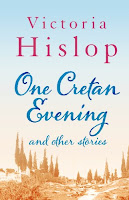
TITLE: One Cretan Evening and Other Stories
AUTHOR: Victoria Hislop

I was in Crete, so I thought I should try to read about Crete. But I read only the remarkably pointless title story. A man arrives to a small Cretan village and enters a house abandoned since the previous occupant's death. This was a woman who'd been ostracised by the village, seemingly for no good reason. I really didn't get the significance of the man's visit, or even the point of the story. I just pressed delete before wasting more time in the other stories.

Also to note that even though the book is short, a big chunk of it is an excerpt from one of Hislop's novels. Meh.

MY GRADE: A DNF.

TITLE: The Girl from Summer Hill
AUTHOR: Jude Deveraux

This sounded like fun, and I used to really like Jude Deveraux way back when. It's a Pride and Prejudice homage, centred around a local theatre company putting on a production of it. The heroine, Casey, is a chef who's catering for the cast, while the hero, Tate, is a famous actor who helps his cousin out by playing Darcy in the production the cousin is directing. But all the amateur actresses are so star-struck, that they can't handle playing Lizzie opposite Tate! Enter Casey, who has taken an immediate dislike to him and thinks he's an arrogant arsehole, and is therefore immune to his charm. So since she's the only one behaving as a normal human, she gets the part.

The setup was ok (although there's a fair bit of people acting like impetuous idiots), but it was the writing that made me put this down sharpish. It felt very simplistic, with a lot of telling and no showing at all. It was as if Deveraux was describing the skeleton of the thing and would come back to fill it in later, only she didn’t. It also felt very old-fashioned... the sort of book where beauty means being blonde and blue-eyed and that's it. I don't think there was a woman depicted as beautiful in the whole chunk that I read who didn't fit that pattern. Not for me.

MY GRADE: Yep, a DNF.

Read more...

The Seven Deaths of Evelyn Hardcastle, by Stuart Turton

>> Thursday, February 28, 2019

TITLE: The Seven Deaths of Evelyn Hardcastle (aka The 71/2 Deaths of Evelyn Hardcastle in the US)
AUTHOR: Stuart Turton

COPYRIGHT: 2018
PAGES: 528
PUBLISHER: Bloomsbury

SETTING: Alternate reality, seems like a version of England between the world wars
TYPE: Speculative fiction
SERIES: None

How do you stop a murder that’s already happened?

At a gala party thrown by her parents, Evelyn Hardcastle will be killed--again. She's been murdered hundreds of times, and each day, Aiden Bishop is too late to save her. Doomed to repeat the same day over and over, Aiden's only escape is to solve Evelyn Hardcastle's murder and conquer the shadows of an enemy he struggles to even comprehend--but nothing and no one are quite what they seem.

Deeply atmospheric and ingeniously plotted, The Seven Deaths of Evelyn Hardcastle is a highly original debut that will appeal to fans of Kate Atkinson and Agatha Christie.
I heard about this book when it won the Costa book awards first novel category last year and there was an interview with the author on Front Row. It sounded intriguing: Agatha Christie + Groundhog Day? What on earth would that look like?

Well, basically, it's like this: a man comes to without any memories, while running in a forest, shouting the name "Anna!". He sees what he thinks is a woman being pursued in the distance, then hears a shot and is convinced he's witnessed a murder. Another man comes to him, places a compass in his hand, and tells him to go east. By doing so, he arrives at a country house where a party is being held, and where people recognise him as one of the guests. He is, understandably, a bit disconcerted by it all.

It turns out he's a soul that has been tasked with finding out the truth about the murder of the titular Evelyn Hardcastle and with getting justice. To do that, he will inhabit the bodies of 8 different people, and live the day during which the murder takes place again and again and again. If he fails at the end of the last day, he starts again.

It all starts out feeling like a bit of a lark, but things start getting darker as we go along. As we discover more and more secrets, we start to care more and truly understand the horror of what's going on.

I really enjoyed reading this, and it turned out to be a more affecting book that I thought it would be during the first sections. For the first half or so, I was enjoying the clever plotting and the almost video game quality of it, but without becoming emotionally involved. But then our main character starts to feel more real, like more of an actual person, and there are quite interesting questions that are explored, albeit not in a terribly explicit way. Who is he, really? He doesn't have memories from before his time in the house, and with each host, he finds the host's personality pressing harder and harder on the dividing line between them and him. So which reactions are truly his, and which are not? I found the exploration of this quite interesting, particularly the way our narrator learns to make this conflict work towards his mission. There is also what feels like real growth and change in the character, when it comes to what we find out about what's really going on and why he's there. I don't want to say much and spoil the ending, but while some aspects of it felt weird and I still don't know how I feel about it, it did all make sense...

I was also impressed by the plotting, both the complexity of it (which was the Agatha Christie element for me, in addition to the setting), and the way Turton was able to take me along as a reader, without requiring me to keep notes or refer back to earlier sections. Honestly, from the way they were talking about it in the Front Row interview I did have some doubts about whether the audiobook would be a good option, but it was absolutely fine. You need to pay attention, but not in an exaggerated way. Also, this was sort of time-travel, which is one of those things that make my head hurt if I try to think about them too hard. So I was surprised by how well it all worked for me, because I tend to avoid time-travel stories precisely because of this.

I must say, though, at the beginning, I was a bit lost, even though I knew the setup I revealed above. But that works, because I was sharing that confusion with the narrator (actually, the narrator is even more confused!). I did have a moment of doubt when I started seeing people around the narrator behaving in very weird, unnatural ways. Is this going to be one of those books were we're just supposed to accept this as the way people would act? But soon even that made sense, because it turns out our narrator gets to keep the memories from when he was in each of his hosts, only losing them if he goes back to the beginning. So his future personas are responsible for some of those 'unnatural' behaviours, and that's perfectly logical.

All this said, I was a bit taken aback by the main character's reactions when he woke up in a host that was morbidly obese. I get it that dealing with a body that just won't do the things that you're used to finding natural, and where you have to put up with your body doing things that are uncomfortable and even embarrassing, would be a bit of a shock. I get that. But some of the language used felt hateful. That element was relatively fleeting, though, so I was able to let it go a bit (and it happens early on, so it didn't leave me with a bad taste in the mouth at the end, which helped).

On the whole, I found this a fun read, and one that felt quite fresh, for all that it's marketing seems to suggest it's a homage to this and that!

MY GRADE: A B+.

Read more...

The Ones Who Got Away, by Roni Loren

>> Friday, February 22, 2019

TITLE: The Ones Who Got Away
AUTHOR: Roni Loren

COPYRIGHT: 2018
PAGES: 354
PUBLISHER: Sourcebooks

SETTING: Contemporary US
TYPE: Romance
SERIES: Starts a series

It's been twelve years since tragedy struck the senior class of Long Acre High School. Only a few students survived that fateful night—a group the media dubbed The Ones Who Got Away.

Liv Arias thought she'd never return to Long Acre—until a documentary brings her and the other survivors back home. Suddenly her old flame, Finn Dorsey, is closer than ever, and their attraction is still white-hot. When a searing kiss reignites their passion, Liv realizes this rough-around-the-edges cop might be exactly what she needs…

Liv's words cut off as Finn got closer. The man approaching was nothing like the boy she'd known. The bulky football muscles had streamlined into a harder, leaner package and the look in his deep green eyes held no trace of boyish innocence.
Olivia Arias and Finn Dorsey are part of a small group of survivors of a school shooting. Several years later, a filmmaker is doing a documentary about the tragedy, and since any proceeds are being donated to the families of the victims, Liv and Finn both feel they should participate. And that's how they meet again after not seeing each other since the shooting. They were always super attracted to each other, and that doesn't seem to have changed.

The Ones Who Got Away popped up on quite a few 'best of 2018' lists, so it seems I'm the odd one out here. The first third or so, which was as far as I got, bored me to tears. There just didn't seem to be any tension at all in the book. Considering Finn and Liv's history, there really should have.

After all, at the time of the shooting, they were unable to keep their hands off each other, but since Liv was the weird Goth latina girl, daughter of middle-class Finn's parents' landscaper, she was his little secret. The night of the shooting, which was a party, Finn had gone with another date, someone of his social class, and when the shooting started he and Liv were angrily making out in a cupboard. Lots of potential for drama there, but in the present, it was all super tepid. I could not see this supposedly huge chemistry between them.

I was hoping things would get interesting at some point, so I kept forcing myself to pick it up. After a while, though, it didn't seem worth it.

MY GRADE: A DNF.

Read more...

Transcription, by Kate Atkinson

>> Tuesday, February 19, 2019

TITLE: Transcription
AUTHOR: Kate Atkinson

COPYRIGHT: 2018
PAGES: 352
PUBLISHER: Little, Brown and Company

SETTING: 1940s and 1950s England
TYPE: Fiction
SERIES: None

In 1940, eighteen-year old Juliet Armstrong is reluctantly recruited into the world of espionage. Sent to an obscure department of MI5 tasked with monitoring the comings and goings of British Fascist sympathizers, she discovers the work to be by turns both tedious and terrifying. But after the war has ended, she presumes the events of those years have been relegated to the past forever.

Ten years later, now a radio producer at the BBC, Juliet is unexpectedly confronted by figures from her past. A different war is being fought now, on a different battleground, but Juliet finds herself once more under threat. A bill of reckoning is due, and she finally begins to realize that there is no action without consequence.

Transcription is a work of rare depth and texture, a bravura modern novel of extraordinary power, wit and empathy. It is a triumphant work of fiction from one of the best writers of our time.
It's the early days of World War II, and Juliet Armstrong, an 18-year-old just out of school, is recruited by MI5. She's soon sent to work on efforts to keep the Fifth Column contained and harmless. Instead of simply arresting these people and trying to prove their guilt (such a faff!), MI5 let them go about their business, thinking they are doing the Fuhrer's work, while in reality, that work is being neutralised pretty effectively. An MI5 agent, Godfrey Toby, has been set up as a supposed agent of the Third Reich, and it is to him that Nazi sympathisers in London bring their reports, with the intention that they be passed on to Berlin. Most of these reports are pointless, but there are always some that are not quite so harmless. They all die with Godfrey.

Juliet's role is supposed to be purely secretarial. She simply types up transcripts of the conversations that are being monitored and recorded in Godfrey's flat next door, under the supervision of her boss, Perry. But things are never quite so simple.

Interspersed with the events during the war, we also get to see Juliet 10 years later, in 1950. She's working at the BBC, but it's clear that she's never managed to shake off the spy business completely...

This was quite excellent. Atkinson's writing just clicks with me, and it seems to be particularly effective in audiobook form (and narrator Fenella Woolgar is just wonderful. She strikes just the right tones).

The voice and the tone were my favourite things about the book. Things start out in a way that seems very 'fun and games' on the surface. The fifth columnists visiting next door feel ridiculous and harmless, for all that they are people with very nasty opinions. It feels like they are playing at what they're doing, and it's not anything serious. And Juliet is just typing things up, so surely she's not in any sort of line of fire. Even when she's asked to take a more active role in certain activities, it's all initially quite genteel. But as the book progresses, it becomes clearer and clearer that there is darkness just below the surface, and veeeery slowly, a sense of dread builds up. And when the nastiness breaks through, it's shocking, even though we knew it was there all along. It was perfect.

Juliet's voice works beautifully with this story arc. It's dry and full of a very British amused tone. The narration is very much from her point of view. Everything is as she sees it... or rather, as she's telling it to herself, which means that even though we're squarely in her point of view, we are clearly not necessarily seeing everything...

I did think, though, that the voice didn't seem to change all that much between the young Juliet at the start of the book, who was only 18, and the one in 1950, who had so much more experience behind her. This creates a bit of a dissonance in some small sections of the action during the war, particularly some of Juliet's interactions with Perry. She'd think things that were pretty naive, but do so in a very worldly voice, if that makes sense. Still, this was a relatively minor issue.

And speaking of the 2 distinct time settings, Atkinson does seem to like non-linear structures, but with her this has a point. The non-linearity is not there just for the sake of being experimental. Here we shift between the early days of the war and 1950, but it's pretty long sections each time, so the reader becomes fully immersed in the particular period each time. And with the events of the 1940s clearly affecting the events in 1950, the back-and-forth worked particularly well in revealing the plot gradually and moving the story forward.

MY GRADE: A very strong B+.

Read more...

To See the Sun, by Kelly Jensen

>> Sunday, February 10, 2019

TITLE: To See the Sun
AUTHOR: Kelly Jensen

COPYRIGHT: 2018
PAGES: 293
PUBLISHER: Riptide Publishing

SETTING: Planets of Zhemosen and Alkirak
TYPE: Romance
SERIES: None

Survival is hard enough in the outer colonies — what chance does love have?

Life can be harsh and lonely in the outer colonies, but miner-turned-farmer Abraham Bauer is living his dream, cultivating crops that will one day turn the unforgiving world of Alkirak into paradise. He wants more, though. A companion — someone quiet like him. Someone to share his days, his bed, and his heart.

Gael Sonnen has never seen the sky, let alone the sun. He’s spent his whole life locked in the undercity beneath Zhemosen, running from one desperate situation to another. For a chance to get out, he’ll do just about anything — even travel to the far end of the galaxy as a mail-order husband. But no plan of Gael’s has ever gone smoothly, and his new start on Alkirak is no exception. Things go wrong from the moment he steps off the shuttle.

Although Gael arrives with unexpected complications, Abraham is prepared to make their relationship work—until Gael’s past catches up with them, threatening Abraham’s livelihood, the freedom Gael gave everything for, and the love neither man ever hoped to find.
In the depths of one of the nasty undercities of the otherwise beautiful planet Zhemosen, Gael is struggling. His life has always been difficult, and now it's turned desperate. After a failed attempt to clear his debts (none of which he incurred himself, but all of which he's responsible for, according to the powers that be), he's in an even deeper hole than he started in, and ready to consider his only friend's suggestion to become a mail-order groom in a planet far, far away.

In one of those distant planets, Alkirak, farmer Bram is feeling a bit lonely. After 30 years working a challenging mining job, he's taken retirement and built his farm. It has been and still is a challenge as well, but the hardest work is done and Bram's job now is mostly about keeping things going. And now that he has some time to himself, he thinks a bit of company would be nice. His planet is still pretty sparsely populated, so his best bet is to place an ad on the galactic online matchmaking site.

Both Gael and Bram like what they're seeing in the other, and before long Gael, has entered into a contract with Bram. He'll travel to Alkirak to live with Bram, and they'll see if they suit. But when he arrives, it becomes clear he's brought some trouble with him.

This started out well. The setup was one I really liked: two people slowly getting to know each other in an isolated location, learning to rub along. It also had two elements I find really satisfying: the person who finally finds safety, a place they can relax in, after living a life of constant stress (that would be Gael), and the person who finds their loneliness alleviated (Bram).

I also really enjoyed the setting. Alkirak is a harsh planet, one where the atmosphere is still a work-in-progress and people have to live in deep crevices to stay out of the burning sun during the day. These crevices are huge (big enough for cities and farms) and traverse the whole planet, going deep into the planet (not such a great thing, as sometimes poisonous mists waft up from the depths). It was all really vivid and different, and I loved the frontier feel of it all.

So all very promising, but did the story fulfil that promise? Well, unfortunately, not really. There was something about the characters that didn't fully gel for me, and the chemistry between them was a bit anaemic (not just sexual chemistry, but the way they clicked together). And then, the last third of the book was a bit of a change of pace, with someone turning villainous in a way that didn't make much sense. I kind of stopped caring about then.

MY GRADE: This was a C+ for me. It was just ok.

Read more...

Dead Woman Walking, by Sharon Bolton

>> Monday, February 04, 2019

TITLE: Dead Woman Walking
AUTHOR: Sharon Bolton

COPYRIGHT: 2017
PAGES: 368
PUBLISHER: Transworld Digital

SETTING: Contemporary UK
TYPE: Mystery/Thriller
SERIES: None

.
Just before dawn in the hills near the Scottish border, a man murders a young woman. At the same time, a hot-air balloon crashes out of the sky. There’s just one survivor. She’s seen the killer’s face – but he’s also seen hers. And he won’t rest until he’s eliminated the only witness to his crime. Alone, scared, trusting no one, she’s running to where she feels safe – but it could be the most dangerous place of all...
.
The opening of Dead Woman Walking is absolutely fantastic. A group of people are doing a sight-seeing tour on a hot-air balloon, enjoying the beautiful Northumberland landscape. At one point, when they've come down relatively close to the ground, they see a murder take place. Hot-air balloons are silent things, and the murderer only notices them after the act. Realising his face can be seen clearly from the balloon, he shoots at them. Panic ensues, and the balloon crashes soon thereafter. Our protagonist, Jessica, is one of the few survivors, and manages to get away before the murderer arrives to ensure there are no survivors. We then follow the investigation and follow both Jessica and the murderer as he chases her.

As I said, the opening is excellently done. It's dramatic and fast-paced, and written in such a way that chaotic events feel clear. After that, however, I felt things disintegrated rapidly.

For starters, I felt Bolton was holding back too much. She's clearly withholding facts to increase the drama of future twists (it's pretty obvious there are a lot of those coming!), but to me, she gets the balance wrong. I didn't know enough to care about Jessica and about her relationship with her sister, which is revealed in frequent flashbacks. I didn't know who she was as a person, I didn't know what she knew or remembered after the clash, I didn't know what she was trying to do. Reading the scenes about her was frustrating and annoying.

The book also seemed to feature two of my least favourite plot devices: the villains who manage to track their prey so incredibly well it's almost supernatural, and spending time with a group of completely amoral people. The murderer is part of a crime family, and every single one of them seems to take murder and mayhem with absolute equanimity. I did not want to spend a second more with these people.

And to make matters even worse, the crime family turned out to be Scottish Travellers, and Bolton seemed to delight in all the stereotypes. They live in caravans outside a manor, which they've trashed and where they're running their criminal enterprise, they sit around a campfire in cheap camping chairs, seats ripped out from cars and even overturned car tyres. It made me very uncomfortable.

I read about 40% of the book and gave up. Out of curiosity, I looked up spoilers for the plot twists, and a couple of those would have definitely pissed me off, so I'm glad I stopped where I did.

I loved one of Bolton's recent stand-alone novels (Little Black Lies), but this did not even feel like the same author.

MY GRADE: A DNF.

Read more...

In a Dark, Dark Wood, by Ruth Ware

>> Saturday, February 02, 2019

TITLE: In a Dark, Dark Wood
AUTHOR: Ruth Ware

COPYRIGHT: 2015
PAGES: 308
PUBLISHER: Gallery / Scout Press

SETTING: Contemporary England
TYPE: Suspense/Thriller
SERIES: None

In a dark, dark wood

Nora hasn't seen Clare for ten years. Not since Nora walked out of school one day and never went back.

There was a dark, dark house

Until, out of the blue, an invitation to Clare’s hen do arrives. Is this a chance for Nora to finally put her past behind her?

And in the dark, dark house there was a dark, dark room

But something goes wrong. Very wrong.

And in the dark, dark room....

Some things can’t stay secret forever.
When writer Nora Shore receives an invitation to Clare Cavendish's hen do, she's very surprised. She and Clare were best friends in secondary school. But Nora left that school at 16 under quite traumatic circumstances, and even though the trauma wasn't anything to do with Clare, the two haven't spoken since, for over 10 years.

Only Clare's bridesmaid Flo, who's organising the do, insists Clare would especially love to see Nora again, and fellow former classmate Nina is coming as well, so what's the harm? It's just a weekend, after all.

But we know from the first scene that something goes badly wrong during that harmless weekend, culminating in some sort of car accident that leaves Nora struggling to remember what happened. And the police sitting outside her room are muttering something about 'murder'...

Ruth Ware seems to be a bit of a polarising writer. Her books receive more 1- and 2-star reviews than usual on Goodreads, and those seem to be right at the top. People who dislike her books seem to really dislike them. Lots of complaints about her heroines being unlikeable or behaving in unlikeable, stupid ways. And to be fair, reading some of those reviews I do recognise some of those issues, particularly about some motivations in this book being not completely believable.

But you know what? I don't care. I loved this book. There's something about Ware's voice that pulls me in and makes me believe in her characters, even when they're not behaving particularly well or particularly cleverly. I care about what happens to them and I care about her plots and finding out what happened. I definitely did so here.

I loved the characters. Ware brings together a motley group of people at the hen do. In addition to quiet, antisocial Nora there's perfect Clare, with her perfect life, Flo, with her disturbingly intense adoration for Clare, privileged playwright Tom, supercool doctor Nina and mumsy Melanie. Many of them don't know each other, and the way the dynamics between them develop was fascinating and rang completely true. You can feel the tension ratcheting up, not helped by the isolated location and lack of phone signal.

But it's not just the main characters who are well-done. The minor ones, even the ones you see only for a short scene, feel like they have a full life outside of the book. I particularly wanted to know more about the detective investigating what happened, DC Lamarr.

I thought the structure worked great, as well. I'm not usually a fan of flashbacks, but cutting back from the events at the house to Nora in the hospital trying to figure out what happened increases the tension dramatically. It all hangs together really well.

It's not a perfect book. As I suggested earlier, some things require a bit of a suspension of disbelief, and it's not that hard to guess the broad shape of what happened. Still, to me, this was immensely enjoyable.

MY GRADE: A solid B+.

Read more...

Back from holiday!

>> Saturday, January 19, 2019

Hello again! I'm back in snowy Helsinki after a very relaxing holiday in Uruguay. A bit of a shock to the system, but I'm still at the honeymoon stage where ploughing through a foot of snow on the way to work (because the usually extremely efficient snowploughs are overwhelmed) is fun and not annoying :)

My holiday was the usual, lots of time with family, lots of walking (usually listening to audiobooks) and lots of sitting in the shade by the pool reading. This year I also incorporated a bit of wine tourism and visited a couple of vineyards. This wasn't really a thing when I left over 10 years ago, but in the interim, Uruguay has developed into quite a good wine destination.

Anyway, on the reading: as usual, I read a tonne of books, including some really good ones. Best were Paladin of Souls (a reread), the new Robert Galbraith and the latest Becky Chambers. Very different books, but all amazing. Helen's Hoang's The Kiss Quotient was also wonderful and lived up to the hype. The big surprise of the holiday was a non fiction book about container shipping, of all topics! That was Deep Sea and Foreign Going (titled Ninety Percent of Everything in the US), by Rose George. It was a surprisingly fun read.

Here's everything I read:


Read more...

Someone To Hold, by Mary Balogh

>> Wednesday, November 21, 2018

TITLE: Someone To Hold
AUTHOR: Mary Balogh

COPYRIGHT: 2017
PAGES: 379
PUBLISHER: Berkley

SETTING: Early 19th century England
TYPE: Romance
SERIES: 2nd in the Westcotts series

Humphrey Westcott, Earl of Riverdale, has died, leaving behind a fortune and a scandalous secret that will forever alter the lives of his family—sending one daughter on a journey of self-discovery...

With her parents’ marriage declared bigamous, Camille Westcott is now illegitimate and without a title. Looking to eschew the trappings of her old life, she leaves London to teach at the Bath orphanage where her newly discovered half-sister lived. But even as she settles in, she must sit for a portrait commissioned by her grandmother and endure an artist who riles her every nerve.

An art teacher at the orphanage that was once his home, Joel Cunningham has been hired to paint the portrait of the haughty new teacher. But as Camille poses for Joel, their mutual contempt soon turns to desire. And it is only the bond between them that will allow them to weather the rough storm that lies ahead...
Book 1 in this series started with a bang. During the reading of the Earl of Riverdale's will, a mysterious young woman walked in, having been invited by the lawyers. The Countess immediately knew she must be the young woman her husband had been supporting in an orphanage since she was a child. How inappropriate for an illegitimate daughter to force herself upon her father's legitimate family! But it turned out Anna wasn't an illegitimate daughter. The Earl had actually married her mother. That was shocking enough. But the next revelation was even more shattering: Anna's mother had died after the Earl married again. The second marriage was bigamous, and thus, invalid. In one stroke, all the Earl's children but Anna were declared illegitimate. Anna inherited piles of money, as the Earl's only legitimate child, and the title passed onto a distant cousin.

Camille Westcott is one of Anna's disgraced half-sisters. She's had a very tough time in the months since the reading of the will. Her highborn fiancé immediately dumped her, her beloved brother Harry decided to run off to join the Army in the Peninsular War, and her mother retired to the country to live a quiet life with her own parents. Camille and her younger sister are living in Bath with their grandmother, and while their grandmother's friends are still friendly, none of the young people they would have befriended in previous years will give them the time of day. The young women don't want to be associated with them, the young men have no interest in courting them.

To be fair, Camille's had a tougher time than she need have. Anna offered to share her fortune, but was rejected out of hand. So were her friendly overtures. It was mostly Camille's doing. Harry was off like a shot (hah!) as soon as he found out the news, and Abby was young and led by Camille. But Camille is in a place where she's... well, not quite 'wallowing', but sort of, and also kind of punishing herself. She feels she and Abby should adjust to their new circumstances, and all the efforts by the people who love them to keep them in the world they grew up in are just postponing the inevitable, even if they mean well. I found that attitude that so puzzles and frustrates her grandmother and sister really psychologically believable; it told me so much more about how traumatised she was feeling about the changes in her life than if we'd simply been told so.

It just so happens that the orphanage where Anna grew up is also in Bath, and it seems to hold some sort of fascination for Camille. First she applies to be a teacher there (illegitimate young women should probably learn how to earn a living), just as Anna had been. Then, when the rest of the Westcotts announce they're about to descend on Bath, supposedly to celebrate a birthday, but really to bring the girls back into the fold, Camille decides she can't stand that and requests to move into living quarters in the orphanage (you guessed it, the same room where Anna used to live).

While at the orphanage, she comes to know Joel Cunningham. Joel grew up there with Anna, and they were best friends. Actually, he thought he was in love with her, but she loved him like a brother, and he's starting to realise she was right. Particularly because he's started to care for Camille in a way he never cared for Anna...

I liked this one quite a bit, mainly because of Camilla. She's exactly the sort of heroine I'm most interested in these days: a somewhat difficult woman, who's difficult for understandable reasons. She was quite unlikeable in book 1, and she's still the same person in this book, only you get to see things from her eyes, and that perspective makes a difference.

I've talked above about how I found some of her more 'illogical' reactions psychologically believable, and that was the case for everything about her. I recognised her as a person, and I loved seeing her begin to heal from the hurt that was done to her. And there were sections that really touched me, like how Camille begins to identify with a particular child at the orphanage with certain quite unattractive qualities (the sections with that child close to the end had me sniffling a bit).

The romance was nice enough, albeit relatively low-chemistry, but I was more interested in all the other stuff going on, from Joel's unexpected discovery of his birth family to Camille's thawing relationship with Anna. That was all particularly satisfying. Nice.

MY GRADE: A B.

Read more...

A bunch of early DNFs

>> Monday, November 19, 2018

I abandoned all three of these relatively early on.

TITLE: Too Hot To Handle
AUTHOR: Tessa Bailey

This starts a series about 4 siblings on a road trip to fulfil their mother's last wish: a winter dive into the ocean in New York. Too Hot To Handle focuses on Rita, the older sister, who followed her mother's steps and became a chef. She's not in a good place, since she just created a mess by going after a fellow contestant in a cooking show with a knife (!) and her mum's restaurant burnt down, for which she blames herself (with good reason). On the way from California to New York, the car breaks down and the siblings are rescued by Jasper Ellis, a bad boy who doesn't want to be a bad boy any more.

I was really interested in Jasper's story. He has developed a bad reputation, and is struggling to be seen as more than just a wild guy and a good lay. But I gave up on this one relatively early on because all the characters' reactions and interactions felt fake. I was constantly going "huh?" and wondering why on earth a particular character was reacting in a particular way. Just didn't click with me, I guess.

MY GRADE: A DNF.

TITLE: One Cretan Evening and Other Stories
AUTHOR: Victoria Hislop

I was in Crete, so wanted to read about Crete. But I read only the remarkably pointless title story. A man arrives to a small Cretan village and enters a house abandoned since the previous occupant's death. This was a woman who'd been ostracised by the village, seemingly for no good reason. I really didn't get the significance of the man's visit, or even the point of the story. I just pressed delete before wasting more time on the other stories.

Also to note that a big chunk of the book is an excerpt from one of Hislop's novels. Meh.

MY GRADE: A DNF.

TITLE: The Girl from Summer Hill
AUTHOR: Jude Deveraux

This sounded like fun, and I used to really like Jude Deveraux way back when. It's a Pride and Prejudice homage, centred around a local theatre company putting on a play of it. The heroine, Casey, is a chef who's catering for the cast, while the hero, Tate, is a famous actor who helps his cousin out by playing Darcy in the production the cousin is directing. But all the amateur actresses are so star-struck, that they can't handle playing Lizzie opposite Tate! Enter Casey, who has taken an immediate dislike to him and thinks he's an arrogant arsehole, and she gets the part.

The setup was ok (although there's a fair bit of people acting like impetuous idiots), but it was the writing that made me put this down sharpish. It felt very simplistic, with a lot of telling and no showing at all. It was as if Deveraux was describing the skeleton of the thing and would come back to fill it in later, only she didn’t. It also felt very old-fashioned... the sort of book where beauty means being blonde and blue-eyed and that's it. I don't think there was a woman depicted as beautiful in the whole chunk that I read who didn't fit that pattern. Not for me.

MY GRADE: A DNF.

Read more...

First Star I See Tonight, by Susan Elizabeth Phillips

>> Saturday, November 17, 2018

TITLE: First Star I See Tonight
AUTHOR: Susan Elizabeth Phillips

COPYRIGHT: 2016
PAGES: 384
PUBLISHER: William Morrow

SETTING: Contemporary US
TYPE: Romance
SERIES: Not really, but some characters from previous books show up

A star quarterback and a feisty detective play for keeps in this sporty, sexy, sassy novel—a long-awaited new entry in the beloved, award-winning, New York Times bestselling author’s fan-favorite Chicago Stars football series.

Piper Dove is a woman with a dream—to become the best detective in the city of Chicago. First job? Trail former Chicago Stars quarterback, Cooper Graham. Problem? Graham’s spotted her, and he’s not happy.

Which is why a good detective needs to think on her feet. “The fact is . . . I’m your stalker. Not full-out barmy. Just . . . mildly unhinged.”

Piper soon finds herself working for Graham himself, although not as the bodyguard he refuses to admit he so desperately needs. Instead, he’s hired her to keep an eye on the employees at his exclusive new nightclub. But Coop’s life might be in danger, and Piper’s determined to protect him, whether he wants it or not. (Hint: Not!) If only she weren’t also dealing with a bevy of Middle Eastern princesses, a Pakistani servant girl yearning for freedom, a teenager who just wants of fit in, and an elderly neighbor demanding Piper find her very dead husband.

And then there’s Cooper Graham himself, a legendary sports hero who always gets what he wants—even if what he wants is a feisty detective hell bent on proving she’s as tough as he is.

From the bustling streets of Chicago to a windswept lighthouse on Lake Superior to the glistening waters of Biscayne Bay, two people who can’t stand to lose will test themselves and each other to discover what matters most.
It's been quite a while since I've read a SEP book, mainly because for everything in them that's appealing, I tend to find something that's very problematic. However, when she's good, she's really good. So I got home one day after a particularly stressful day, and decided this one was exactly what I needed.

Piper Dove has finally managed to get a client who might be the ticket to the survival of the fledgling detective agency her father founded. If she can impress them, many more important clients will follow. She only needs to follow Cooper Graham around without him seeing her, which shouldn't be too hard, considering the amount of attention he attracts whenever he goes out. Cooper has recently retired as the Chicago Stars football team star quarterback, and the city still loves him to bits (well, the parts of the city that don't support The Stars' rivals, as Piper does).

Only the job is not a piece of cake, and Cooper spots her. He wants to know who hired her, and threatens to sue. But when Piper refuses to betray the confidentiality of her relationship with her client, only assuring Cooper that there's nothing there that will harm him, he has to grudgingly respect her. And after she points out some really shitty schemes ran by Cooper's employees at the nightclub he's founded, she ends up in his employment.

The description sounded like I'd have to get over a lot of cringe. The bit whoever wrote the cover copy chose to highlight as a good example of just how hilarious this book is comes from when Cooper makes Piper following him and she has to come up with some sort of excuse on her feet. And the best she comes up with is: “The fact is . . . I’m your stalker. Not full-out barmy. Just . . . mildly unhinged.” And that scene was pretty ugh. Hah hah, mental illness, so funny.

But that's not really Piper at all! I was afraid that whole thing, with Piper pretending to have mental health issues, would continue on, and on, and on, but it doesn't. It lasts for exactly one short scene. The very next time they meet, Cooper finds out she's actually a PI, which was a huge relief. And she's good at it! I really liked that Piper is actually super competent, and she doesn't fall all over herself with lust for Cooper. She does find him very attractive, but she's perfectly capable of controlling those feelings, unlike so many romance heroines of old (and often new, unfortunately).

Actually, in general I felt this was a slightly more enlightened SEP at times! We've got no slut shaming or demonisation of beautiful, stereotypically 'feminine' women, in spite of our heroine being one of those "just like one of the guys" heroines. This felt like it was being done on purpose, like SEP acknowledging the toxic romance trope and intentionally subverting it. There's a scene in Cooper's nightclub where Piper's been thinking disparaging thoughts about the gorgeous blondes with uniformly swishy hair in the VIP section. She runs into one of them in the loo, and they get talking. Turns out the other woman is about to get her PhD in Public Health! Huh, Piper thinks, she needs to stop making assumptions about the swishies! It's a bit too on the nose, but better than the other extreme, at least.

The romance was a bit mixed for me. I liked a lot of it, mostly because of Piper. Cooper was nice enough, typical SEP hero, but on the low end for assholishness. Still, nothing too special. Piper was the character who shone. Which is why the way late in the book she undergoes a complete change of heart about something very important to her left a bit of a bad taste in my mouth. I can just about choose to believe that this was what she actually wanted all along, it's just that she was afraid to want it because of her upbringing, but only just about.

Finally, I really should mention that there's also a big mess of an incredibly ill-judged subplot which felt a lot more like the old, insensitive SEP. It involved Saudi princesses a "Pakistani servant girl", and it was terrible. Very simplistic and old fashioned, with a distinct 'white saviour' vibe. It didn't ruin the book for me, but it could (and should) just have been cut out of it.

MY GRADE: This was still a mostly very positive reading experience. A B.

Read more...

The Outsider, by Stephen King

>> Saturday, November 03, 2018

TITLE: The Outsider
AUTHOR: Stephen King

COPYRIGHT: 2018
PAGES: 576
PUBLISHER: Scribner

SETTING: Contemporary US
TYPE: Paranormal fiction
SERIES: I'd say this is #4 in the Bill Hodges series

An unspeakable crime. A confounding investigation. At a time when the King brand has never been stronger, he has delivered one of his most unsettling and compulsively readable stories.

An eleven-year-old boy’s violated corpse is found in a town park. Eyewitnesses and fingerprints point unmistakably to one of Flint City’s most popular citizens. He is Terry Maitland, Little League coach, English teacher, husband, and father of two girls. Detective Ralph Anderson, whose son Maitland once coached, orders a quick and very public arrest. Maitland has an alibi, but Anderson and the district attorney soon add DNA evidence to go with the fingerprints and witnesses. Their case seems ironclad.

As the investigation expands and horrifying answers begin to emerge, King’s propulsive story kicks into high gear, generating strong tension and almost unbearable suspense. Terry Maitland seems like a nice guy, but is he wearing another face? When the answer comes, it will shock you as only Stephen King can.
TW for sexual abuse of children. Doesn't happen on-screen, but you do get some pretty nauseating details.

The sexual assault and murder of a local child is one of the most horrific crimes Flint City Police Detective Ralph Anderson has ever had to investigate. The details of how things went down and the mutilation of the body are truly stomach-churning.

But the case is also the easiest to solve in Ralph's career. Witness after witness after witness identify previously squeaky-clean Little League coach Terry Maitland as the man who was seen stopping by the little boy, who was walking home pushing his bike with a broken chain. Terry was seen talking to the boy and putting the bike in his van. He was seen coming out of the woods where the child was found, covered in blood. He was seen at pretty much every stage of committing his crime. There's physical evidence galore, as well. Fingerprints everywhere you'd expect them to be if the perpetrator hadn't worn gloves or wiped them off, even DNA evidence. No murderer has ever been this careless, no case has ever been this watertight.

But once a very public, very humiliating arrest has been made, evidence starts to emerge that seems at odds with the facts Ralph is so convinced of. Terry claims to have been somewhere else at the time of the murder, somewhere quite far from Flint City. And the evidence for that is rock-solid as well...

And that's all the detail I'm going to give about the plot, as I don't want to ruin any surprises. Suffice it to say that Ralph ends up pursuing the doubts generated by Terry's alibi, and these threads lead into some quite scary directions.

The Outsider is a page-turner, even though if you think about it objectively, there's less plot than you would expect in a book that is almost 600 pages long. That's because the plotty bits are very nicely balanced out by quite a bit of character development and interaction, and that, to me, was what made this book so excellent.

I particularly liked the way Ralph is not acting alone in his investigation. Almost without trying, a sort of team is created, made up of people whose interest in the case comes from several different directions. They each bring their strengths to the case. And that is something that I always love. In this case, it was also a wonderful bonus to have one of the people in the team be Holly Gibney, who readers of King's Bill Hodges series (which starts with Mr Mercedes) will surely remember. She's still very much Holly, but she's also a character who has evolved and changed and gone a long way from the little mouse of a woman of the first book. I loved the connection and growing friendship between her and Ralph. That was just beautiful.

The supernatural element was really interesting. We go into the mythology of Spanish- and Portuguese-speaking countries, a particular being that was a part of my childhood but in a very mild, disembodied way. It was fascinating to see the much more concrete forms, with some very detailed mythology, that it takes in other Latin American countries. I'll never think of a particular lullaby in the same way again, I can tell you that!

Finally, the conclusion of the book was great. Exciting and surprising, and plenty of closure afterwards. Loved it.

MY GRADE: A very enjoyable A-.

AUDIOBOOK NOTES: This one had the same narrator as the Bill Hodges series, Will Patton. He does some very idiosyncratic voices. I found them annoying at first when I started reading Mr Mercedes, but by the time I got to this one, they feel just right. It was nice to have Holly have exactly the same voice as before, even if I did feel Ralph's voice was maybe a bit too close to Bill's in the previous series.

Read more...

Blog template by simplyfabulousbloggertemplates.com

Back to TOP